
How sport can take tackle Gen Z’s problem with gender polarisation

Gender is as becoming as divisive as race, politics and economics among but sport can play its part in fixing a growing problem among Gen Z, writes Matt Readman.
It’s been 25 years since Nelson Mandela famously said that sport could “unite people in a way that little else does”. While sport has sometimes mirrored social divisions, there’s no denying its power to bridge them when used deliberately and effectively.
Historic moments like the Ping Pong diplomacy between the US and China in 1971, the 1995 Rugby World Cup in post-apartheid South Africa, Pakistan’s cricket tour of India in 2004, and the global “taking the knee” movement all showed how sport can cut across political, national, religious and racial divides.
Today, a new and unexpected divide is forming – one that sport has yet to reckon with: gender polarisation among young people.
For the first time, there is a sharp divergence between how young men and women see the world ideologically. According to the Pew Research Center, gender has become as divisive an issue among Gen Z as race, politics, or economics.
As Professor Rosie Campbell puts it, “what we are seeing is a polarisation in the attitudes of young men and women towards gender equality [… and] party support in the younger age groups.” We don’t yet fully understand all the causes or long-term consequences of this divide – but few could argue it’s a good thing.
This raises an important question: if sport has united people across race and borders, could it also bring young men and women closer together?
Old-school v neo-sexism and sport
This isn’t something we often ask. In fact, most of the energy in marketing women’s sport has focused on doing the opposite by creating a clear distinction from men’s sport.
There is good reason for this; a separate space has allowed women’s sport to grow on its own terms. It’s helped craft a distinct culture: more progressive, inclusive, and less aggressive. Marketers are understandably protective of that space and want to leave behind many of the polluting parts of men’s sport.
That instinct is even more understandable when you look at the attacks female athletes face daily. According to a 2024 study by Women in Sport, incidents of online abuse targeting female athletes have increased by 20 per cent over the past two years.
Industry best practice therefore has been to protect, separate, and promote women’s sport as its own ecosystem. But in doing so, could we be unintentionally reinforcing the broader gender divide that’s emerging in society?
To fully understand this problem, we need to look at how misogyny in sport is changing. Historically, women’s sport has had to deal with the so-called dinosaurs – the type of fan who will hail Liverpool men’s 9-0 win over Bournemouth as a footballing masterclass, but sees Liverpool women’s 9-0 win over Doncaster as a joke.
There’s hope that this old-school sexism will fade with time. But there’s a more worrying shift happening; modern misogyny isn’t about perceived incompetence – it’s about resentment.
A recent survey found that 44 per cent of 16-24-year-olds believe women can outperform men in most sports – more than double the 19 per cent among those aged 55+. Young men aren’t doubting women’s ability; but some are threatened by their success.
This mindset – a cornerstone of the manosphere – isn’t fuelled by underestimation, but by the fear that women are natural adversaries in classrooms, boardrooms and playing fields.
And here’s the twist: where separation was effective at fighting back against the dinosaurs, it does the opposite against this neo-sexism. By positioning women’s sport in a separate, and proudly progressive space, sport risks mirroring the same divide that’s happening in society.
Sport’s massive gender opportunity
The good news is that most young men don’t think this way. In fact, many are passionate fans of women’s sport. A majority – 60 per cent of fans of women’s sport in the 18-24 age group – are male.
That’s a massive opportunity. Because if sport can model gender collaboration, mutual respect, and shared fandom, it could play a powerful role in mending this crucial societal divide.
To be clear, this is not women’s sport’s problem to solve. We also don’t need to abandon the separate strategies that have helped it grow; but we should be talking about how sport can actively build bridges between the men and women of the future.
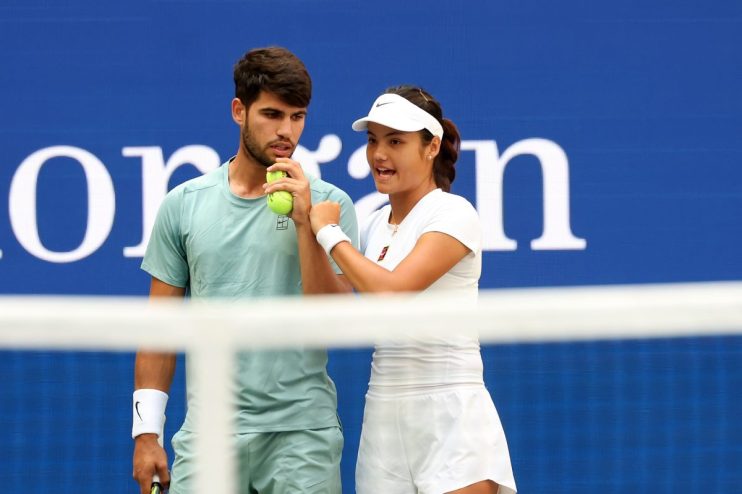
For example, we can market female athletes as heroes to young men, not just to young women. We can create more high-entertainment mixed-gender sporting formats, like the recent US Open tennis mixed doubles or the planned mixed events at the LA 2028 Olympics, to normalise superstar collaboration. And we can work harder to cross-pollinate fandoms to make shared viewership feel natural and welcoming.
Sport reflects who we are and who we want to be as a society. It can unite, and it can divide. As gender polarisation among young people grows, sport has a chance to become part of the solution – or part of the problem. Which side of that divide it lands on is still up to us.
Matt Readman is chief strategy officer at marketing agency Dark Horses and writes a monthly column for City PM.