
How retailers like ASOS, H&M and Zara are fighting back against ‘serial’ returns

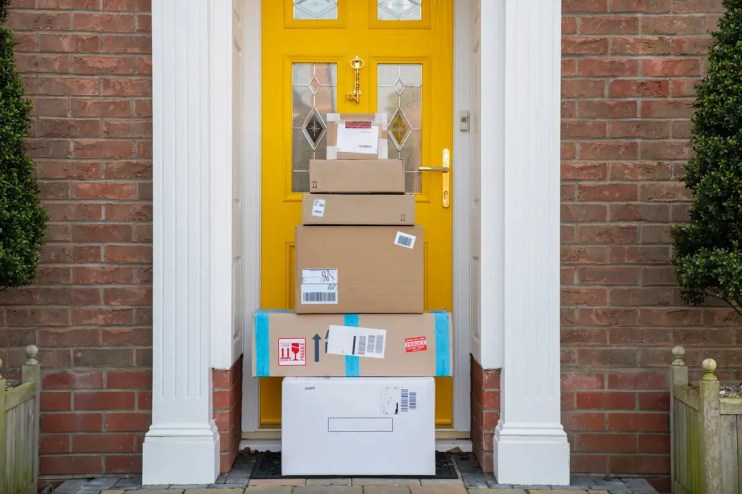
ASOS has become the latest retailer to change their returns policy as firms increasingly try to fight back on costly high-frequency takebacks – as well as outright fraud.
In an email to its premier and non-premier members, the popular fashion giant shared that it would be updating its Fair Use Policy foe “select customers” in a move which will likely see it join the long list of online retailers that will no longer offer free returns for so-called “serial refunders”.
A similar strategy was rolled out in the US last year and saw the addition of a $4.99 (£3.81) fee on returns for customers who ASOS deemed “constantly take actions that make providing them with free returns unsustainable.”
Other large-scale fashion brands like Zara, Prettylittlething, Wayfair and H&M have also started charging for their online returns after the rise in large-scale takebacks.
The cost of returns
A high level of returns can cause significant costs to business in the form of lost products, transport, packaging and processing. There are two key problems for businesses: returns fraud and serial returners.
Returns fraud includes customers trying to return an item which is ineligible for return, quality disputes, and wardrobing – where a customer returns an item after they’ve worn it.
More common – but also costly – problems with returns occur when customers simply order a high quantity of goods with the intention of returning those they do not like.
A recent survey found that UK retailers lose around £5.2bn annually due to online returns alone, and nine out of 10 UK retailers have experienced an increase in the rate of returns fraud or policy abuse in the past 12 months, according to Loop Returns.
The environmental costs, too, are dire.
Third-party returns platform Optoro has estimated that only around half of returns will be re-sold, while the rest will be sent to landfill.
A logistics firm put the carbon dioxide cost of returns in the US as being equivalent to the output of 3m cars, the Guardian found.
The problem is so bad that a Product Returns Research Group (PRRG) was set up at the University of Southampton to tackle it.
Their research project ‘No such thing as a free return,’ found that online sales, particularly returns to store, are “seriously impacting” company profits.
Implementing a fee for serial returners, however, can act as a genuinely impactful deterrent. The PRRG found that for an average company, a “five percent improvement in the rate of returns has the potential to deliver real improvements (200 basis points) in net margin.”
“Such improvements could be critical to help them deliver the services which customers expect such as free delivery and returns, whilst keeping prices competitive,” they added.
According to Loop, nearly two thirds of retailers identified returns fraud as the biggest headache to their organisation.
Chief executive of Loop Returns, Jonathan Poma, said: “The challenge is enormous: for every $100 (£76) in returned merchandise, retailers lose $10.40 (£7.93) to return fraud. Retailers are implementing sweeping changes to address this drain on their bottom line.”
“Leveraging tools like… return fees can provide merchants with the resources they need to not only mitigate these issues, but also improve their return processes as a whole,” Poma added.
Returns hurts small businesses the most
The cost of returns is higher for small businesses who don’t have access to the resources available to larger brands.
Just under a fifth of orders get returned at small businesses, according to payment provider Sumup.
“Implementing policies to counteract [returns fraud] is especially important for small to medium enterprises, as they, on average, have smaller profit margins,” Corin Camenisch, POS Product Marketing Lead at Sumup, said.
There is a risk that customers “may be less inclined to shop with the same retailer… with an additional cost to return faulty or unwanted items,” Camenisch said.
“However, if the policy is implemented on a case-by-case basis and only affects customers who are so-called “serial refunders,” like it is in the US, customers may not notice a difference. They may even have a more positive shopping experience, as policy updates are often made to improve efficiency within their distribution centres,” Camenisch added.