
How free markets are making solar energy feasible without subsidies

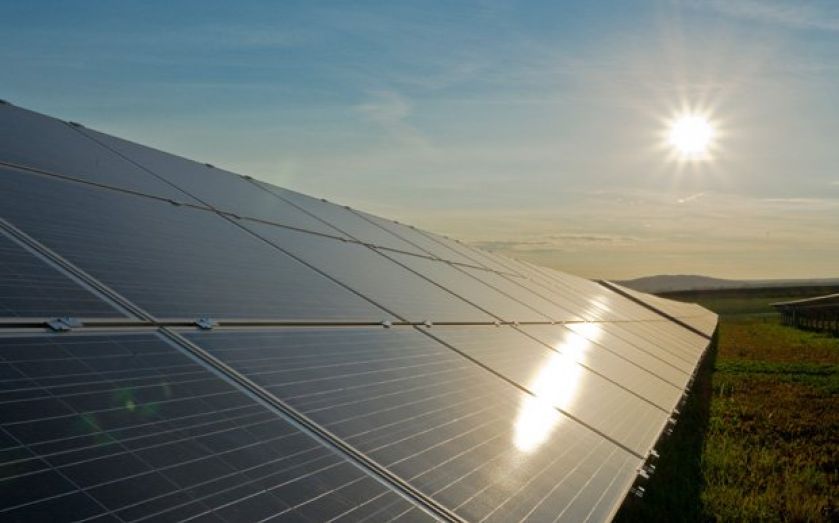
IT MAY be a clean form of energy, but solar has become a dirty word in some circles. Given expensive subsidies and feed-in-tariffs, solar (like other renewables) has looked like yet another uncompetitive distraction. It’s little surprise that countries like Germany, which have made the greatest commitments to renewables, also have the highest domestic energy prices, as the costs of subsidies are passed onto consumers.
Investors have also found solar tricky territory. While the cost of photovoltaic (PV) modules has plummeted, the industry has seen significant consolidation and many players have collapsed. Chinese firms now dominate, at least at the low end of the market. The spectacular bankruptcy of California’s Solyndra in 2011 happened despite $500m (£300m) in funding from the US Department of Energy, and a series of tax breaks.
But this bad reputation is set to change. Given giant technological leaps, rapidly changing economics, and new potential applications, capitalist pioneers have begun to make solar competitive. Ignore it at your peril.
First, grid parity – when electricity generation is competitive with grid-electricity rates without subsidies – is edging closer. In 2012, Bloomberg reported that Germany, Denmark, Italy, Spain, Portugal, Australia, and Brazil could already expect to achieve at least a 6 per cent return on PV investments. Many of these countries still offer indirect subsidies, so the market isn’t competitive quite yet. But the direction is clear. The average US PV market will likely reach proper grid parity around 2020, and states like California should reach that point sooner. Within a few years, arguments about feed-in tariffs will become irrelevant in many countries, because the solar industry won’t need subsidies.
Second, large companies are flocking to solar. Thanks in part to cheap PV modules, non-energy businesses are becoming mini power generators. The retail giant Walmart already has a solar-energy capacity of almost 90 megawatts (MW) in the US. If the retailer installed panels on every US store, it could generate 1.5 to 2 gigawatts – or about twice the output of my local nuclear power station. If other big-box retailers follow – and many are already doing so – we could see collective generation capacity skyrocket, making solar increasingly viable as part of the energy mix.
Its potential goes beyond retail. Solar is well-suited to industrial and processing applications: in Saudi Arabia, the Al-Khafji solar-powered seawater desalination plant is set to produce 30,000 cubic metres of salt-free water per day. And entrepreneurs are honing new applications. The US startup WaterFX, for example, is developing solar “troughs” that remove salt from water by distillation to deal with drought.
But these innovations are only possible because solar technology is developing rapidly. Today’s domestic PV modules are the Ford Model-Ts of solar: cheap, mass-produced, commercial pioneers. But they are poor at converting sunlight into electricity (efficiencies of around 10 to 15 per cent are common). These figures, however, could easily double.
Scientists from the California Institute of Technology and partners are developing a new multi-junction cell with a target efficiency of over 50 per cent. Building-integrated PV – glazing that generates power – could further popularise solar power. And PV is not the only form of solar energy. Improvements in other approaches, such as concentrated solar power (CSP), are possible. CSP uses mirrors to concentrate a large amount of sunlight onto a small area, driving a turbine. Just look at Spain’s 50MW Solnova Solar power station.
Energy storage is another area of technical and commercial progress. Storage is important because sunlight does not sync with electricity demand, causing a number of serious knock-on issues. Japan is likely to be at the forefront of this development. Since the 2011 Fukushima nuclear disaster, Japanese firms have invested heavily in alternative energy. I visit the country fairly regularly, and many important companies are prioritising energy storage. According to Lux Research, Japan will lead the $2.8bn global market in PV energy storage in 2018 by quite some margin.
Finally, consider where the wise money is going. In 2011, while Solyndra was busy going belly up, Warren Buffett was buying into solar – to the tune of over $5bn and counting, largely through Berkshire Hathaway subsidiary MidAmerican. As usual, he’s in it for the long haul. While arguments about subsidies will persist for the time being – and rightly so – solar is becoming an important part of the global energy mix. A renewable energy source is finally becoming competitive.
Carl Telford is program manager for Strategic Business Insights’ Scan Service. @SBI_Scan