
How AI took the wheel in 2025

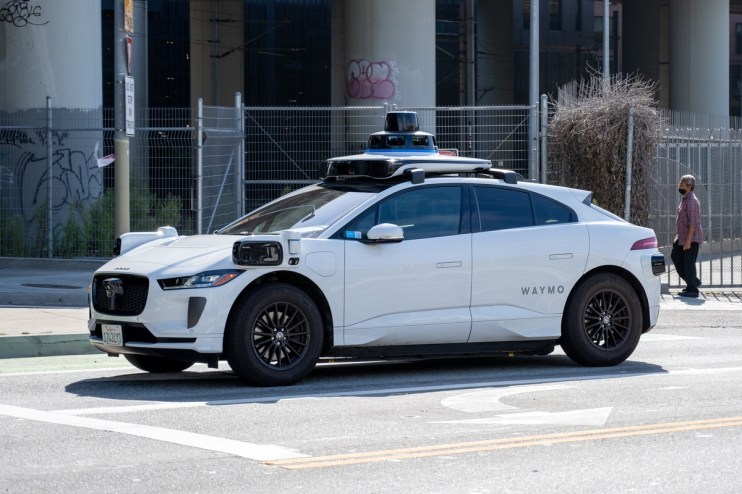
2025 was the year artificial intelligence (AI) took the driver’s seat, literally.
Not just in boardrooms or on trading floors, but increasingly on the tarmac, in showrooms, and behind the wheel itself.
From record-breaking EV sales in the UK and Europe to autonomous taxis navigating San Francisco streets and preparing to arrive in London next year, the automotive world shifted into a new era.
The technology set the pace, but human decisions in policy, investment, and adoption alike determined whether the ride would be smooth or bumpy.
Britain holds its ground
The British car industry defied sceptics by meeting the government’s Zero Emission Vehicle (ZEV) mandate for this year.
Analysis by the Energy and Climate Intelligence Unit shows that by November, electric vehicles accounted for 22.7 per cent of new car registrations, comfortably above the 20.4 per cent effective requirement.
And while headline targets allow for flexibilities, counting some lower-emission petrol and diesel hybrids, it’s safe to say that British drivers are switching to electric.
Colin Walker, head of transport at ECIU, said: “British drivers are increasingly choosing to switch to electric, so much so that, of the world’s largest car markets, the UK is now second only to China in the proportion of drivers buying new EVs.”
But the transition is far from frictionless. Affordability remains the biggest sticking point, with the government’s £3,750 EV grant only applying to cars priced under £37,000, leaving many popular models out of reach for private buyers.
At the same time, global competition is only intensifying. Chinese EV brands like BYD are aggressively undercutting prices and expanding into Europe, while Tesla, once the uncontested leader, is losing ground on the continent.
Autonomy arrives, tentatively
Driverless cars remain a novelty for most, but 2025 saw tangible steps toward a world of autonomous drivers.
Waymo, the US robotaxi pioneer, announced plans to launch fully autonomous taxis in London in 2026.
Meanwhile, British AI start-up Wayve, backed by Uber and SoftBank, is expanding testing operations across Germany and the US, refining its camera-based systems for complex urban environments.
But London is no San Francisco.
The city’s congestion, erratic pedestrian behaviour, and labyrinthine streets are set to present challenges that even the most advanced AI will struggle to navigate.
Steve McNamara, general secretary of the Licensed Taxi Drivers Association, remains unconvinced: “London is like nowhere else. I want someone to explain to me how this driverless car is going to go somewhere like Charing Cross Road at 11pmt, where everybody’s just walking across the road.”
Public scepticism mirrors McNamara’s warning, even as government plans promise tens of thousands of new jobs in autonomous transport, alongside the displacement of traditional cabbies.
The new co-pilot
Beyond the visible shift on roads, AI reshaped the ecosystem in 2025.
Multi-agent systems now work behind the scenes in manufacturing, retail, and logistics.
“Vibe coding,” the AI-driven generation of software, is refactoring legacy systems and enabling developers to focus on higher-order tasks.
Yet, with these advances comes a new imperative for ethical oversight, and security.
Steven Webb, UK CTO at Capgemini, warns that without traceability and oversight, AI-driven systems risk instability, despite driving efficiency.
“With AI writing more of the codebase, trust again becomes a major concern”, he said. “Organisations will need strong traceability, provenance controls, and automated assurance mechanisms to ensure safety, security, and long-term maintainability.”
The picture emerging from 2025 is not yet of a driverless utopia, but of a pivotal moment for the sector.
EV adoption is climbing, autonomous mobility is edging toward reality, and AI is reshaping the cars themselves, as well as the businesses that make and support them.
The wheel may still sit in human hands, but the direction is increasingly influenced by algorithms.
This shift is already influencing how vehicles are designed, priced, insured or operated, with huge implications set for productivity, safety and cost.
For 2026, the question shifts to how effectively the UK will position itself within that transition.
Because those who treat AI as a co-pilot rather than a replacement, who invest in infrastructure, regulation, and skills, will reep the economic benefits.
Those that do not may find themselves in the backseat, as the industry continues to evolve.