
Households face two painful energy bill hikes this winter as Ofgem confirms quarterly price cap


The consumer price cap will be updated four times a year rather than twice, revealed Ofgem, raising the prospect of multiple painful hikes to energy bills during the coldest months of the yea when demand will be at its peak.
The regulator warned households face a very challenging winter, and confirmed the price cap will have to rise over the coming months to reflect soaring wholesale costs and market volatility.
This raises the prospect of millions more Brits falling into fuel poverty, with energy bills taking up an increasing chunk of household incomes.
Ofgem also revealed the move to a quarterly price will add at least £60 to customer bills from October to December – putting more pressure on energy users.
It said the changes were necessary to enable suppliers to recoup costs and mitigate future market shocks which would hurt consumers.
While the UK only imports around four per cent of its gas supplies from Russia, it operates in a global market, and Gazprom’s latest cuts to gas flows via the Nord Stream 1 pipeline has raised the prospect of supply shortages across the continent.
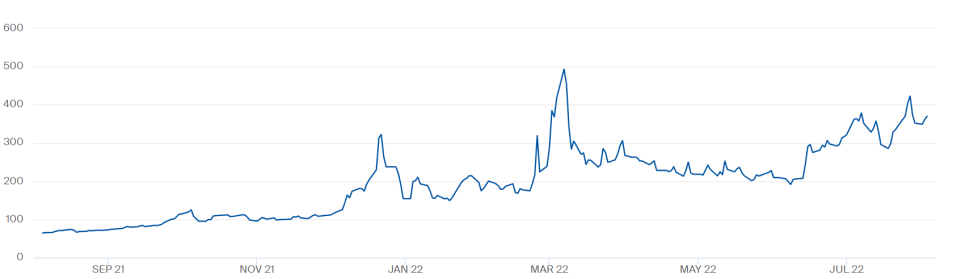
This has caused wholesale costs to spike, with UK and European gas prices climbing to near record levels in recent weeks – amid the growing risk of a supply crunch.
The price cap, established in 2018, sets a maximum rate that suppliers can charge per unit of energy, and caps the level of profits an energy supplier can make to 1.9 per cent.
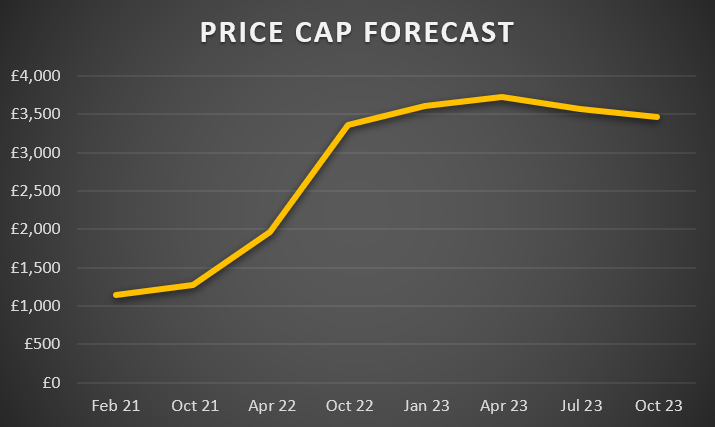
It rose to a record £1,971 per year in April following Russia’s invasion of Ukraine, and carnage across the domestic energy sector.
In May, Ofgem boss Jonathan Brearley cautioned Westminster in a committee briefing that the cap would have to rise again to at least £2,800 per year.
Since then forecasters BFY Group and Cornwall Insight have both hiked their predictions for the price cap to nearly £4,000 per year.
BFY Group predicts a peak of £3,850 per year next January under the quarterly arrangement, while Cornwall Insight predicts a lower peak of £3,729 next April – but expects ultra-high prices to remain until at least 2024.
Currently, around 24m customers are on a standard variable tariff and are are covered by the price cap
Energy market remains in recovery
Ofgem first proposed a quarterly price cap earlier this year, as it attempts to clean up and stabilise the energy market.
It has already brought in financial stress tests, fit and proper person rules, market stabilisation charges, and has launched a consultation on potentially ringfencing customer credit balances.
The watchdog believes the latest change to price cap will provide more stability in the market, reducing the risk of further large-scale supplier failures which cause huge disruption and push up costs for consumers.
Nearly 30 suppliers have collapsed over the past 12 months, struck down by the lethal combination of soaring wholesale costs, poor management and the rigid price cap.
Ofgem argued that by updating the cap every three months rather than every six, the prices bill-payers are charged are a better reflection on gas and electricity costs.
In theory, it would mean households would benefit from any drop in wholesale costs while suppliers would be less constrained amid future market volatility.
It has further revealed there will be a shorter notice period between announcement and implementation of the new cap so that prices reflect gas and electricity costs more quickly and accurately.
The implementation period is currently two months, with Ofgem previously confirming plans to halve the window to just one month.
Ofgem will publish the next price cap level at the end of August.
Commenting on the latest updates, Brearley recognised the situation was “deeply worrying for many people,” with much higher prices than ever before.
He said: “The trade-offs we need to make on behalf of consumers are extremely difficult and there are simply no easy answers right now. Today’s changes ensure the price cap does its job, making sure customers are only paying the real cost of their energy, but also, that it can adapt to the current volatile market.”
He confirmed Ofgem will work closely with the Government, consumer groups and with energy companies to establish what further help can be provided to help with these higher prices.
Former Chancellor Rishi Sunak revealed a £15bn support package this spring, however with bills set to rise again, there will be increasing pressure on the Government to provide more support.