
Hey, big spender: Institute for Fiscal Studies boss Paul Johnson on the end of economic orthodoxy


In the eight years Paul Johnson has been director of the Institute for Fiscal Studies (IFS), he has seen three prime ministers, two general elections and – so far – one Brexit referendum.
Read more: Government almost matching Labour’s spending pledges, says IFS
If that wasn’t enough, Britain’s political leaders have recently torn up their commitment to formerly sacred economic doctrines. Gone is the Conservative devotion to austerity, while there is nothing left of Labour’s restraint under ex-shadow chancellor Ed Balls.
The IFS – the well-respected research institute – has coped with turbulent political weather remarkably well. Its steady stream of thorough and nonpartisan analysis continues, and policymakers are still petrified of the institute taking issue with their plans. But with a general election looming, what does its boss think of the current state of things?
A few days before we meet, the CBI harshly criticised Labour’s radical plans to renationalise the railways, utilities, and Royal Mail. The business group said the moves would cost an “eye-watering” £196bn – before admitting it couldn’t be entirely sure of its figures.

Johnson says the CBI’s focus on upfront costs was misplaced. “The really important question is: how are you going to do it?” he says. “How are you going to ensure it’s efficient? What is the regulatory structure going to be?” Johnson insists Labour must answer these questions with detailed answers.
Running nationalised industries from government departments “is just not going to work,” he says. “But if it’s genuinely arm’s length, what benefit are you getting that you’re not getting, and you couldn’t get, by changing the regulatory system in the private sector?” He says it’s these sorts of things “the media ought to be pressing them on, not ‘is it £196bn’, which is easy for them to bat off.”
Johnson’s impressive 30-year career has included various civil service roles, including as a top economist in the Treasury. His voice carries the weight of experience, then, when he says Labour needs to be more honest about how it will fund its policies – including £250bn of infrastructure investment over 10 years. The party has promised no tax rises for those on less than £80,000 a year and pledged to squeeze the cash from companies and the rich.
Read more: City voices anger at John McDonnell’s climate change plans
Johnson is sceptical. He argues Labour’s tax plans wouldn’t earn as much money as the party has claimed. “Countries which do raise a lot more tax than we do,” he says, “basically do it by getting more from people on average incomes. In the end that’s what you’d probably have to do at least some of.”
The Tory turn
Chancellor Sajid Javid’s commitment to disregarding the policies of his predecessors has been just as firm as his Labour counterpart John McDonnell’s. He has promised the biggest spending rise in more than 15 years next year – around £13.4bn.
Javid’s pledges of billions more for schools, hospitals and the Home Office will take spending beyond the limits set out by ex-chancellor Philip Hammond. Johnson is reluctant to criticise this rule breach, however, calling the deficit “quite manageable”.
Yet he is less sanguine about Prime Minister Boris Johnson’s promised tax cuts, which would raise the higher-rate income tax threshold from £50,000 to £80,000. The IFS’s Johnson highlights Britain’s ageing population and the resultant higher spending on health and social care.
“My view is that it’s not feasible to reduce the tax burden from where it is at the moment unless you’re going to do something really quite remarkable for public services,” he says, such as slashing the NHS or significantly means-testing state pensions, which he says are not “really on the cards”.
Johnson does have some concerns about the Conservatives’ approach to spending. “Over the last three years, we’ve had sort of last minute top ups,” he says. “It does feel a bit like government by crisis management in some of these public services.”
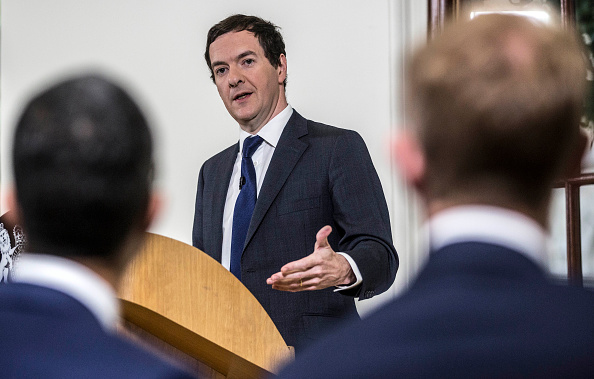
Crime spending is one example, Johnson says. Police numbers were cut dramatically under David Cameron and George Osborne, only for the new PM to restore them. “The worst thing to do is sack 20,000 police and then recruit them again,” he says. “It’s incredibly inefficient and expensive.”
Both Javid and McDonnell have latched on to a growing view in mainstream economics that record-low interest rates mean high levels of government debt are more than manageable. But is it correct?
“It is clearly true that we can manage with more debt than we used to be able to,” Johnson says. He says interest rates have “been like this for 10 years now and 10 years is beginning to look like the long run”. But he cautions: “We don’t know how long the long run is.”
Read more: European policymakers eye up fiscal response to slowdown
Whatever they decide to do, politicians must be clear about what their tax and spending policies are trying to achieve, Johnson says. Higher government spending can be justified, he says, but the argument has to be stronger than: “interest rates are low, let’s spend more”.
(Image credit: Getty)