
Here’s what the government should do to fix business rates

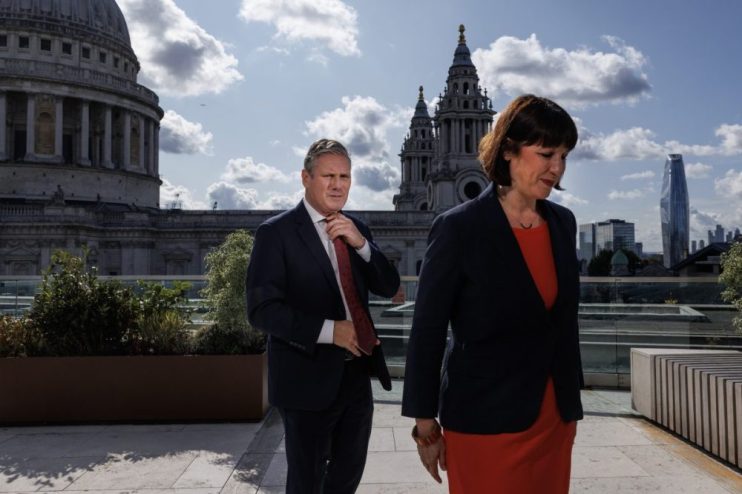
Businesses are calling for certainty. What they don’t need is a knee-jerk reaction on business rates from the government, writes David Jones
The current business tax rate is too high and Labour must address this issue proactively. The government is facing increasing pressure to make the right decisions, and these could provide critical relief to sectors like retail, hospitality and office rental markets. Starmer’s handling of business rates as a tax is extremely important.
In lead up to the 2026 business rates revaluation, our research forecasts a 14.7 per cent increase in the total rateable value (RV) pool in England, from £72bn in 2023 to £82.5bn in 2026. In Wales, we anticipate a 10.8 per cent increase over the same period, leading to a potential reduction in the Uniform Business Rate (UBR) from 51p to 43.8p in England and from 57.4p to 51.1p in Wales – showing the urgent need for government intervention as the revaluation approaches.
The current situation was carried over from the previous government. The Conservatives halted the inexorable increase in business rates by freezing the UBR to offer some relief during the pandemic. In April 2023 significant changes were made for large businesses via in increase in the supplement by 6.7 per cent Consumer Price Index (CPI) inflation to create a standard multiplier. However, the underlying UBR has remained fixed at 49.9p for five years.
Now is the perfect moment for Rachel Reeves to use the Autumn Budget to drive change. We ask the government to be bold and finally decouple the UBR and its associated supplements from inflation going forwards. Then, let’s push ahead with a 2026 rating revaluation to drive down the UBR to the level we forecast below 44p. By allowing shorter revaluations to determine the extent at which the tax can rise, we predict that we will have a base UBR at 40p by 2029.
While digitalising the tax system and revising the relief system are crucial steps for encouraging investment, these measures should not distract from the core issue: the need for a lower tax rate.
At the Autumn Budget on 30 October, the government must commit to delivering a tax rate of 40p as the primary goal over the next five years. This is an objective that is within their grasp and will finally create stability in the tax base, benefitting all businesses.
To ensure this reduction is doable, we propose a set of affordable and deliverable solutions that will simplify the relief system and reduce administrative burdens, while targeting relief effectively.
Decouple tax from inflationary increases
By the 2029 election, the government needs to commit to tackling the excessive tax rate and deliver a UBR no higher than 40p. This can be achieved with by decoupling the tax from annual inflationary increases and using the RV pool increase, which we forecast for the 2026 revaluation, to drive down the base level UBR at the Autumn Budget.
Maintain an upwards transitional scheme
We forecast that many sectors will face significant increases in RV for the 2026 revaluation, so with this in mind, it’s vital that the government maintains an upwards transitional scheme to phase in the largest increases – especially for worst-affected sectors such as logistics, hotels, leisure and large infrastructure.
As with the 2023 revaluation, we ask for the government to fund this scheme outside of the business rates system to avoid the reintroduction of a downwards transitional adjustment. The abolition from April 2023 was very successful in ensuring the retail sector received the benefits of lower business rates from day one of the 2023 revaluation.
Extend improvement relief
The current scheme provides a one-year rate holiday for ratepayers on increases in liability, arising from extensions and improvements, but we need to extend improvement relief to two years. This should include landlord liabilities so they can work with incoming occupiers to meet exacting carbon reduction targets.
Review empty rates
The government needs to undertake a thorough review of empty rates. It is not necessary to penalise landlords where space has longer-term vacancy. The government should introduce a system which incentivises landlords and developers to invest, as well as encouraging earlier reoccupation of the vacant stock.
Ensure detailed testing and a roll out of Duty to Notify
Duty to Notify (form of ratepayer self assessment) is planned to be introduced by the Valuation Office Agency (VOA) and will be extremely onerous and costly to ratepayers. We urge the government to ensure the VOA undertakes a detailed testing and roll out phase. We consider that full implementation must be delayed to at least 2027, which will still provide the VOA with the necessary data gathering requirements to value for the 2029 revaluation.
Invest in digitalisation
The current systems are antiquated and unfit for purpose with no links between the VOA and billing authority systems. The government must invest in the business rates system and digitalise the tax; enabling ratepayers to review their valuations and pay their business rates on a single site. If they want a modern business rates system that is fit for purpose, they must invest.
David Jones is principal and managing director of business rates at Avison Young UK