Skip to content
City PM
  • Germany
  • France
  • Europe
  • Markets
  • Business
  • Opinion
  • Germany
  • France
  • Europe
  • Markets
  • Business
  • Opinion
Thursday 19 September 2024 3:12 pm  |  Updated:  Thursday 19 September 2024 3:26 pm

Hawkish Bank of England? Don’t be so sure.

By: Chris Dorrell

Add as a preferred source on Google
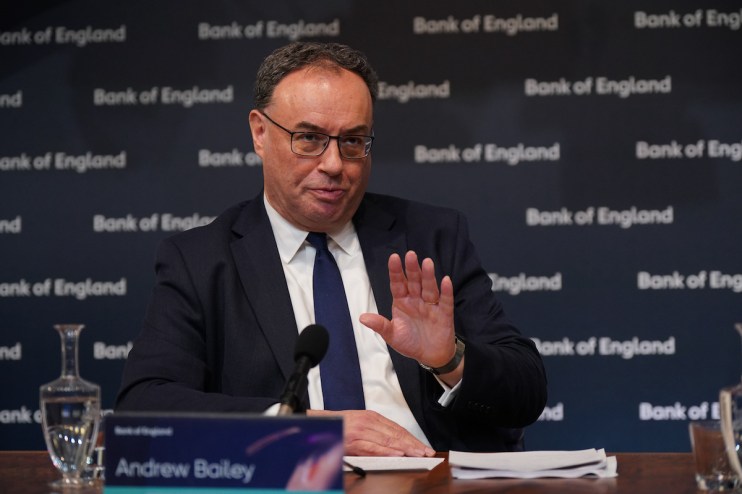
The Governor's comments were seen as slightly more dovish than his previous guidance had implied, prompting markets to anticipate further rate cuts in the months ahead.
Andrew Bailey could make the final call on interest rates in December.

After the drama of the US Federal Reserve’s interest rate announcement last night, the Bank of England’s decision to hold rates at five per cent was always likely to feel a little flat.

The Bank’s decision was widely interpreted as a hawkish hold, particularly in contrast to the Fed’s 50 basis point cut.

Following the decision, the pound rose, climbing to a two year high against the dollar. Yields rose across the board too, suggesting that markets think there will be a slower pace of easing ahead.

Why this response?

Eight members of the Monetary Policy Committee (MPC) voted to hold rates at five per cent leaving just one dovish dissenter. Markets had thought Dave Ramsden might have joined Swati Dhingra in calling for another rate cut, but alas they were disappointed.

Looking forward the minutes showed that “most members” favoured a “gradual approach” to cutting rates, unless there were any material changes to the outlook.

Governor Andrew Bailey said “we need to be careful not to cut too fast or by too much”, further reinforcing the Bank’s caution.

The Bank of England’s approach stands in marked contrast to the Fed’s. Alongside the 50 basis point cut, Fed officials signalled that there would likely be another two rate cuts in the remainder of the year (or one more bumper cut.)

Even though the Fed’s projected path for rates into the medium term is still more cautious than the market path, the size of the first rate cut suggests policymakers will be willing to move hard and fast if necessary.

The Bank is not in that space yet. One look at this week’s inflation numbers shows why. Although the headline rate remained at 2.2 per cent, services inflation jumped back up to 5.6 per cent.

Read more

Kevin Warsh tears up forward guidance on rate moves at the Fed

Kevin Walsh addressing a conference audience in a formal business setting, wearing a suit and gesturing with his hand.

Services inflation is expected to fall over the remainder of the year, but it is by no means a certainty. Put simply, inflation appears to be a bigger risk in the UK than the US.

As Paul Dales, chief UK economist at Capital Economics, explained: “The contrast between (the Bank’s decision) and the Fed’s jumbo 50bps rate cut last night makes sense as the Bank has yet to shift from worrying less about inflation and worrying more about weak activity.”

But it would be wrong to overplay the hawkishness of the Bank of England’s decision today. Bailey – and the wider MPC – clearly think more rate cuts are on the way.

“The economy has been evolving broadly as we expected,” he said. “If that continues, we should be able to reduce rates gradually over time”.

Bailey was clearly trying to signal that there will be further rate cuts, while also pointing out there’s no need to reduce rates aggressively, at least for the moment.

As Rob Wood, chief UK economist at Pantheon Macroeconomics said: “The broad data flow suggests little need for urgency”.

So what’s the outlook? A November cut looks nailed on, especially as the Bank of England will be releasing its latest forecasts alongside the rate decision.

Beyond that, the Bank will likely pause in December before gradually easing rates further next year. Will it be a slower pace than the Fed? Yes, but that does not mean the Bank is being excessively hawkish.

The last word goes to Lindsay James, investment strategist at Quilter Investors, who points out that “the spectre hanging over all of this, however, is the upcoming Autumn Budget at the end of October.”

“Taxes are guaranteed to rise, but by what extent we are not sure and thus the economic impact cannot be properly gauged. Businesses and consumers are likely to cut back on spending in anticipation of changes to their income and as such growth could slide further.”

Read more

As it happened: Stocks sink after Fed and Bank of England opt for hawkish hold; Oil price tumbles

Bank of England building on Threadneedle Street, London, showcasing its historic architecture and financial significance

Share this article

  • Facebook
  • X
  • LinkedIn
  • WhatsApp
  • Email

Similarly tagged content:

Sections

  • News

Categories

  • Economics

People & Organisations

  • Andrew Bailey
  • Bank of England
  • UK economy
  • UK inflation
  • UK Interest Rates

Related Topics

  • Bank of England
  • UK inflation
  • UK interest rates

Trending Articles

  • Top Burnham adviser calls for capital gains and inheritance tax hikes

  • Clarkson’s Farm and why businesses must stop blaming the weather

  • Two solicitors linked to Post Office scandal charged with misconduct

  • Lloyd’s deputy chair: The City is a club in the best sense

  • A meeting with the breakfast king of Mayfair

More from City PM

  • Kevin Warsh tears up forward guidance on rate moves at the Fed

    Markets
    Kevin Walsh addressing a conference audience in a formal business setting, wearing a suit and gesturing with his hand.
  • As it happened: Stocks sink after Fed and Bank of England opt for hawkish hold; Oil price tumbles

    Markets
    Bank of England building on Threadneedle Street, London, showcasing its historic architecture and financial significance
  • Bank of England should hold interest rates, City PM Shadow MPC says

    Economics
    Bailey Boe in professional attire speaking at a business conference with a presentation screen in the background.
  • Inflation expectations at record high in interest rates signal

    Economics
    Bank of England building on Threadneedle Street, London, showcasing its historic architecture and financial significance
  • Bank of England to ‘tolerate slow return’ to inflation target as interest rates held

    Economics
    Bank of England Governor Andrew Bailey said cited several indicators that the labour market was softening.
  • House prices jump as property market ‘treads water in rough conditions’

    Property
    The price paid for first homes has surged 7.1 per cent in a year
  • Bank of England chief economist ‘not trying to be a troublemaker’ on rates split

    Economics
    Chief economist Huw Pill said "consistency" was key to the Bank of England's quantitative tightening programme (Photo by: Graeme Sloan/Bloomberg via Getty Images)
  • The Bank of England is keeping Britain in the waiting room

    Opinion
    Andrew Bailey, Bank of England governor, discusses economic policy during a press conference at the central bank headquart...

City PM — European politics, business and analysis.

Europe

  • Germany
  • France
  • Europe
  • UK & Ireland

Topics

  • Business
  • Markets
  • AI
  • Technology
  • Opinion
  • Energy

More

  • Politics
  • Economics
  • Fintech
  • Legal
  • Sport
  • Life

Company

  • About City PM
  • Editorial Policy
  • Corrections
  • Contact
  • Terms of Use
  • Privacy Policy
  • Cookie Policy
© 2026 City PM · Published by CityPM Media, Bahnhofstrasse 65, 8001 Zürich, Switzerland
About · Editorial Policy · Corrections · Contact · Privacy