
Grown-up politics means answering difficult questions

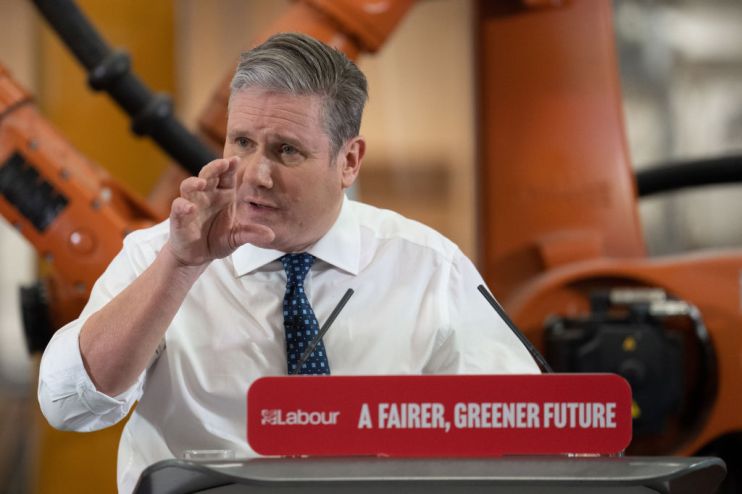
If Starmer is serious about restoring trust he should end the era of client journalism and face up to real scrutiny from people who know what they’re talking about, says Simon Neville
“You’re very keen. Would you like to ask a question?”
So said the new Chancellor Rachel Reeves at the end of her first press conference earlier this week, where she outlined her ambitions to overhaul the planning system.
The reason her intervention is important is it was a rare moment where a minister actually allowed a journalist in the room to ask her a question simply because he had his hand up, rather than being on a pre-approved list.
Too often the media ended up in performative ministerial press conferences under the Tories, with political colleagues and aides clapping like seals from the sidelines to create a sense of bonhomie for viewers.
They would be stuck in a room knowing if they were on the list their question wouldn’t be answered and, if not, knowing they were nothing more than room meat, instead of arbiters of truth.
From a communications perspective, Reeves’ conference was a strong start for the new government.
Yes, she had clapping colleagues and a list of journalists to take questions from, but, her decision to allow Politico’s Emilio Casalicchio, who has made a habit of putting his hand up throughout press conferences in the hope politicians on stage will notice, was a rare moment of improvement.
Labour needs to win over a highly sceptical media who are fed up with watching ministers spoon-feed stories to their favourite journalists.
Better known as “client journalism”, the idea is that new policies would be given as exclusives to friendly outlets, usually pre-briefed without attribution.
If the story creates too much of a stink, the government can casually walk away from it, blaming the media for the offending smell. “We can blame it on a disgruntled civil servant”, is the line used in The Thick Of It, which appears to have been used as an instruction manual by the last government instead of a piece of satire.
But this leads to stories and – more importantly – policies failing to be properly understood and scrutinised.
For years as a business journalist, I would try to build relationships with ministers who were responsible for sectors I followed closely.
During the coalition government in the 2010s, several ministers and their aides recognised speaking to sector specialists and reporters outside Westminster was a route to accurate reporting that focused on policy rather than personality.
But as the Conservatives’ grip on power progressed, it became clear that ministers felt they must avoid as much scrutiny as possible.
Journalists were evil, stupid and wrong, so new policies should be given to the most malleable of reporters. Scrutiny could come later, if at all.
This was the mantra of Boris Johnson’s poundshop Svengali, Dominic Cummings, whose loathing of the press dripped throughout Whitehall and lingered long after he was caught out by the media over his driving/eye test trip to Barnard Castle.
He tried to isolate publications he didn’t like and would also lie to journalists, via his “sources”, including during his infamous Covid trip.
The hope must be that the Labour Government can embrace its “change” messaging when it comes to the media.
Rachel Reeves’ press conference was a good start because, in addition to taking the ad hoc question at the end, the room was packed with economic and business journalists, rather than political ones.
But Labour must build on this. The health secretary should prioritise meeting health correspondents; the business secretary with business journalists; transport with transport reporters and so on.
These journalists are not looking for the day-to-day gossip of Westminster. They are trying to understand often complex topics in a digestible format to inform their readers or viewers.
They aren’t looking to trip up politicians with gotcha moments and, if anything, they might have useful insight on a policy that the minister and their department hadn’t considered.
Journalists don’t need to toe the line of government. But proper grown-up scrutiny will result more readily from engaging with those specialists and specialist publications, than eyeing up which lobby journalist is most likely to not ask difficult questions.
If Starmer is serious about being a grown up, then difficult questions should be asked. Only then can the relationship between the media and the government be restored to one of healthy respect. Politics, the media and democracy will be better for it.
Simon Neville is media strategy and content director at SEC Newgate