
Graduate crisis proves British universities are no longer fit for purpose

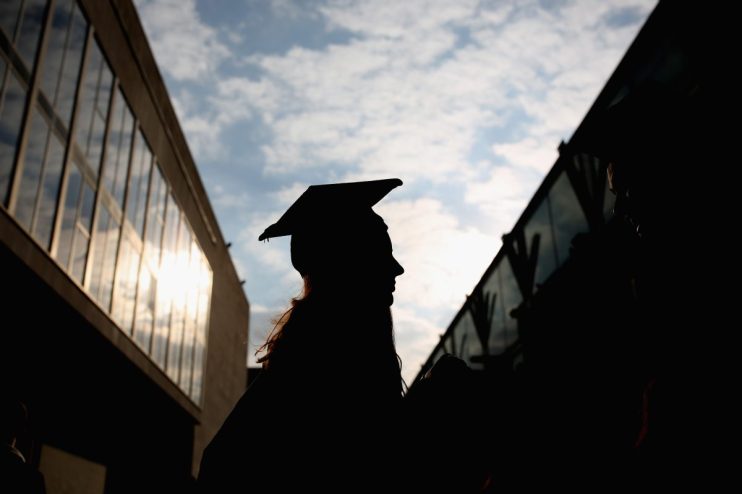
It’s time to accept that a substantial proportion of British universities are simply not fit for purpose, writes Paul Ormerod
The true cost of taking a degree at many of Britain’s universities is becoming all too frighteningly apparent.
Students are now graduating with an average debt of £53,000. A good chunk of this is taken up by loans for tuition fees. It has been known for some time that many graduates will never earn enough to pay off their debt.
But figures obtained by The Times newspaper via a freedom of information request to the Student Loans Company paint a distinctly gloomier picture.
Even those who make repayments are finding that, because of the interest rate charges, their level of debt rises rather than falls.
The repayment structure is quite complex and depends on when the loans were actually taken out. But in essence, once a graduate earns above a certain annual threshold, HMRC automatically deducts nine per cent of their pay as a repayment of the loan.
Last year, some 4m graduates made repayments. But two-thirds of these accrued more in interest than they paid. The total amount repaid was £5bn, but interest charges amounted, incredibly, to £15.2bn.
Little wonder that figures released this week by the Centre for Social Justice show that no fewer than 240,000 graduates are not working for health reasons. What a depressing prospect for many young people!
This outcome was predicted when Tony Blair announced a target of sending 50 per cent of young people to university.
30 or 40 years ago, a much smaller percentage of school leavers went to university. Most of these institutions offered a good education. As a result, graduates tended to earn substantially more than non-graduates over the course of their working lives.
But the large expansion in both the number of universities and the number of students since then has led to a huge increase in the supply of graduates.
The number of jobs which genuinely require a degree has not risen by anything like as much. So supply has outstripped demand. Unsurprisingly, the price – the average salary of graduates – has fallen. For many, the graduate premium does not exist.
A reckoning for Britain’s universities
We need to accept that a substantial proportion of our universities are simply not fit for purpose.
Universities in general have three main sources of income: domestic student fees, international student fees and research income. For the top institutions, commercial income from spin-offs and IP plus donations from alumni can be significant. But most receive very little through these channels.
Indeed, a substantial number subsist almost exclusively on domestic student fees. They lack the prestige and ability to attract either foreign students or research grants.
A good approximation to the operating model of weaker universities is as follows. Prospective students have a bounty of their head in the form of the student loan. The university will do anything to corral them in, even to the extent of offering places to students with just a single A-level.
The students arrive and graduate. But their degrees are of such little value that they never repay their loans, which are written off after 30 years.
In short, such universities exist only because they are almost entirely subsidised by the taxpayer. They are in effect a make-work scheme for their middle class staff.
This system is highly inegalitarian.
University students are drawn from the top 50 per cent of the age cohort by academic ability. The total amount currently outstanding on student loans is a staggering £250bn, at least half of which will never be repaid.
In comparison, the bottom 50 per cent get very little by way of training. The Further Education colleges could do a massive amount with the money which is effectively wasted on our weaker universities.
Time for a fundamental rethink about Britain’s universities.
Paul Ormerod is an honorary professor at the Alliance Business School at the University of Manchester. You can follow him on Instagram @profpaulormerod