
Giving into the demands of NHS workers has only emboldened them to ask for more

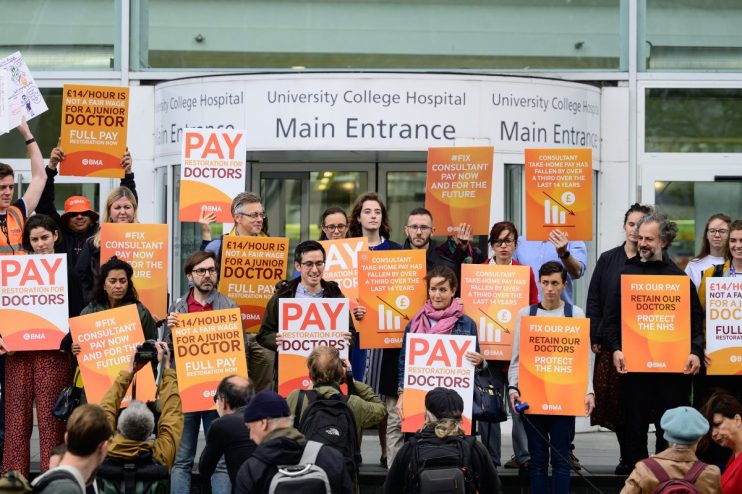
Thinking a pay rise would put NHS strikes to rest has proven wishful thinking. This government must draw a line, writes Emma Revell
What was your last pay rise? Did it match inflation, maybe beat it a bit? Even if it did, there’s a good chance it didn’t make up for the last two years of price rises and you’ve probably noticed everyday things like the weekly shop cut a little deeper than you remember.
Everyone can have sympathy for striking NHS staff. Perhaps less for consultants, taking home six figures for working somewhat less than full time with a nice helping of locum or private clinics on the side. But many people can understand why nurses and junior doctors, whose pay increases have been restricted over recent years as successive governments tried to rein in public spending, have been limiting overtime or outright striking over previous years. Pointing out what a physically and emotionally difficult time they had working on the frontline during the pandemic only garners more sympathy.
Public sector pay increases are not usually awarded on the basis of a good X Factor sob story. Independent pay review bodies make a report annually to the Prime Minister and the health secretary, taking into account a broad range of factors including the need to recruit and retain workers, labour market conditions, the funds available to the health department and the government’s inflation target.
However, in this case, a 22 per cent increase over two years was the review bodies’ recommendation and the new Labour government – keen to put an end to years of strikes – accepted it.
A significant burden on the taxpayer, for sure, but surely that means we can move on, allowing the NHS to function without the disruption of rolling walkouts and perhaps allowing people to see more clearly that its ongoing underperformance is the result of deeper structural factors?
That, it transpires, is wishful thinking.
Firstly, even a 22 per cent pay increase falls short of the 35 per cent junior doctors were agitating for. Leaked messages between leaders of the strike make clear that further industrial action is already being discussed, targeted at the moment in time when Labour’s honeymoon ends so they can exert maximum pressure.
While they perhaps optimistically assumed the honeymoon would end in around a year, rather than what looks like a month due to rioting on the streets, we shouldn’t doubt their intentions. Emboldened strike leaders do not see this as the end of the road, merely as the end of act one. Act two could cost the taxpayer, and the health of the nation, much more, regardless of when it comes.
Secondly, and perhaps more immediately damaging, GPs have decided that it’s their turn. On a 98.3 per cent vote in favour, the British Medical Association (BMA) last week announced that GPs would begin collective action over a 1.9 per cent funding increase for 2024/25 which they claim could leave some GP surgeries unviable.
GPs won’t close their doors but instead have the option to choose from a menu of actions helpfully provided by the BMA. These include limiting appointments to 25 people per day, piling pressure on urgent care services by diverting other patients or stopping sharing patient data unless it is in the best interests of the patient. Perhaps most shockingly, GPs will also have the option to turn off software which automatically seeks the best value when prescribing medications.
NHS England have encouraged patients to continue contacting their surgeries where appropriate, but have warned this action – which has no fixed end date – will inevitably lead to people turning up at A&E unnecessarily or delaying seeking medical attention entirely.
For a new Labour government quite literally fighting fires on other fronts, this is the last thing they need. A close relationship with the unions meant the new health secretary, Wes Streeting, was confident of being able to do a quick deal to end strike action but that same relationship means the unions are able and willing to exert pressure in a bid to extract more from the taxpayer.
Streeting has been refreshingly honest about the scale of the challenge facing the NHS and seems open to the sort of radical reforms needed to actually address them. Given that salaries account for almost half of the health services’ day-to-day spending, let us hope he can also find the strength to oppose unreasonable and opportunistic pay demands.
Emma Revell is head of communications at the Centre for Policy Studies