

Wednesday's top story: Union and SPD leaders says Deutsche Bahn should enforce its alcohol ban
After Deutsche Bahn (DB) on Tuesday announced that it intended to ban alcohol at all of the train stations in Germany, the question now arises how that ban could be enforced.
According to the politicians from parties in Germany's federal coalition the railway itself should take on the responsibility of enforcing its own ban.
"I expressly welcome the fact that Deutsche Bahn is stepping up its own security [by banning alcohol]," the Union's domestic policy spokesman, Alexander Thro, told Die Welt. "But this also includes enforcing these rules with its own staff."
The domestic policy spokesman of the SPD, Sebastian Fiedler, suggested that the policy will only work if "the railway can provide a significant increase in personnel at DB Security."
The German police union takes a similar view. Its chairman Heiko Teggatz, also speaking to Welt, called on the railway to provide the staff to monitor the alcohol ban: "This is a matter of the railway's domiciliary rights. It must ensure that more security personnel are provided."
Federal Interior Minister Alexander Dobrindt (CSU) said he welcomes the initiative in principle, but that the question of enforcing the ban is "a problematic one".
In addition to the DB security forces, the Federal Police is responsible for security at stations. This is under the authority of the Federal Ministry of the Interior.
So far, a ban on alcohol consumption has been in place mainly at major German train stations such as Frankfurt, Hamburg or Cologne. In total, Deutsche Bahn deploys around 4,500 security guards at stations throughout Germany.
Meanwhile, the Federal Association for Homeless Assistance fears new hardships for unhoused people with alcohol addiction.
"A ban does not change the living situation of the people who are at the station, but only displaces them..." said Deputy Managing Director Joachim Krauß to RND. He added that in Hamburg where a ban is already in place people have been pushed into surrounding neighbourhoods, where they have less shelter or support resources.
Federal criminal police report rise in child sexual abuse cases
Germany’s Federal Criminal Police Office (BKA) has recorded a rise in child sexual abuse cases in 2025, with 17,126 offences registered, around 1,600 more than in 2021.
The figures were presented by Interior Minister Alexander Dobrindt, who called the numbers “alarmingly high” and warned that the true scale is likely greater.
Police recorded 18,736 victims, with girls making up the majority of those affected.
The report also found that most suspects were men and that in more than half of cases there was a previous relationship between the victim and the suspect.
Authorities said the figures underline the need for stronger protection measures, particularly in the digital space where offenders can use online anonymity.
Beer drinking worldwide continues downward trend
Less beer is drunk worldwide yet again this year.
Global production fell by 1.4 billion liters last year, according to an analysis by the world's largest hop trader BarthHaas from Nuremberg.
This corresponds to a decline of 0.7 percent to 189.6 billion litres. That's including non-alcoholic beer, which has recently become an increasingly important market in some parts of the world.
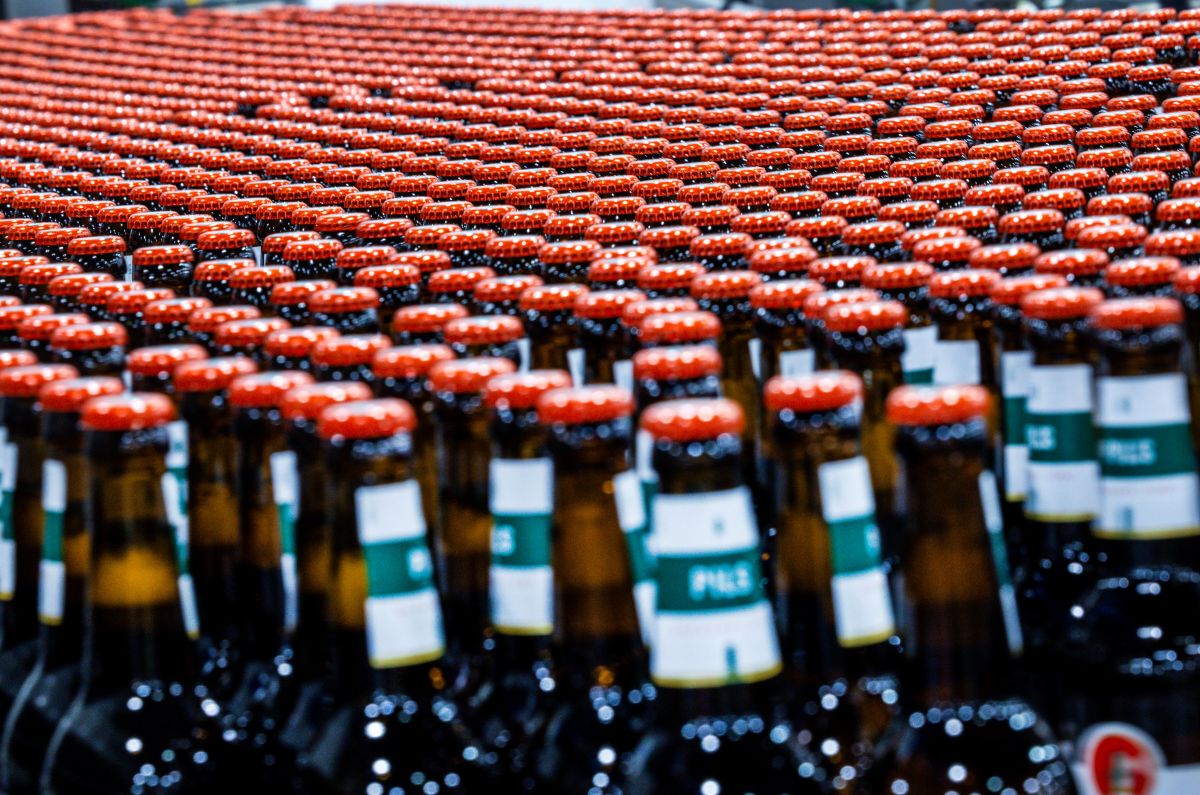
For Germany, the outlook is worse: By May, the loss had been "more than five percent" compared to the previous year, according to a comment by the chief executive of the German Brewers' Association to the Rheinische Post.
For the German beer industry, the concern is not a year of bad sales but the threat that the beer market has reached a real turning point.
The German beer market has shrunk by around 18 percent since 2019.
This is also likely to have an impact on the brewery landscape in Germany, with the number of breweries in Germany also expected to continue to decline.
France becomes first EU country to ban social media for children under 15
France has become the first country in the European Union to adopt a social media ban for children under the age of 15.
The French National Assembly voted in the evening with 279 to 81 votes in favour of the ban. The Senate had voted in favour of the draft in the afternoon with 243 votes to two.
At the request of French President Emmanuel Macron, the new rules are to come into force after the summer holidays.
"I had campaigned for it, now it has been decided: From the new school year, social networks will be banned for children under the age of 15," Macron said after the parliamentary decision.
In Germany a political debate about a possible social media ban for minors has been ongoing since last year, but an expert commission on the topic ultimately advised against implementing a ban on its own.
Experts recommended restricting all social media use for children under 13 years old, and introducing some safeguards for children in the ages of 13 to 18.
However, Family Minister Karin Prien also said that she would prefer for the EU to bring legislation forward rather than Germany moving forward alone.


