

It was supposed to be a night of joyful dancing, connecting with friends and celebrating the LGBTQ+ community.
But Berlin's Christopher Street Day (CSD) parade – one of Europe's biggest Pride events – was disrupted by a brutal attack on Saturday night when a man drove a van into crowds on the edge of Tiergarten before attacking people with a machete, killing a 65-year-old woman and injuring 29 others, many seriously.
The presumed perpetrator, a 21-year-old German Islamist of Lebanese origin identified as Abdul Ballout, was located by police on Sunday and shot dead after reportedly approaching officers with a bladed weapon.
LATEST: Everything we know about the deadly attack on Berlin's Pride parade
Now as Berlin mourns the attack on its queer community, many are wondering how it happened and where the city goes from here.
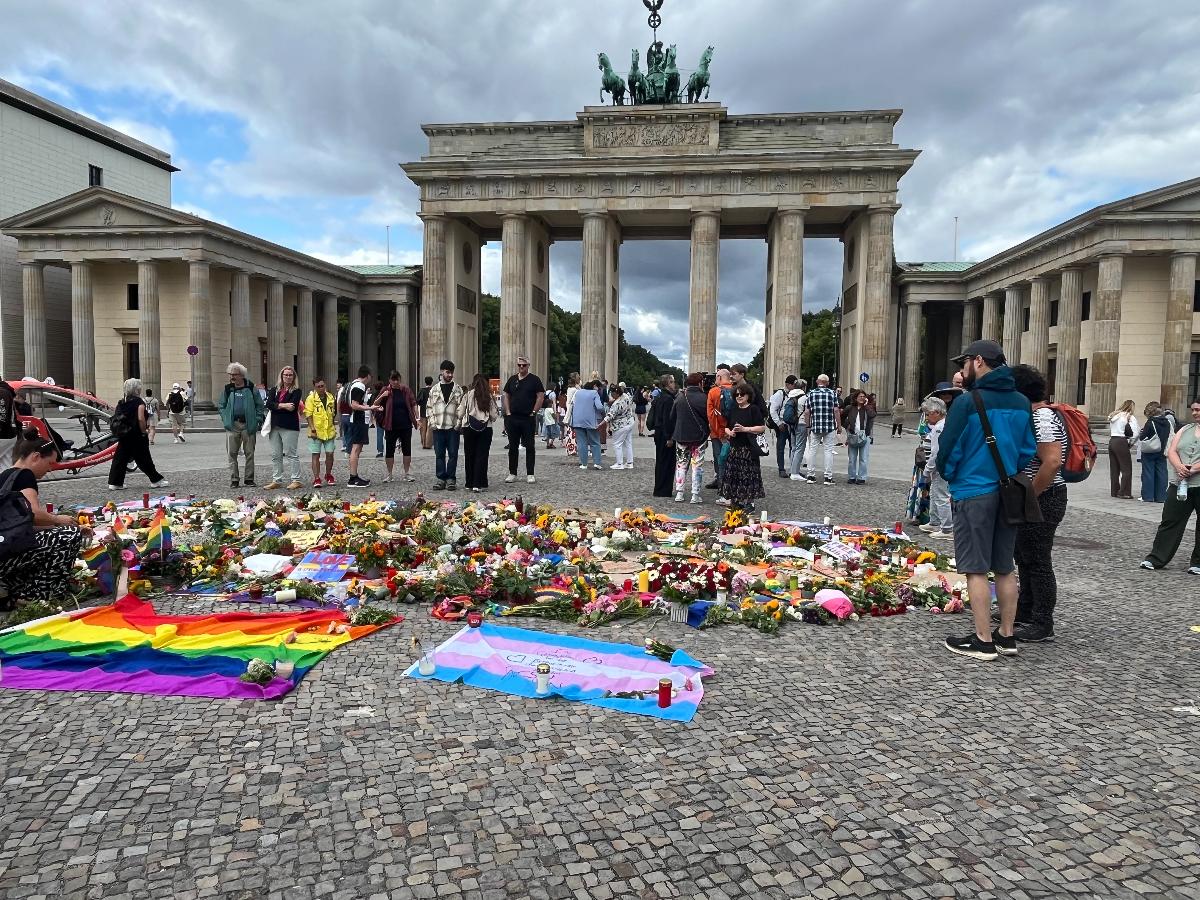
On Monday, people left tributes at Brandenburg Gate, a short walk from where the tragic events unfolded at around 10pm on July 25th.
Alongside flowers, candles and teddy bears, a banner read: "Today we mourn, tomorrow we fight. For her. For us. Together we are stronger". Another banner stated: "We are here! We are queer and we won’t disappear!"
'Attack on our safe space'
Those who attended the parade were still in shock. Jannik Wuttke, 28, had travelled from Duisburg to Berlin with his partner, David, 29, for CSD. The couple visited Brandenburg Gate on Monday to pay tribute to the victims.
He said the atmosphere at Pride before the attack was "lovely and joyful", adding: "I think it was one of the best years for me here, I really felt welcome and loved. It felt really good to be here again."
Jannik said he left the party about 30 minutes before the attack happened. Friends told him shortly after that the event had been cancelled, although it was unclear what had happened.
"So we waited until more information came out and then started to realise and started contacting friends, contacting family," he said.
The couple said some friends who were still at Tiergarten weren’t contactable until 4am, leaving them worried for their safety. They were relieved to find their loved ones were okay – but devastated by the violent attack.
"It’s an attack on our safe space," said David. "We feel that we are good here, that we can come here (to Berlin) and we can be ourselves and now it's a little bit scary."
"Right now it's mourning time and then the fight continues – and we keep standing up for LGBT rights," added Jannik.
'I'm so angry'
Journalist and Berliner Aaron Burnett, 39, was attending the event for the eighth year.
"It's hard to process even now, partly because it really was a beautiful, colourful, gorgeous day," he said. "There was a lot of love and positivity."
Berlin's CSD was first held in 1979 to commemorate the Stonewall uprising in New York, sparked by a police raid on the Stonewall Inn on Christopher Street in June 1969.
Since then, the event has grown into one of Europe's largest Pride celebrations, attracting visitors from around the world.
Aaron said Berlin's CSD is a "destination that people come to, it’s a beacon", adding: "And y'know some asshole decided that he was threatened by this and decided he wanted to attack that beacon, which of course is really upsetting."
Prosecutors said the presumed perpetrator had previous convictions for causing bodily harm, extortion and robbery and had attempted to join the Islamic State extremist group in Syria.
Aaron said German authorities have many questions to answer. "Obviously we’re looking at a police security system that failed, we’re obviously looking at a justice system that clearly failed to protect people and protect our society," he said.
"The fact that he had been arrested before, the fact he had been convicted before. The fact that he was an IS sympathiser, well known within police circles. The fact that he was let out by the judge in Berlin on probation...I’m angry, I’m so angry. This was a massive failure."
Despite the horror, Aaron said the LGBTQ+ community in Berlin will emerge stronger.
"We have to keep living our lives and being fabulous and being iconic because that’s how we ultimately win," he said.
'No racist interpretations'
Other CSD attendees came to Brandenburg Gate to pay their respects over the weekend and on Monday.
Rebecca, 27, was in Berlin on holiday from Birmingham, England, to celebrate the CSD. She was enjoying the party with friends on Saturday night when the event ended abruptly.
"We didn't know what was going on," she said on Monday. "We started to go back to our hotel and then as we got back we saw the news and there were so many sirens everywhere. It was really strange."
Lou Girault, 23, was visiting Berlin from France with friends for the Pride event. They attended the parade but did not know the extent of what happened until Sunday.
"In the morning, we saw the news and we were kind of shocked," she said. "We are a big group but some of us were scared to go out the next day because the police didn't know where the attacker was."
As mourning continues, some members of the queer community have warned against allowing the attack to fuel anti-Muslim sentiment or be used to undermine Berlin's diverse communities.
In an X post, the far-right Alternative for Germany (AfD) co-leader, Alice Weidel, accused Chancellor Friedrich Merz (CDU) of insufficient action against "migrant violence".
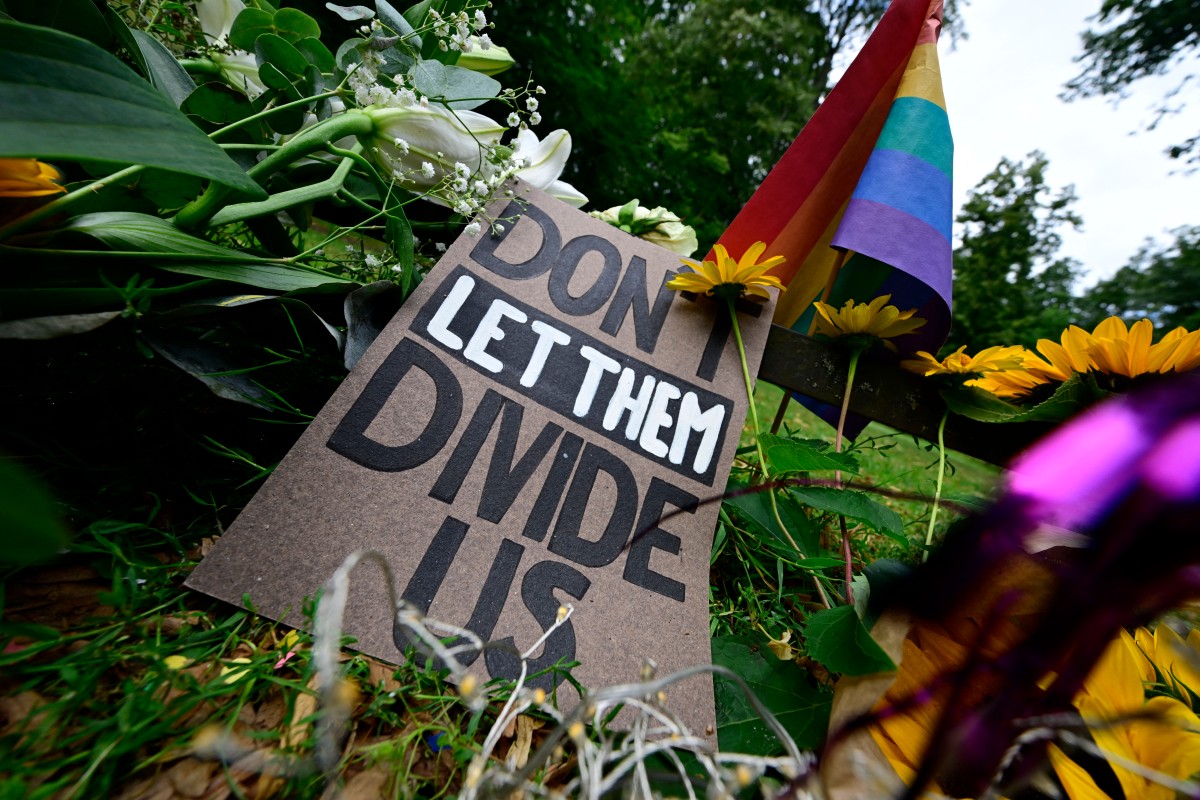
During a vigil on Sunday at Brandenburg Gate held in solidarity with the victims, one banner read: "My queer grief won't be instrumentalised for your Islamophobia."
Another banner laid down at the makeshift memorial said: "Rage, grief, no racist interpretations."
Berlin is 'city of freedom'
Politicians across the political spectrum have paid tributes to the victims of the attack, which comes two months before Berliners elect a new city-state government.
Werner Graf, the Green party's mayoral candidate in Berlin, said he was mourning the loss of the victim and his thoughts were with the injured.
"My sympathy goes out to everyone affected – those who were at the scene and had to endure this horrific attack, as well as the loved ones who are mourning and worrying about the victims," he said. "I hope you all find the strength to get through this terrible time.
"At the same time, as a member of the LGBTQIA+ community, I mourn with my community for the joy and love that defined the CSD in Berlin – and which ultimately gave way to horror and fear.
"On Saturday, we experienced together that our solidarity and our community represent a force capable of moving mountains, yet at the same time, we are vulnerable and exposed to attack."
Graf called for a thorough investigation into the circumstances but added that the city should remain united.
"Berlin is the city of freedom," Graf said. "No attack will ever change that."


