When Catholics Annul their Marriage — Personal Stories From France
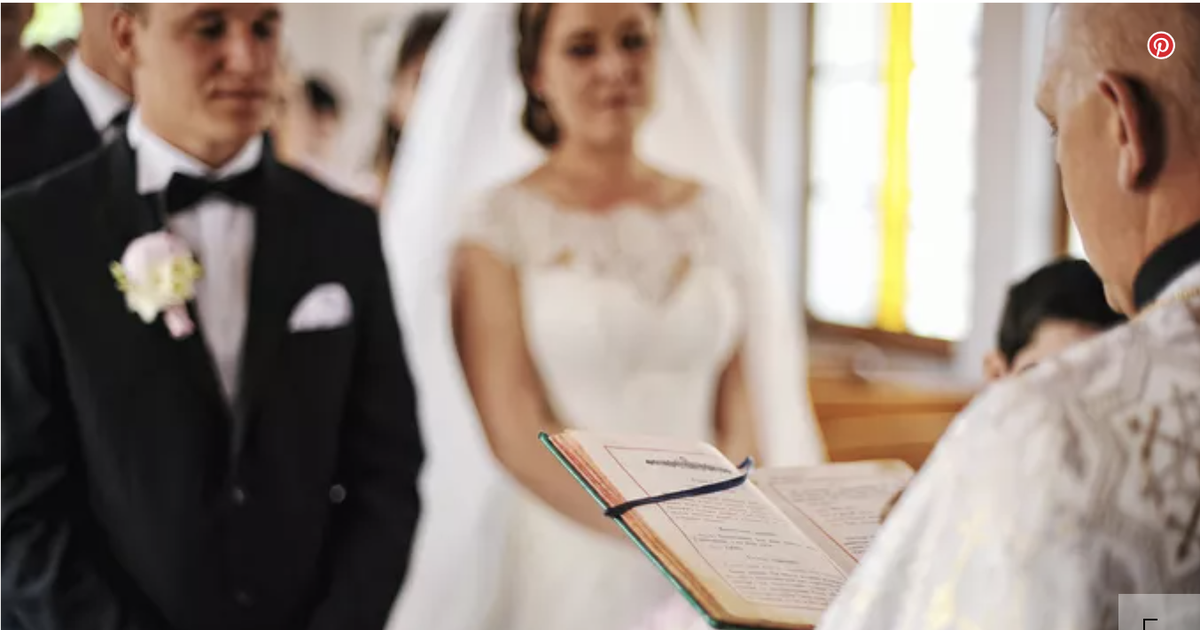
Elizabeth remembers her wedding night as a trauma. In the silent room, nothing unfolded as expected. “I can still see myself lying there, my wedding dress untouched, my head full of questions. My marriage was not consummated that night, nor on any of the nights that followed,” she says softly.
Elizabeth is 51 when she agrees to revisit her story. “I’m a believer—not perfect, but practicing. For me, marriage is a profound commitment. To my husband, to myself, and to God,” she says. She entered it very young, perhaps too young, with a simple idea in mind: “The traditional path: first marriage, then children,” in her own words. Reality caught up with her brutally.
For months, she listened as her husband cited headaches and fatigue to avoid physical contact. Then came the excuses, the silences. Eventually, verbal abuse followed. He accused her of being the reason for his lack of sexual desire, belittled her, and destroyed her self-confidence. “He even told me I had disgusted him with women, that it was my fault, that I had made him gay,” she whispers.
Until the day Elizabeth decided to stop. She hired a lawyer to file for divorce and, at the same time, walked into a parish seeking help. There, almost by chance, she discovered another possibility: annulment.
“It’s not a ‘Catholic divorce.’ It’s something else. You examine what happened at the moment of consent. And, if warranted, the Church erases the marriage,” she explains. Because that is the core of the process: the Church does not “undo” a union—it examines whether it was valid from the outset.
An invalid union
Unlike divorce, which acknowledges a rupture, ecclesiastical annulment declares that the marriage was never valid to begin with. Maître Sérée de Roch, a church lawyer in Toulouse, insists on this essential distinction: “Divorce ends a contract. Annulment states that the union was never valid,” he explains.
The reasons vary: immaturity, family pressure, absence of genuine consent, mistaken understanding of the person. The procedure takes place before a Church tribunal known as an officiality. “The judge conducts the inquiry according to the ancient inquisitorial process,” he says. “The questions can be intimate.”
Contrary to popular belief, the file does not travel to the Vatican: in the vast majority of cases, the decision is made locally, in the bishop’s name. Rome intervenes only in appeals. Every year, around 55,000 requests are filed worldwide, including 500 in France. More than 90% succeed. Once reserved for an elite, annulments have become more democratic. “The Church does not want to deprive itself of divorced people,” the lawyer observes.
“We’re going to help you,” promised the church lawyer who Elizabeth had consulted immediately. She had expected judgment; instead she found understanding. “It lifted a burden of guilt. I was told: this happens to many people.”
A few months were enough. Her witnesses were heard, her ex-husband summoned—a summons he ignored. Then the ruling came: the marriage was declared null due to “error concerning the person.”
“It was a decisive part of my reconstruction process,” she says today.
By contrast, the civil world still pulls her back into the past. She becomes upset recounting how, years later while buying an apartment, she heard her notary say: “Mrs. Elizabeth, divorced from…” “I find it shameful to have this traumatic episode thrown back in my face,” she says angrily.
Her only regret today? Not being able to remarry in church because her divorced husband never had his own first marriage annulled. Religious remarriage is impossible without first annulling the previous marriage.
Late clarity
Florence-Anne Ambroselli, also in her fifties, speaks of a “deep process.” An illustrator and founder of the Atelier de l’Enfant Jésus, she tells another story—longer, denser, almost dizzying.
Married at 21, pregnant, and unprepared, she entered a union several priests had advised against. “They’re heading into the desert with an empty canteen,” one of them even remarked in his homily—a prophetic phrase she did not yet hear.
Did her relatives know her fiancé was violent? No. “But they knew us well and sensed we weren’t good, not healthy, for each other. That our respective flaws would feed a toxic relationship,” she says.
At that age she believed in the power of will, the beauty of sacrifice, and the strength of honoring a commitment no matter the cost.
“I made a commitment and wanted to believe in it,” she says.
She insists on this point: it was not a casual marriage or a naïve illusion. It was a deeply inhabited choice, one she refused to back out on. “I had been taught that a promise has value. So I held on,” she says.
She held on for 14 years.
Fourteen years in which genuine love mixed with deep dysfunction. Yet very quickly she felt something was wrong. “After a year, we nearly separated,” she admits.
She stayed. Out of loyalty. Out of pride too, she now acknowledges candidly. “I wanted to prove everyone else wrong. That I had been right.” In that determination to persevere, she lost herself. “I lost my identity.”
Pregnancies followed one another; nine children were born. A large family, consistent with the ideal she cherished. But behind the image lay a darker reality: physical violence, control, imbalance.
“It wasn’t glorious,” she says simply. What stands out in her account is this late, almost merciless lucidity. Florence-Anne does not present herself merely as a victim. She examines her own role.
“I was fragile. I had enormous emotional dependency,” she repeats twice. She goes further back: a rape at 17, toxic relationships, damaged self-esteem.
“The ground had already been weakened,” she murmurs.When she finally left the father of her children, it was a wrenching rupture.
“I left with nine children and nothing,” she says. No bank account, no resources, a life to rebuild from scratch. And above all, one dizzying question: how had I ended up here?
“A procedural defect”
That is where annulment took on another meaning. “The Church does not look at the years of marriage. It looks at the moment of ‘I do,’” emphasizes Maître Sérée de Roch.
This reexamination forced Florence-Anne to return to the beginning—to revisit every stage, every ignored warning sign, every unrecognized wound. A letter from her grandfather opposing the union, another from a priest close to the family, her relatives’ doubts, the rushed wedding: everything resurfaced.
The procedure lasted years. It resulted in a 15-page brief drafted with her lawyer, multiple interviews, and a five-hour hearing. “It was very factual. But at the same time, very gentle,” she says. Immaturity was cited, but what ultimately carried the most weight were those letters of opposition—almost like a procedural defect.
She had expected to justify herself, to be blamed. The opposite happened. “I was never accused by anyone. I was helped to understand,” she says gratefully.
Gradually her perspective changed—not only on her ex-husband, but especially on herself.
“I had to learn to forgive myself.” She describes that as the hardest step: accepting that she had “misused her freedom,” acknowledging her blind spots, her pride, her wounds. Naming what within herself needed repair.
“It was a work of mercy,” she says, deliberately borrowing spiritual language. A work that went beyond the legal sphere. One touching intimacy, body, and soul.
Still, Church lawyer Maître Sérée de Roch issues a warning: “Saying that a marriage never existed can be traumatic, particularly for children.” The children, however, remain considered legitimate by the Church.
The annulment was granted in 2019. But it was not an ending. Rather, a stage in a broader journey. “My dignity was restored,” she says, weighing each word.
The dignity of a woman, a mother, and a believer. Years later, she remarried. Differently. “This time, I was truly free,” she says. Today her work as an illustrator—religious icons, announcements, scenes of daily life—bears the mark of that journey.
“It’s also my rising again,” she says quietly. As if, at the very heart of the fracture, something had eventually rebuilt itself. Slowly. Deeply.
An introspective journey
There are also those whose voices are heard less often. Like Judicaël B., 38, an executive in western France. His marriage, celebrated after two years together, had seemed solid. “We checked all the boxes. Same faith, same vision of family.” But very quickly a profound mismatch emerged.
“She didn’t want children. She admitted it after the wedding,” he says regretfully. A fundamental disagreement concealed at the moment of commitment. The marriage unraveled.
“I felt I had been deceived about something essential.”
A priest friend told him about annulment. At first it felt abstract, almost legalistic. It became introspective. “You’re asked very personal questions. Sometimes uncomfortable ones. But it forces you to understand what really happened,” he says. Lack of intent to have children is grounds for annulment in the Catholic Church.
For him, the hardest part was not the procedure but what came afterward. “Accepting that this marriage never existed—it’s violent. It calls part of your life into question.” When the annulment was pronounced, relief did not come immediately. Quite the opposite.
“I thought it would free me. In reality, it destabilized me at first.” The ruling acted like a symbolic fracture. To say the marriage had never existed struck him head-on. “It’s like being asked to erase several years of my life,” he says.
He hesitates, searching for words. “I almost regretted starting the process.” Not because he disputes its basis, but because its implications exceeded him. “Annul, erase... it made me feel as though a part of my story was being denied. As if none of it had counted,” he continues.
That feeling opened another kind of vertigo. If the marriage had never existed, what should he do with the memories, shared moments, sincere hopes? “I had to reconcile that. Understand that it wasn’t ‘nothing,’ even if it wasn’t a valid marriage.”
A slow, almost philosophical effort to give that past a place without allowing it to define the future. With hindsight, his view has softened. “Today I understand the process better,” he says reassuringly. “It’s not denial—it’s naming things differently.”
He insists on that nuance. Annulment does not erase lived history; it proposes a different reading of it. “It forced me to be more lucid. About myself, my expectations, what I had refused to see.” But he warns: “It’s a demanding path. You don’t come away untouched from a sentence like ‘this marriage never existed.’”
A phrase that initially sounded to him like violence before gradually becoming a form of truth he could live with. A truth that, rather than closing the story, shifts toward what comes next.