Skip to content
Sunday 2 August 2026London --:--Frankfurt --:--Zurich --:--
NewslettersSearchEN · DE
City PM

European business, markets and politics

FTSE 100
10,868.05
-0.27%
DAX
25,629.24
+0.07%
CAC 40
8,509.64
+0.28%
STOXX 50
6,358.01
+0.21%
  • Europe
  • Markets
  • Business
  • Economy
  • Technology
  • Politics
  • Opinion
More
GermanyFranceBankingAIEnergyFintechPropertyCapital Markets
  • Germany
  • France
  • Europe
  • Markets
  • Business
  • Economy
  • Technology
  • Politics
  • Opinion
  • DE
Tuesday 22 October 2019 4:47 pm  |  Updated:  Tuesday 22 October 2019 4:53 pm

Four ways the Brexit deal could change Britain’s economy

By: Harry Robertson

Add as a preferred source on Google
Four ways the Brexit deal will change Britain’s economy
BRUSSELS, BELGIUM - OCTOBER 17: British Prime Minister Boris Johnson (L) and European Commission President Jean-Claude Juncker give statements to the media prior to a summit of European Union leaders on October 17, 2019 in Brussels, Belgium. Officials announced earlier in the day that EU and UK negotiators have reached an agreement on the United Kingdom’s departure from the EU. (Photo by Sean Gallup/Getty Images)

MPs are once again poised to vote on Boris Johnson’s “great new Brexit deal,” following the official release of the Withdrawal Agreement Bill by the government.

Read more: Government threatens to pull Brexit bill if MPs vote against timetable

Should the House of Commons today pass the bill alongside a motion to ram through legislation at short notice, then by the end of 2020 Britain’s economic model will look radically different.

But what are the key economic elements of the bill? And what effect do experts think they will have?

No protection against no-deal Brexit

The bill says Britain’s existing economic relationship with the European Union will stay in place until the end of December 2020.

It gives the government until then to negotiate a free-trade agreement with the EU. If one is not reached, Britain will crash out of the bloc on to World Trade Organization terms, with higher tariffs on EU trade.

This issue has vexed MPs from across the House today, causing a major obstacle for the Brexit deal. Former Conservative chancellor Philip Hammond told the Times the bill was “a camouflage to a no-deal Brexit at the end of 2020”.

EU chief negotiator Michel Barnier today told the European parliament a trade agreement could take “three years or more”.

Paul Dales, chief UK economist at consultancy Capital Economics, called the chances of a deal being struck in this time “very slim”. He said: “To do one in 18 months or so would be a Herculean effort.”

Yet many Brexiters are thought to be keen on this aspect of the bill as it denies MPs the chance to extend Britain’s stay in the EU once again.

‘Level playing field’

To the fury of many on the Labour benches, references to a “level playing field” – alignment with the EU on things like labour and environmental standards – have been removed from the withdrawal agreement.
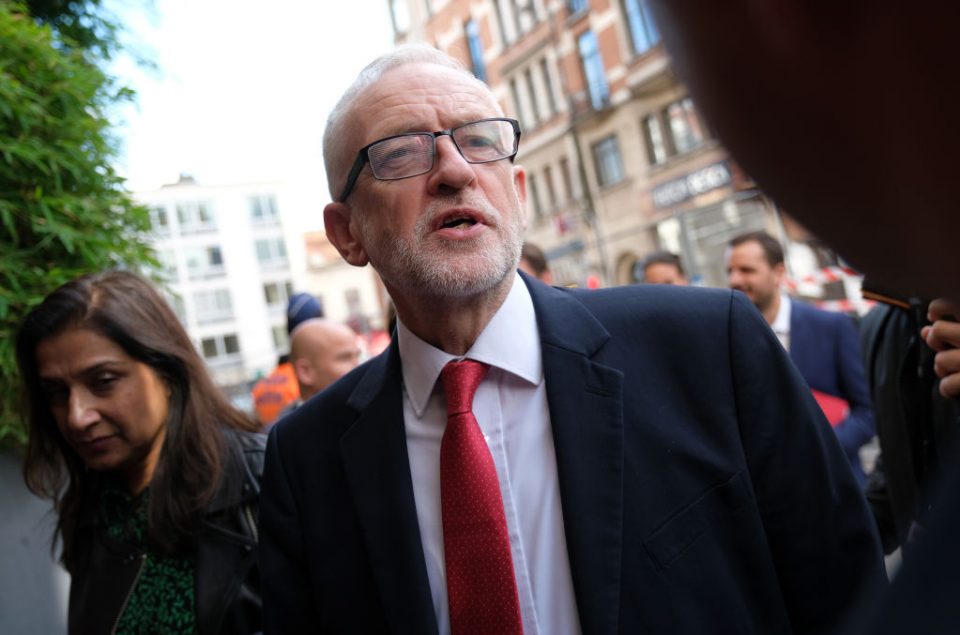
Jeremy Corbyn has criticised the Brexit deal bill for not protecting workers' rights
Jeremy Corbyn has criticised the Brexit deal bill for not protecting workers’ rights (Image: Getty)

They instead appear in the non-binding political declaration, which says any “future relationship must ensure open and fair competition, encompassing robust commitments to ensure a level playing field”.

Read more: Donald Tusk opens door to Brexit extension ahead of key vote

Read more

OBR misery makes tax rises inevitable

Treasury Department building with government bonds signage, representing financial management and bond issuance responsibi...

Charlotte Kude, head of government affairs at the free-market Adam Smith Institute, said the change was “good news”. She said: “This means the UK will have more power to set our own regulations and be able to negotiate comprehensive free trade deals after we leave.”

Workers’ rights

One of the Labour party’s chief objections to the bill is that without level playing field provisions, there is no legal protection for workers’ rights.

All the withdrawal agreement says is that a minister would have to notify the House if the government was seeking to change labour standards.

Andrew Pendleton, director of policy at left-leaning think tank the New Economics Foundation, warned that “once outside Europe, whatever is written in the bill can be changed in future by a UK government that wants to weaken employment protections”.

This “should be enough to spook any MP that cares about these issues into demanding that workers’ rights are upheld and protected as we leave,” he said.

Yet Kude said: “The UK already has more stringent labour regulation than European Union directives mandate. This will continue after Brexit.”

Irish Sea border

The bill outlines the new plan for Northern Ireland, which will remain aligned to the EU customs union even if the rest of Britain dramatically diverges.

It is one of the major differences between Johnson’s bill and Theresa May’s. It places a border between mainland Britain and Northern Ireland – down the Irish sea – and scraps the so-called backstop.

Ann McGregor, chief executive of the Northern Ireland Chamber of Commerce, said the arrangement will bring with it new difficulties, chiefly paperwork.

“I will be very different from what we have now – adding a further administrative burden to businesses and slowing down the on-time delivery model that many companies operate.”

Read more: Government borrowing jumps by a fifth in run-up to Brexit

However, Dales said that in some ways the arrangement is the “best of both worlds” for Northern Irish businesses, giving them “one foot in the EU, one foot in the UK”.

(Image credit: Getty)

Read more

Singapore on Thames or the Sick Man of Europe?: The Economics of Brexit Ten Years from the Referendum 

UK-EU Brexit negotiations meeting with officials discussing trade agreements and policy impacts in a formal conference room

Share this article

  • Facebook
  • X
  • LinkedIn
  • WhatsApp
  • Email

Similarly tagged content:

Sections

  • Markets & Economics
  • News

Categories

  • Business
  • Economics
  • Politics

Trending Articles

  • Gino D’Acampo restaurants face HMRC winding-up order

  • BP quits North Sea after tax grab

  • Goldman Sachs criticises £1.45m paternity payout

  • Healey announces early Budget

  • Revolut will become $1 trillion company by 2035, says early VC backer

More from City PM

  • OBR misery makes tax rises inevitable

    Opinion
    Treasury Department building with government bonds signage, representing financial management and bond issuance responsibi...
  • Singapore on Thames or the Sick Man of Europe?: The Economics of Brexit Ten Years from the Referendum 

    Opinion
    UK-EU Brexit negotiations meeting with officials discussing trade agreements and policy impacts in a formal conference room
  • Exclusive: Government to reject Reform’s offer to cover Farage by-election cost

    Politics
    Nigel Farage speaking at a podium, dressed in a suit, addressing an audience at a business conference event
  • Tale of two cities: London leaps ahead in global finance but domestic growth stalls

    Economics
    Getty Images number 2154617464 depicts a relevant scene for the articles unidentified content, suitable for business context.
  • Manchester was Burnham’s rehearsal – now get ready to pay the bill

    Opinion
    Manchester skyline with iconic landmarks during a Belfast speech event, highlighting urban landscape and architectural bea...
  • A pragmatic plan for Thames Water

    Opinion
    Thames Water infrastructure with pipes and maintenance workers, highlighting water management efforts in London
  • Burnham risks £4bn bill in Thames Water special administration

    Politics
    Thames Water infrastructure with pipes and maintenance workers, highlighting water management efforts in London
  • Vance says ‘broken’ Britain must rebuild economy, not just change PM

    Politics
    Andy Burnham returns to Parliament
CityPM

Independent European business, markets and political news for decision-makers.

Morning Briefing

Europe

  • Germany
  • France
  • Europe
  • UK & Ireland

Business

  • Markets
  • Banking
  • Technology
  • Energy
  • Property
  • Fintech

Editorial

  • Opinion
  • Editorial Policy
  • Corrections
  • Contact

Company

  • About City PM
  • Privacy Policy
  • Terms of Use
  • Cookie Policy
© 2026 City PM Ltd · Published by CityPM Media, Bahnhofstrasse 65, 8001 Zürich, Switzerland
Privacy · Terms · Cookies · Facebook