
Forget finishing the current seasons; this is a time for sport to ponder far bigger questions


The now globally iconic slogan “Keep Calm and Carry On” was originally used on a 1939 British motivational poster, during the country’s preparations for World War II.
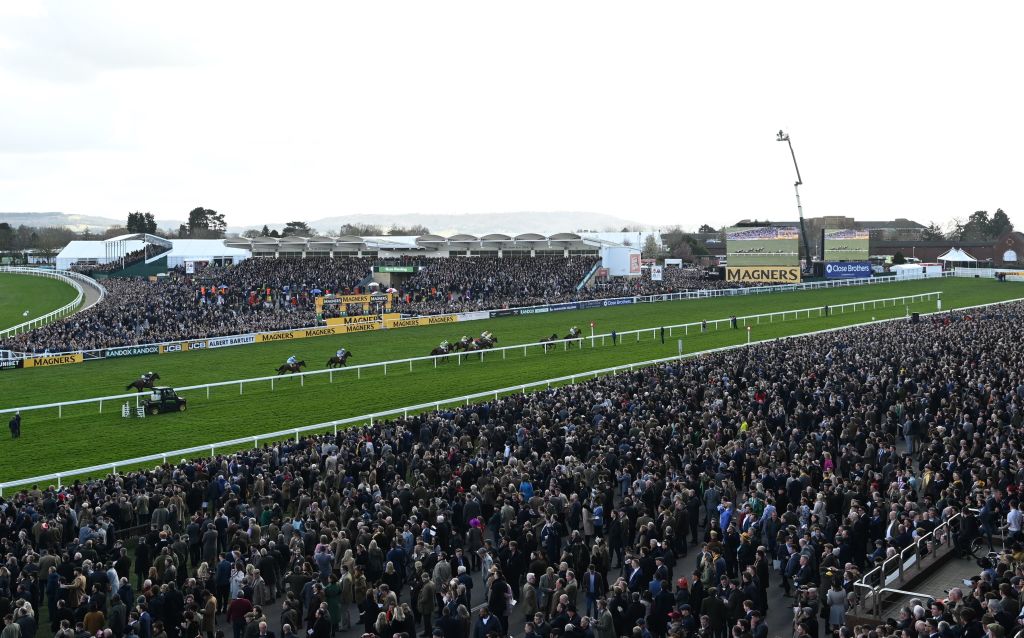
With Covid-19’s outbreak and spread across Eurasia, much of British sport has appeared intent on summoning the spirit of this old poster. From the Cheltenham Festival to Champions League matches to Park Runners, British wartime gumption seems to have been sport’s — and, for that matter, government’s — chief orientation.
We now know that such optimism was at best misplaced and at worst downright dangerous.
Yet as Britain’s new reality dawns, it is towards “keeping calm and carrying on” that British sport continues looking.
Indeed, some would have us believe that a full, post-virus Saturday programme of well attended Premier League matches will be our equivalent of the post-World War II street parties.
If we are incredibly lucky, some of us might get our wish. However, in truth such a notion is as fanciful and naive as it is unlikely.
Experiences in East Asia already illustrate that we will struggle to finish last season’s sports leagues, let alone be ready on time to start next season’s.
In the meantime, we should unfortunately anticipate sporting casualties along the way.
Cash flow is already a problem for many teams, clubs and businesses in sport. The longer matches aren’t played, the bigger this issue becomes.
Through a combination of government assistance and innovative thinking, one nevertheless hopes the survival rate will be high, although the signs are not encouraging.
At the same time, we are already seeing some dramatic shifts in the ways that people engage with and consume sport.
Rather than spending time at a match or a race, people are instead competing in esports and other online digital contests.
Time will tell whether this is a temporary fix for those who need their weekly dose of competition, or a fundamental change in sport as we have known it.
Reset moment for sport
In this context, keeping calm and carrying on as normal may therefore soon not be an option.
Dealing with short to medium-term challenges is, of course, what sport must deal with right now. Yet at the same time the seeds of its future are also being sown.
Policy makers and stakeholders must start thinking about what happens once the pandemic begins to dissipate.
The phrase “reset moment for sport” is already becoming well worn, though few have offered to answer the question “reset to what?”.
Some perceptive observers have alternatively asked, “who will do the resetting?”, though again there seem to be plenty of questions but few answers.
During normal times, one would expect government to provide some kind of policy direction on the future direction of sport. However, it is rightly and more importantly engaged with other matters right now.
Even so, some signals from the Department for Culture, Media and Sport would be helpful in provoking action from within the industry.
Public policy is not just a matter for government, it is something that governing bodies, competition owners, event managers and representative bodies should devote themselves to shaping.
As such, in thinking about the future it is vital that such stakeholders are all involved in shaping what becomes of British sport in the coming months and years.
Gargantuan task
Without a collaborative, consensual view of the future, of policy and of the industry, the new normal for sport could be, well, just the same as the old normal, with which many have been dissatisfied.
Even worse, it could be a hyper-normalised version of normality in which only the strongest survive and the weakest, less financially viable fall by the wayside.
If this is what Britain wants for the future of its sport, then so be it. However, one suspects that this is not the case.
Indeed, one shouldn’t lose sight of the fact that, post-coronavirus, sport is likely to play a vital role in helping stitch the country back together again.
As house-bound citizens re-emerge into the world, sport will play a key role in re-establishing people’s physical and mental well-being, in turn helping to restore a sense of personal and community identity.
Perhaps some of us previously hadn’t noticed it, but sport has always been a sturdy platform upon which social cohesion is built.
At the same time, sport is a source of employment, a driver of export and taxation revenues, and an increasingly important contributor to the nation’s GDP. Among the lessons the virus has taught us is that livelihoods are at stake when the existence of sport is threatened.
Many people around the world still admire Britain’s pragmatism and its desire to keep calm and carry on. However, to do this now would be a disservice to the country’s sporting future.
The long-term strength and prosperity of the sector cannot be decided once the pandemic has relented. Instead, this gargantuan task must begin now.
Certainly, we should try to stay calm, but carrying on with what sport was and currently is requires action.
Simon Chadwick is Professor of Eurasian Sport and Director of the Centre for the Eurasian Sport Industry at Emlyon Business School.