
Forget Apple Watch: Intelligent virtual assistants are the next tech revolution

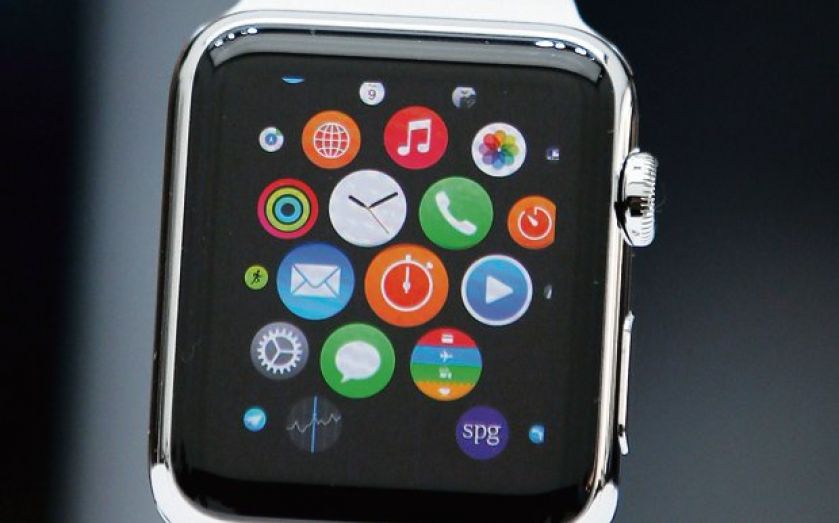
THE APPLE Watch is just the latest exciting development in wearable technology. But the prospect of consumers interacting with Siri on their smartwatches also hints at another impending revolution in how we access digitised knowledge. Today, we stand on the brink of the third wave of computing – where machines become capable of learning and self-reflexively developing knowledge about the people and objects around them.
With the creation of so many data points defining our behaviours, interactions, activities, and locations, the next step in emerging technologies is a service that consolidates our experience. Think of it as a mash-up of the powerful natural language processing of IBM’s Watson, the voice-activated intelligent assistance of Apple’s Siri, the productivity enhancement of Google Now, and the biometric and physiological quantifying of the self through wearable technology.
Combine it all together and you have a Virtual Assistant (VA), arriving sometime in the next five years. Companies at the forefront of this development, like Viv Labs, are moving beyond screens and social: the VA will be the new gateway to the internet and all the people and things connected to it. For pop culture references, see intelligent computers like Space Odyssey’s HAL, KITT from Knight Rider, or J.A.R.V.I.S. from the Marvel movies.
I’m involved in Project Virtual Assistant, a research collaboration between the Institute of Management Studies at Goldsmiths, University of London and media agency Mindshare. We seek to explore and understand the opportunities and challenges of bringing the VA of the future to life for users, regulators, and service suppliers.
Researching the future in the present is never easy and requires innovation in both methods and methodology. We worked intensely with 12 consumers for six weeks, running workshops and experiments, in real world settings, with the latest face and emotional recognition technologies, beacon technologies like those on the revamped Regent Street, wearables, hearables, trackables, and even scent. And then we sought to understand what people would really want from a VA. Testing the results, we surveyed 1,000 smartphone users.
Our practical output is a design blueprint for a next generation VA. But in many ways, the outcome could also be a fundamental transformation in how we view the potential power and implications of consolidated digital technologies that are right around the corner. On a magnitude scale, if social media and big data are minor tremors, VAs are earthquakes of impending disruption to individuals, families, and communities.
VAs will not be divorced from the actual real-life experiences, actions, and choices of the people that use them. If you are walking home on a street with a high level of assaults or robberies, your VA will proactively alert you and propose an alternative route. If you are an alcoholic on the wagon, your VA will alert your sponsor when you drink a beer or enter a bar. Initially, we will synch our mental and physical wellbeing with our VAs. But just as wired web connections or smartphone cables are disappearing, the progression of VA connectivity to wearables or hearables – and then implants – is inevitable.
In families, the VA will automatically alert parents when their child connects with a suspect profile showing a 97 per cent correlation with likely grooming or bullying behaviours on a social network. This is no different to how financial institutions trust their fraud algorithms to be faster, more reliable and comprehensive than any human in assessing real-time risk in credit card transactions. You may not want to offload your parenting responsibilities to your VA, but you may be grossly irresponsible if you don’t.
Call it persuasive technology, moral enhancement, or algorithmic discretion, but this is how VAs will integrate themselves into every facet of your life. You may get annoyed when your bank cancels your credit card while you are abroad, but is anyone willing to cut their credit cards off from automated fraud detection services? VAs will not feel invasive or manipulative. Like a soft warm blanket, they will wrap themselves around our personal, community, crowd, economic, political, and environmental interactions.
End users will be individuals, but organisations, cities, communities, families, even organised crime may link and integrate VAs for collective services. Any brand, particularly those engaging directly with consumers, needs to be thinking now about how they are going to fit into this next communication revolution.
Our research suggests this trajectory is inevitable, fuelled by the perfect storm of the maturity and exponential growth of relevant digital technology, and humanity’s tremendous innovation in harnessing its potential powers.
Dr Chris Brauer is director of innovation in the Institute of Management Studies at Goldsmiths, University of London. He’s announcing the results of Project VA at the RE.WORK summit on 18 September in London www.re-work.co/tech