

First-hand account: my observations on China’s return to work

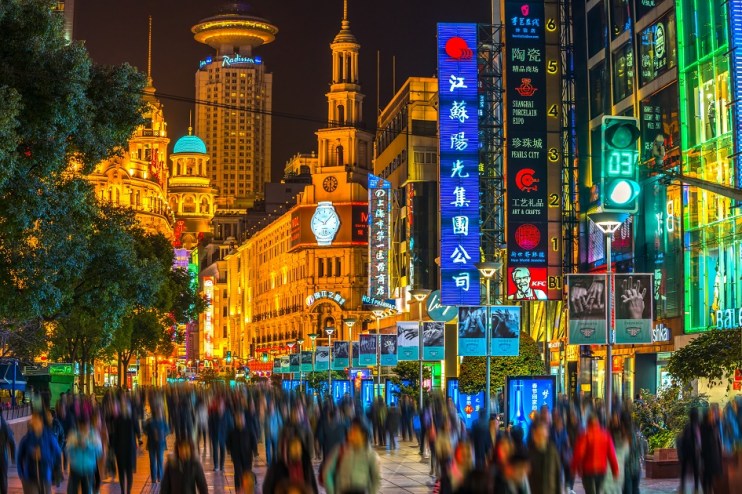
Emerging markets analyst Shuyu Gao provides a personal account of virus containment measures on her return to China, and reviews the recovery in activity.
Amid the global spread of Covid-19, with lockdowns necessitating working from home more broadly, I decided to return to China and work from my family home in Nanjing. At the time, China appeared to be on the path to recovery from the healthcare crisis, while Europe was at a much earlier stage.
As an emerging markets analyst focused on China A-shares, it also provided the benefit of being on the ground for a longer period. Here is what I have found.
Has China taken measures to limit imported cases of Covid-19?
I was aware when I booked the trip to China that there would be a quarantine period to follow on arrival. This required 14 days and nights in a hotel designated by the government, to be paid for out of my own pocket.
Few people will have taken a plane in the past month, and while perhaps to be expected, it was an unusual sight to see the crew dressed in full personal protective equipment (see photo below).

Upon arrival at my quarantine hotel, I was tested for Covid-19. Thereafter, my temperature was tested twice a day for two weeks. I also had to register on a Tencent mini app, which gave me a QR status code red.
The experience after quarantine
After 14 days, and having cleared a second test for the virus, I was free to check out, at which point the medical staff updated my QR code on the app, which turned to green (shown below).
I was later granted another green QR code for the city of Nanjing; after my mum got a call form the local Nanjing government to check on the arrival time of my train.

These QR codes were checked on entry to “check-in” at places such as visiting the bank or a supermarket. My temperature was often taken, and this was common in both Guangzhou and Nanjing.
There is another QR code which I had to scan at certain places; it tracks people’s movements, which proves highly effective when carrying out contact tracing in order to protect the public.
In Guangzhou, everyone is required to wear a mask in public. For a brief moment I was not wearing my mask in the lift and on the metro. In both instances I was detected by cameras and asked to put one on.

At the arrival gate in Nanjing, there was also an infrared temperature monitor. Anyone with a high temperature could be identified – a similar approach was in use at a shopping centre in Nanjing.

There is much focus on mitigating the risk of a second wave of outbreaks in China, now that the country has largely re-opened after the lifting of lockdowns. My experience suggests that this is a risk the authorities are taking very seriously.
Gauging the recovery in consumption
Before leaving Guangzhou, I took the opportunity to look around a few shopping centres and restaurants. There were many people going about their daily lives, but social distancing measures were evident in most restaurants, and the shops were relatively quiet, albeit a Friday afternoon.
The picture in Nanjing was very different, however, despite the fact that it is a lower tier city; Nanjing has a population of 8.5 million people while there are 13 million in Guangzhou. This was perhaps because it was a weekend, but I also suspect because Nanjing saw far fewer cases of the virus than Guangzhou and so the recovery has been swifter.
In the shopping centres I visited in Nanjing, there were far more people; some of the luxury brands had queues outside of their stores.

Restaurants, meanwhile, displayed minimal social distancing requirements and in certain cases were full. But many restaurants were still closed. The virus appears to have accelerated the consolidation trend: the popular restaurants survive and take market share, while the weaker ones are leaving the market.

Gym classes were full. Meanwhile, students were back at school and university in batches.
I was positively surprised by what I saw in Nanjing. But there were signs of the crisis, be it temperature checkpoints and masks everywhere, or an increase in the number of small stores available for rent.
What have I learned?
It is impossible to draw any meaningful conclusion based on my first few days back in China. I have provided a snapshot of activity in two cities in a country with over 1.4 billion people. My comments in that sense are of course anecdotal.
Experiencing the measures to prevent imported cases of Covid-19, and to limit domestic transmission was on one hand reassuring.
It is certainly true to say that life is not back to what we previously called “normal”. Things appear to be moving in that direction, although it may be the case that we never see a full normalisation in that sense; some change may be long lasting. The differences in the normalisation between Guangzhou and Nanjing also suggest that the recovery and exit from restrictions may be happening at a different pace across China.
For more:
– Economies in free fall as hopes fade for a V-shaped recovery
– Will Covid-19 prove a pivotal moment for climate change?
– Is the market recovery a false dawn?
Important Information: The views and opinions contained herein are of those named in the article and may not necessarily represent views expressed or reflected in other Schroders communications, strategies or funds. The sectors and securities shown above are for illustrative purposes only and are not to be considered a recommendation to buy or sell. This communication is marketing material.
This material is intended to be for information purposes only and is not intended as promotional material in any respect. The material is not intended as an offer or solicitation for the purchase or sale of any financial instrument. The material is not intended to provide and should not be relied on for accounting, legal or tax advice, or investment recommendations. Reliance should not be placed on the views and information in this document when taking individual investment and/or strategic decisions. Past performance is not a guide to future performance and may not be repeated. The value of investments and the income from them may go down as well as up and investors may not get back the amounts originally invested. All investments involve risks including the risk of possible loss of principal. Information herein is believed to be reliable but Schroders does not warrant its completeness or accuracy. Reliance should not be placed on the views and information in this document when taking individual investment and/or strategic decisions. The opinions in this document include some forecasted views. We believe we are basing our expectations and beliefs on reasonable assumptions within the bounds of what we currently know. However, there is no guarantee than any forecasts or opinions will be realised. These views and opinions may change. Issued by Schroder Investment Management Limited, 1 London Wall Place, London, EC2Y 5AU. Registration No. 1893220 England. Authorised and regulated by the Financial Conduct Authority.