
Sunday Talk: Mark Ridley, CEO of real estate giant Savills


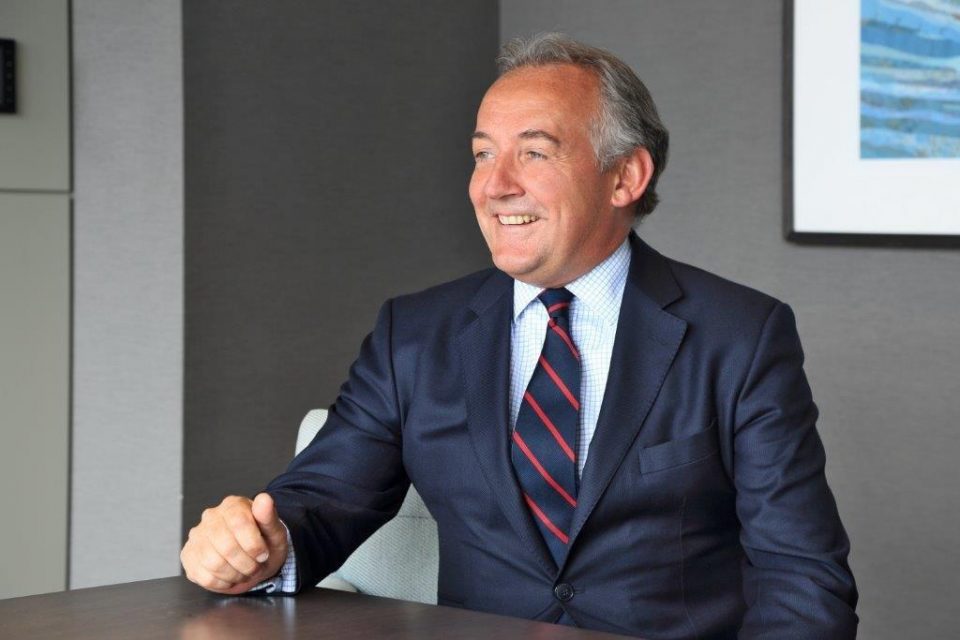
In a wide-ranging interview, City PM discusses fundraising challenges, Brexit and the shift to home working with Mark Ridley, who has been the group CEO of Savills since 2019, the London-based, LSE-listed real estate services giant which had a revenue of £1.93bn in 2019 and currently employs around 40,000 people in the UK and across Europe.
The pandemic has chased office workers into a work-from-home model. How do you see the City’s future in 2021? Empty offices?
No, office workers will return, in fact we have undertaken a number of surveys, which indicate that 89% believe that the office will remain a necessity. As time spent away has increased through the pandemic, the majority wish to return, albeit with a desire to work more flexibly 1 or 2 days per week. This makes it difficult for companies to downsize their offices significantly, as they will still need space for all to be accommodated on the days when everybody is in the office.
So in the short-term, how has the pandemic impacted your focus on the office sector?
At the moment we are seeing a very typical recessionary rise in small sub-lets, much of which is secondary space which we anticipate will be reabsorbed by companies as trading conditions improve. Another typical recessionary trend is the delay of development starts, meaning when occupier requirements are reactivated, there will be even fewer high quality buildings available for tenants to choose from encouraging pre-letting activity. We are seeing this in other parts of the world as the effects of the pandemic reduce.
Ridley’s career at Savills in a snapshot
- 1996: Joined Savills
- 2008: Chairman of Savills commercial
- 2013: CEO of Savills UK
- 2014: CEO of Savills UK and Europe
- 2018: Joins the board, appointed deputy group chief CEO
- 2019: Group CEO following the retirement of Jeremy Helsby
There has been much discussion about companies reducing the size of their London offices in favour of more regional locations.
Yes, a ‘hub and spoke’ model. Whilst some will no doubt consider this, it can prove very costly to operate and there is perhaps more likelihood of companies giving their staff access to serviced or shared offices, or just empowering employees to work from home more flexibly, which is definitely the demand we are seeing from the results of our surveys. The war for talent continues and the property adage ‘location, location, location’ will continue to drive the markets.
So is it still smart to invest in retail and hospitality in an office-rich area, such as the City?
Retail and leisure are undoubtedly the most challenged part of the London property market, with the online trend accelerating during the pandemic as well as fewer office workers and limited tourist numbers. Once the pandemic has passed we do expect footfall and spend to recover, we are already seeing record sales recovery in some markets in Asia Pac and there will be pent up consumer demand. In the UK, it is clear that local and suburban retail is performing better than the City, but this will rebalance, particularly when international travel restrictions are lifted.
Most investors are cautious at present but are starting to see value and I would expect volumes to increase this year on the back of further news on delivery of vaccines. While there are still structural challenges facing parts of the retail sector we are seeing demand from retailers who want a flagship store in London and who have more choice than historically was the case.
In terms of fundraising, the pandemic has turned the entire investment climate upside down. How difficult is it currently to raise fresh funds from, let’s say, large institutional investors and pension funds?
It is very polarised, clearly the pandemic hasn’t helped and has made institutional investors very cautious. October alone saw the third highest level of monthly redemptions ever experienced by open-ended UK real estate funds. It is particularly difficult launching new funds, especially blind funds.
Nevertheless, there remains plenty of capital out there looking to allocate to real estate, but it has been hesitant given the turbulence resulting from Covid. However the market has seen some successful fundraisings, particularly for specialist funds focused on logistics, build to rent and supermarkets. Our own funds are well established and have been relatively stable – we have seen some outflows but also new applications too.
“October alone saw the third highest level of monthly redemptions ever experienced by open-ended UK real estate funds. It is particularly difficult launching new funds.”
Mark Ridley
Where do you see opportunities for growth, currently?
At the moment we are seeing both domestic and non-domestic investors move to a risk-off strategy. This favours well-let CBD offices, big logistics, datacentre, multi-family housing and anything that has a health/science hook. Retail warehousing is also becoming a contra-cyclical play due to its competitive pricing, its greater resilience to online retailing and the ease for social distancing and access. The major London-focused REITs are also maintaining their confidence in London office development, focusing on high quality, environmentally sustainable buildings, in accessible locations. There will definitely be a shortage of this product over the next five years, and large corporate requirements for such space have actually risen during 2020. Likewise, we are seeing a significant increase in investor demand for Central London, particularly investors from Asia Pacific but also pan-European investors drawn to London by its attractive comparative pricing.
Finally, a recession is looming, Brexit has been completed, the pandemic is far from over: what will London’s property scene look like in 2021? What can we expect?
We expect to see more non-domestic investor demand this year. London offices tend to see a surge of global investor interest as we come out of a recession, regarded as a safe haven to those looking for low risk, income producing assets. Whilst tenant demand may will remain subdued during the first half of 2021, the pressure on companies to both attract and retain staff will become key drivers of demand and many occupiers will have to invest more in their office environment as a consequence.