
Ex-OBR chiefs: Reeves was warned about productivity downgrade

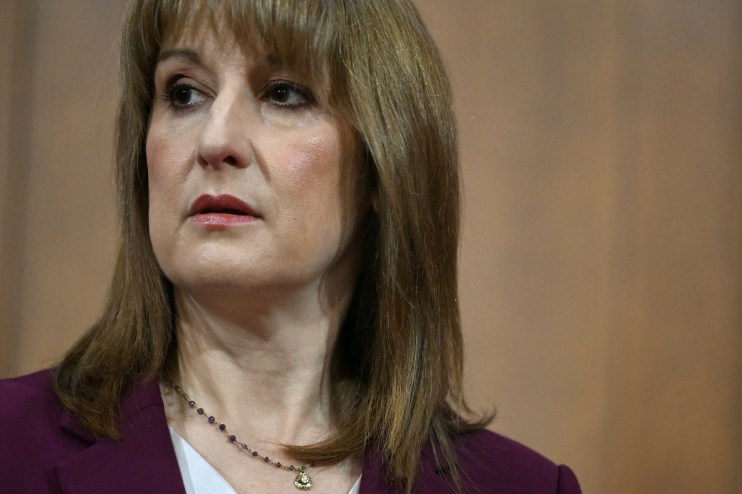
Chancellor Rachel Reeves was warned about costly productivity downgrades and should have left a bigger fiscal headroom at the Spring Statement, former Office for Budget Responsibility (OBR) officials have said.
Speaking to City PM, a number of leading economists raised questions around Reeves’ statements suggesting an OBR review of productivity trend forecasts has forced her to hike taxes and seek spending cuts at this year’s Budget.
Sir Charlie Bean, who sat on the OBR’s Budget Responsibility Committee (BRC) between 2017 and late 2021, said expected productivity downgrades, which are believed to cost the Treasury some £20bn, should not have come as a surprise to Reeves given repeated warnings about the uncertainty around previous predictions.
“The government cannot claim that this is something that’s come out of the blue,” Bean, who was also formerly the Bank of England’s chief economist, said.
“This is not an unusual forecast re-evaluation, given what’s happened and also where other forecasters are.
“The real issue here, to be honest, is that Rachel Reeves was unwise to leave herself such a small amount of fiscal headroom, knowing the substantial range of uncertainty around the forecast.
“You’re asking for trouble if you leave yourself a small margin of error.”
Bean’s comments are at odds with statements made by the Chancellor and other government ministers over the last few months who, along with union bosses, have questioned why the OBR had chosen to conduct its supply side review.
Reeves failed to build sufficient headroom
Reeves has faced intense scrutiny for pointing the finger at Brexit and low capital expenditure under the previous Conservative government when speaking about the downgrade, though she has also committed the government to beating “gloomy” forecasts by focusing on growth.
Reeves has also indicated that she will build a larger fiscal headroom this year, with analysts predicting a buffer of around £15bn.
Just hours after the Spring Statement this year, OBR chair Richard Hughes said there were extra “risks” attached to its central forecasts on productivity. He also presented a number of possible scenarios that could take out her “tiny” £9.9bn headroom, the third smallest left by any Chancellor since the independent body’s creation in 2010.
Andy King, a former OBR committee official who spent ten years at the body until 2023, conceded it was “challenging” for the Chancellor to face productivity downgrades after the Spending Review had already fixed departmental budgets for the next four years, making it harder for Reeves to make cuts.
But he added that there was “no good time” for downgrades, with the timing of this year’s revision making sense given the difficulty of reviewing OBR models straight after economic shocks, such as Russia’s full-scale invasion of Ukraine, and around last year’s General Election.
“Everything relates back to the fact that there is very little headroom against the fiscal rules, which means that any change to any aspect of the forecast runs the risk of being the reason why policy has to change if the Chancellor wants to get back to her preferred amount of headroom,” said King, who is now a specialist partner at Flint Global.
“It will always have to look at evidence in the past. Even if the OBR wasn’t there, the Treasury would have to do exactly the same thing because that’s how you construct a forecast of what might happen over the next five years.”
Former Bank interest rate-setter Jonathan Haskel said this year’s review was “fair” adding the government should focus on boosting output levels in the public sector, with recent data showing a fall in productivity across healthcare in the three months to June.
“Our current poor labour productivity is a choice,” Haskel said.
“Falling labour productivity in the health and care sector over the last six years is a major drag on labour productivity. If we just had zero productivity growth in that sector, overall labour productivity would nearly double.”
Fiscal fine-tuning is ‘patently absurd’
Another prominent former civil service figure, who asked to remain anonymous, said Reeves did not have much of an excuse for blaming her Budget choices on productivity downgrades, comparing protests against the timing of the revision to “sailors complaining about waves in the sea”.
However, one economist told City PM this year’s productivity review seemed “somewhat random” and said the OBR’s charter should be updated to provide clear guidance on the timing of when such revisions are made.
Bean suggested that the fiscal targets which Chancellors set themselves should change to reflect the risks around public finances, particularly around spending and taxation policies.
He said that fiscal rules could be an effective “disciplining device” to ensure Cabinet ministers do not overspend public funds but it had been “patently absurd” for the Chancellor to fine-tune measures to specific numbers that could quickly change.
“I think it would be much better if, instead of this excessive attention paid on this [headroom], you had a much more holistic assessment of whether the public finances were on a sustainable track.”
He suggested that the government should take greater notice of the OBR’s annual report on the sustainability of public finances over 50 years. This year’s report highlighted the potential issues of an ageing population for the triple lock pension and on falling fuel duty receipts as a result of the transition to net zero.
Other leading economists cautioned the government against such a move. King suggested any new measure in the fiscal framework away from rules around current budget deficits would still “collapse into a number” and lead to continued debates around fiscal holes.
The Treasury was approached for comment.