
ESA races ahead in space travel with Europe’s first space taxi launch

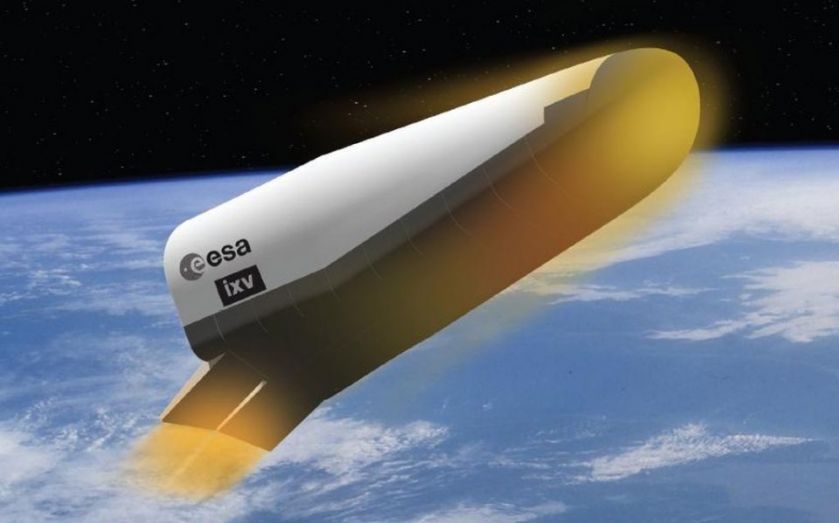
Until its Space Shuttle programme was closed down in 2007, the US was the dominant force in the development of space taxis.
Operated by Nasa, the 40-metre-long vehicles delivered satellites into space, conducted science experiments in orbit and helped construct the International Space Station. At the time, Europe had created nothing capable of competing with it.
But now the tables are turning – the US had to bring its programme to an end because the shuttles were too expensive to build, while the European Space Agency (ESA) is on the brink of launching a much smaller and cheaper equivalent.
On Wednesday, the ESA will send its Intermediate eXperimental Vehicle, or ‘space taxi’, up beyond our atmosphere from a launch pad in French Guiana. This, according to one of the engineers involved in building the craft, will pave the way for more independence from the US and Russia in the future of European space travel.
“It is strategic for Europe to be independent in going to and returning from space,” explained Koen Puimège in an interview with City PM “For Europe, this is a very unique project – it will be the first time a European vehicle returns to earth without the assistance of US or Russia.”
Puimège works in the space division of QinetiQ – a British engineering company hired by the ESA to create the technology needed to bring the shuttle back down to Earth.
“The taxi is different because its shuttle is ten times smaller than the American shuttle, which makes it much more economical to bring back from space and send up again multiple times,” he continued.
The hope is to use the vehicle for the same purposes as the US space shuttle, but the reduced costs mean it could also be adopted by companies for commercial purposes further down the road, such as space tourism.
One of the most tricky aspects of travelling to and from space is the safety of the return flight, since a controlled landing is not possible without calculating the optimum angle for re-entering the atmosphere – if the angle of entry is too steep the craft will burn up, and if it is too shallow it won’t reach its designated landing place.
An internal computer developed by QinetiQ will apparently get around this problem and is fundamental to the ESA mission's success, yet others who have attempted to overcome the same challenge have failed – last month, SpaceX was unable to land its Falcon 9 rocket on a platform in Florida, temporarily hindering the private US company's mission to build a “reusable rocket”.
But according to Puimège, the ESA's experience and knowledge as an established agency gives it an advantage that SpaceX did not have. “In terms of the objective and the challenges, the vehicles are very similar, as Europe also wants to demonstrate a precision landing” he said. “But in terms of the risks, I think there is a difference between an agency like ESA and a company like SpaceX, which is just starting out with its business.”
If the test launch is successful, Puimège says Europe’s technology sector is set to benefit beyond just space travel:
This computer was originally developed for autonomous small satellites, so it will be useful for the creation of other autonomous vehicles. We couldn't use them straight away for driverless cars, but certainly a similar type of technology is involved.