
Ed Warner: Don’t criticise British Cycling for accepting sponsorship from Shell

Disclaimer No1: I don’t think I’ve written anything in support of British Cycling down the years. Quite the opposite in fact. But I can’t bring myself to add my name to the lengthening petition that splutters in indignation about the governing body’s sponsorship deal with Shell. So, here’s a first for me.
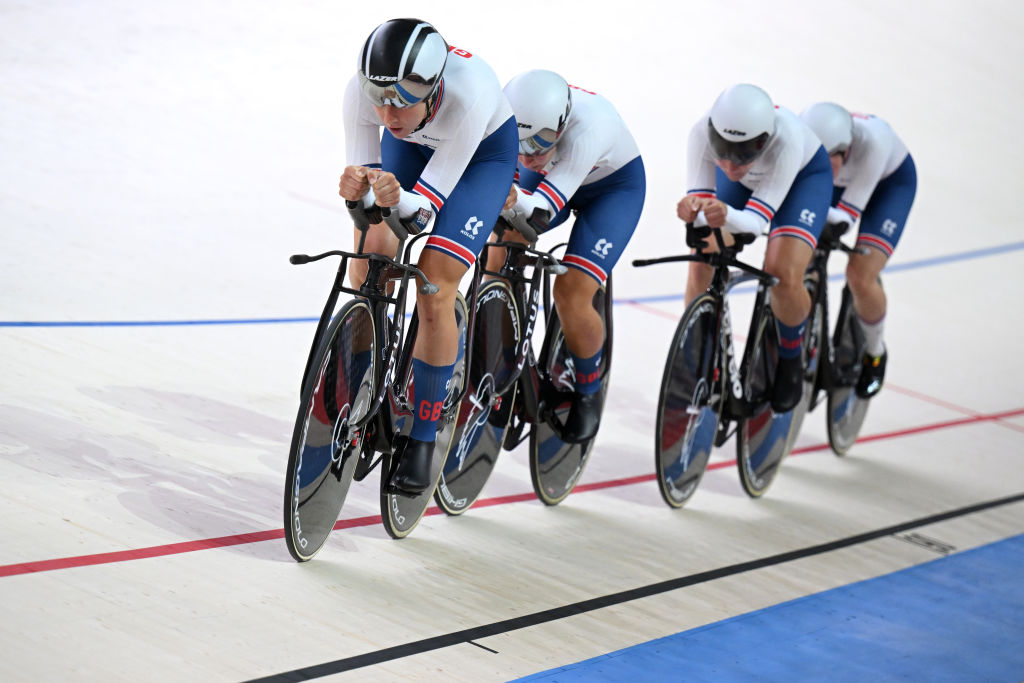
British Cycling’s eight-year contract with Shell was announced on Monday last week. Within hours the backlash – the favourite description employed by the commentariat – was in full swing.
A day later it was reported that there were over 700 signatories to an open letter calling for the sponsorship to be withdrawn. Last I looked, there were 1266 names appended.
“Athletes and especially cyclists are vulnerable to the lethal air pollution that comes from the burning of fossil fuels, and the estimated 8.7m deaths that result each year globally from that pollution,” the letter to British Cycling reads.
It’s unclear who the original author of the letter is, but if you have “any major issues” with it you are invited to email Robbie Gillett of Adfree Cities, which styles itself as “a network of groups across the UK who are concerned about the impacts of corporate advertising on our health, wellbeing, environment, climate, communities and the local economy.”
Well, my first major issue is that without advertising, most organised sports’ finances are royally screwed. If you’d like to watch live sport without arena-side hoardings or logos on athletes’ shirts, go ahead. Do petition too for all televised competition to be on ad-free channels.
Just expect to pay a lot more for these privileges, and see the quality of the product plummet. And expect a hike in membership fees from your governing body if you are a grassroots participant – or live with a drop in the services it delivers to you.
Of course, this petition’s signatories aren’t railing against sponsorship in general. Rather, they are incensed by a sport whose direct reliance on oil consists only of a few squirts of 3-In-One onto chains and callipers embracing what they describe as “one of the world’s biggest polluters and major oil companies.”
I presume there will be some complainants who don’t drive vehicles with internal combustion engines. Others, though, are likely to rack their bikes onto the back of their 4x4s and head off to train and race.
Do they drive past Shell stations when they are short of fuel? If so, where do they then choose to fill their tanks? And if instead they’ve embraced electric power, what of the mined minerals that are integral to their engineering?
The energy transition in the UK as elsewhere is an evolutionary road paved with good intentions – and doubtless many charlatans too. I’m all for accelerating the shift to renewables, but see the old oil establishment as representing a potential partner in this regard not simply a drag anchor.
The cancel culture reaction to an arrangement that gets Shell around the table with advocates of cycling risks blocking off avenues of opportunity. It’s far too easy to bellow “greenwashing” and “sportwashing” and then move onto the next apparently obvious target.
Occasionally sport sponsorship still smacks of the whim of a CEO, the super fan with a corporate budget that enables him to make his own heart swell. Today, though, this motivation is a rarity.
All businesses backing sport, whether as official partners like Shell in cycling or simply as advertisers, have an ultimate objective. That may be simply to shift product, or it could be to alter perceptions. Increasingly, it is to foster a general sense of goodwill among all of a company’s stakeholders by backing sporting enterprises that are deemed to be doing the right thing.
Oh that this was an easy market to navigate for the owners of sporting rights, that it was awash with cash itching to find something or someone to back. That simply isn’t the case.
Indeed the landscape has become far tougher in recent years as traditional analogue methods of marketing have been swept away by digital ones, and given the travails of a global economy sideswiped by covid.
British Athletics recently lost its headline sponsor, Muller. The likes of British Swimming and British Gymnastics don’t have major partners. HSBC called time on its centrepiece deal with British Cycling four years earlier than expected in February 2020. Apparently Shell isn’t a direct replacement, suggesting a relatively modest contribution from the oil company.
And these are the larger Olympic and Paralympic bodies. Look outside into the professional team sports and many clubs are struggling because of a lack of income from all sources, including sponsors.
Scanning wider still, a couple of weeks back I flagged the risk of the W Series of women’s motor racing packing up early this season. This duly came to pass when the owners/organisers failed to land a hoped-for backer.
W Series CEO Catherine Bond Muir stated she was looking for “good, strong, solid, successful sponsorship deals”. She’s far from alone.
The marriage between Shell and British Cycling may yet come a cropper on the steep banking of the velodrome of public opinion. I hope not. I’d rather judge it on its outcomes over the coming years. But if BC’s board does decide to bow to pressure and tear up the contract, I’ll be reverting to my habitual critical stance.
Disclaimer No2: I don’t own a bike – I feel safer on two feet than two wheels.
WAGMI watch
Last we checked in with Crawley Town, they had beaten Fulham in the EFL Cup but were struggling in League Two. The NFTs launched by Crawley’s new owners, US cryptocurrency enthusiasts WAGMI United, had slumped.
Now, mired near the foot of the table, they have sacked their manager and the tokens have halved again – currently quoted at 0.088 ethereum each versus July’s 0.4 launch price. The real world will just keep interfering with this innovative crypto experiment in football funding.
167 stung
Wasps have gone into administration, hard on the heels of fellow Premiership rugby club Worcester Warriors. The 167 redundancies make for 167 sad stories.
This number drew me up short though. So many to run a rugby club and stadium? Two years ago Wasps averaged 242 employees, a quarter of them playing staff. Not far short of the smaller Premier League football clubs which operate with far greater income.
Other English top-flight rugby clubs are similarly scaled. There must surely be a leaner way of operating.
Ed Warner is chair of GB Wheelchair Rugby and writes at sportinc.substack.com