
Dyslexia and ADHD diagnoses should not just be reserved for the wealthy

One in seven people are neurodivergent but far too few get the help they need early. Universal screening will ensure no child with dyslexia or ADHD is left behind, says Matt Hancock
Battered, bruised, and blistered. Just a few words that describe how I’m feeling following Sunday’s London Marathon.
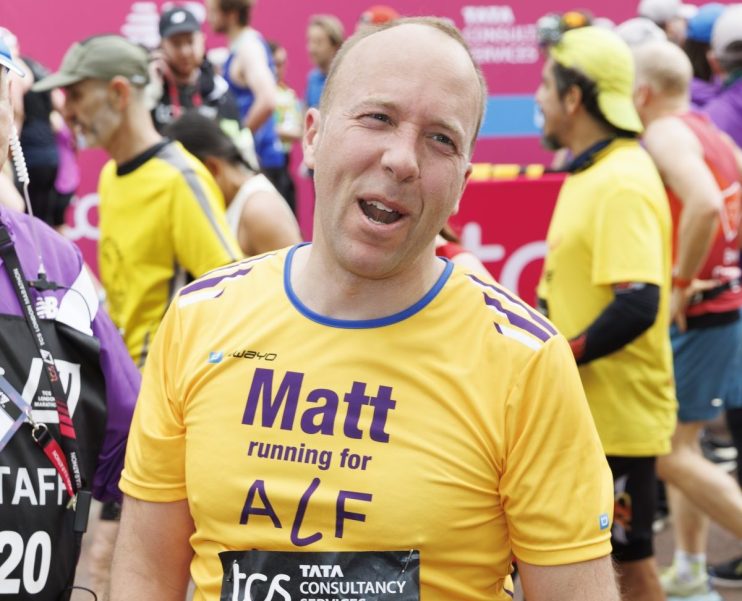
This year I was running (hobbling towards the end!) to raise money for the Accessible Learning Foundation (ALF), a charitable organisation fighting for better identification and support for people with neurodivergent conditions – including dyslexia, autism and ADHD – in schools, workplaces and prisons.
Although I ran the gruelling 26.2 miles wearing a rather loud, canary yellow ALF branded t-shirt, determined to spread the word and raise as much awareness, ahead of introducing my Neurodivergent Conditions (Screening and Teacher Training) Bill in Parliament later today, it wasn’t always that way.
For almost 20 years I hid my dyslexia. Why? Well, the truth is, I was embarrassed by it. I didn’t understand why I didn’t always understand, and I worried it would hold me back.
I was wrong to hide it because being neurodivergent isn’t something anyone should be ashamed of.
From top businessman, Richard Branson and Hollywood star Emma Watson to celebrated chef, Jamie Oliver and Olympic gold medallist, Simone Biles, each one of these highly successful household names is a proud member of the neurodivergent club.
It’s not an exclusive club – one in seven of us are neurodivergent. But shamefully, being a member of the identified neurodivergent club is often reserved for the wealthy.
According to a London School of Economics report published last November, 15 per cent of children with specific learning difficulties are in the most affluent decile and six per cent are in the most deprived. This cannot reflect reality.
The only explanation is an unjust allocation of early identification tools within the system. There isn’t enough focus on early identification, there isn’t enough funding, and crucially, there is also an inequality in the early identification that leads to diagnosis and the development of education health and care plans (EHCPs). This isn’t only unfair but a silent scandal that I’m determined to address.
My updated bill, which has gathered cross-party support, wants to introduce neurodivergent screening in all primary schools to ensure no child starts secondary education not knowing if they are neurodivergent.
Incredibly, one in five (18 per cent) children still leave school not knowing that they have dyslexia. I was one of those – only discovering I was dyslexic once I got to university. My identification was a lightbulb moment. It changed my life and gave me the opportunity to relearn how to read and write.
I was one of the lucky ones. For far too long, those of us with neurodivergent conditions have been let down by the state education system.
It’s true that many neurodivergent children leave school and thrive, but thousands don’t. Instead, they find themselves locked in what academics describe as the school-to-prison pipeline, all because of a lack of early identification and support.
Incredibly, children with identified Special Educational Needs (SEN) account for almost half (46.7 per cent) of all permanent exclusions from school, while a report by the government found that more than four in 10 (42 per cent) UK prisoners had been permanently excluded from school.
This is another silent scandal I’m determined to address.
But it gets worse. I was shocked to discover that half of prisoners are believed to have dyslexia, while one in four prisoners grapple with attention deficit hyperactivity disorder (ADHD) – that’s five to 10 times higher than that of the general population.
These challenges extend beyond adult prisons to the youth justice system (YJS) too – with 80 per cent of children cautioned or sentenced within the YJS having special educational needs.
These truly alarming statistics highlight the importance of identifying neurodivergent children at a young age and providing comprehensive support to the child, parents, and teachers, that will significantly reduce the number of neurodivergent kids caught up in this destructive cycle, saving lives, as well as taxpayers hard earned cash.
Last month, I chaired a panel at the Dyslexia Show, at the NEC in Birmingham, and spoke about ALF’s goal to provide effective support for neurodivergent prisoners, helping to break the cycle of reoffending. By reducing barriers to education and rehabilitation, we can empower those leaving prison to contribute meaningfully to society, creating a more inclusive and equitable future for all.
While progress has certainly been made in acknowledging and addressing the needs of those with neurodivergent conditions within the criminal justice system, there’s a lot of work still to be done. By working collaboratively, implementing effective policies, and continuously assessing and improving support systems, we can create lasting positive change, reduce reoffending rates, and empower neurodivergent individuals to thrive beyond their sentences. Having met with the Justice Secretary, Alex Chalk, in January, I’m confident we will make the necessary changes.
I believe early identification is the key to ensuring no neurodivergent child is left behind. It’s what I’ve spent the last two-and-a-half year’s campaigning for in Parliament – because the positive impact of promoting early intervention could be immense.
Despite the support my bill has received, the campaign for universal screening has too often felt like a marathon, when the road to neurodivergent equality should be a sprint.
We’re running the wrong race, but I’m determined to put that right and today will ensure the debate is on the right track, as we sprint to the finish.
Matt Hancock is founder of the Accessible Learning Foundation (ALF) and former health secretary