
Driverless taxis will make black cabs extinct – and that’s no bad thing

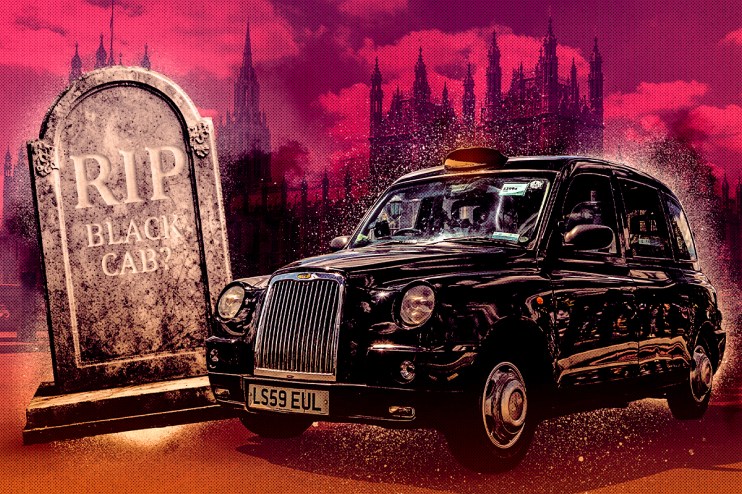
The imminent advent of ‘robo taxis’ may well be the final nail in the coffin of the London cab trade, suggests James Ford
By all accounts, a London cabbie’s lot is not a happy one. You may get to drive around the capital in one of the great transport icons (the black cab is up there with the red bus) but your efforts are sorely unappreciated. Popular public opinion is that you are either a racist, militantly anti-cyclist, or excessively curmudgeonly (and, often, all of the above). And if public hostility was not enough to deal with, there is ample evidence that being a cabbie is not just thankless but pretty unpleasant. In 2020 and 2021 alone the Met recorded 168 crime incidents against taxi and private hire drivers. According to a major industry survey, almost half (43 per cent) of London cab drivers report that they have had to deal with a passenger vomiting in their taxi at some point. Little wonder then more than a quarter of cabbies report that their job is bad for their mental health or that the number of cabbies plying their trade in London is in freefall
But there might be a light at the end of the tunnel. Our brow-beaten taxi tribunes may soon be able to turn off their yellow light and put their feet up. Permanently. Because Uber, always eager to play the saviour to the capital’s beleaguered licensed cabbies, is ready to start trialling driverless taxis in London.
It may be premature to write the obituary for the London cab trade just yet (though I arguably had a good try a few weeks ago in these hallowed pages). The public remains sceptical about driverless cabs, although the numbers are shifting with the latest figures showing that 10 per cent of Londoners would feel “very safe” in a driverless car compared to just two per cent in 2020. Unsurprisingly, support for autonomous vehicles is strongest amongst the young.
The cabbie is set to go the way of the tosher and the lamplighter and join the ranks of obsolete professions
London has an impressive track record as an early adopter of transport technologies. Not only was the capital the first city to put trains underground (in 1863 no less) but five years later it introduced the first traffic light. The first electric trams (1901), battery-electric buses (1907), electric ticket-issuing machines (1908) escalators (1911) and CCTV onboard buses (1986) would all follow. Though groundbreaking at first, all of the above have subsequently become not just mainstream but run-of-the-mill.
London has already gone driverless
There is ample evidence that Londoners are more accepting of driverless transport than some surveys suggest. The DLR has been driverless since it opened in 1987 yet in 2023/24 almost 100m Londoners still felt happy enough to take a journey on it. Most tube lines (including the Northern, Jubilee, Victoria, Central, Metropolitan, Circle, Hammersmith & City, Elizabeth and District lines) are semi-autonomous already, which means that whilst there is an operator in the cab, they are there to work the doors and don’t actually drive the train. The majority of Londoners are either blissfully unaware of this or are entirely unphased by it.
Opposition to new technologies usually centres on two factors: public perceptions of safety and concern about the economic impacts of new innovations on those workers and artisans being disrupted and replaced. As the public get over their safety concerns through experience (and begin to feel the benefits of quicker, easier and cheaper journeys), they soon forget about their past fears and quickly lose interest in the fate of those rendered redundant. (Though it is worth noting that the Department for Transport projects that the shift to autonomous vehicles could create 38,000 jobs by 2035).
Past censuses of the capital listed many professions – such as dripping men (who dealt in meat fat), toshers (who scavenged for valuables in the sewers), knocker-uppers (who roused sleeping workers before the invention of the alarm clock) or lamplighters (who lit gas-powered street lamps) – that have been rendered obsolete. The London taxi driver may well be the next idiosyncratic trade to join the ranks of the moribund and defunct.
James Ford is a public affairs consultant and former advisor on transport, environment and technology policy to then mayor of London Boris Johnson