
Draghi’s balancing act: Stress tests can’t paper over Europe’s problems

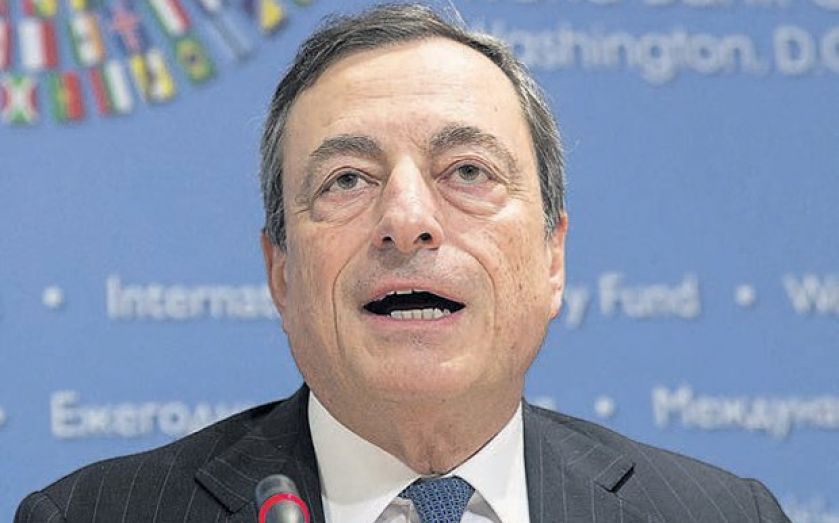
European Central Bank (ECB) president Mario Draghi has faced an unenviable balancing act recently. He’s had to oversee rigorous stress tests on the Eurozone’s banks – making them sufficiently harsh that investors viewed the process as credible – while at the same time encouraging those same banks to lend to the real economy in order to spur growth.
That has required a fine equilibrium. The very weak loan growth in the Eurozone would point to him having failed so far. In reality, it may have been impossible to succeed. With the results of the tests now public, the trillion-euro question is whether the tide will begin to turn.
The results of the Asset Quality Review (AQR) and stress tests should be positive for the European banking sector. The exercise has shown Europe’s ability to conduct a highly comprehensive exercise across national borders – a difficult undertaking. Most of the region’s banks have passed, with very little surprise over those that haven’t. The tests have been a year in the making, and home country regulators have been working closely with the banks during the test period to keep them informed of how they were getting on. The banks at risk of failure have spent the past 12 months taking remedial action. It’s been a bit like a teacher telling his students their mock exam results so he can boast to the head teacher that they are better prepared when the final exam comes. The rigour of the process should restore faith in the ECB after the last two lacklustre efforts at stress testing.
But banks aren’t Draghi’s only problem. With the Eurozone facing the very real threat of deflation, there’s widespread disagreement over what to do about it. Draghi is facing calls to start full-blown quantitative easing (QE), but is struggling to convince the Bundesbank to back it. The ECB has to convince the Germans, while publicly and privately coercing the likes of Italy and Greece to undertake the structural reforms demanded by the Bundesbank in return for its backing of QE. All while deflation threatens to burn the tightrope under Draghi.
The stress test results cannot paper over the wider issues the region’s banking system faces either. There’s still plenty to keep bank chiefs up at night, including the dire economic outlook, geopolitical risks and the low structural profitability of most banks. They’ve swapped the prospect of the euro’s collapse two years ago with the spectre of deflation and economic stagnation today. In hindsight, it may have been wise for the ECB to test the impact of widespread deflation on the banks too.
The pressure to commission sovereign QE is becoming immense. But Draghi also realises that QE is his last bargaining chip with governments. He is rightly concerned that the more politicians are able to rely on the central bank to solve their problems, the more the structural reforms that the currency bloc badly needs will be sidelined. Given the competing and conflicting forces bearing down on Draghi, his tightrope walking abilities have so far been remarkably composed. The rest of his journey is unlikely to be wobble-free.