
Does mayo need a purpose? It’s time for a corporate governance reset at Unilever

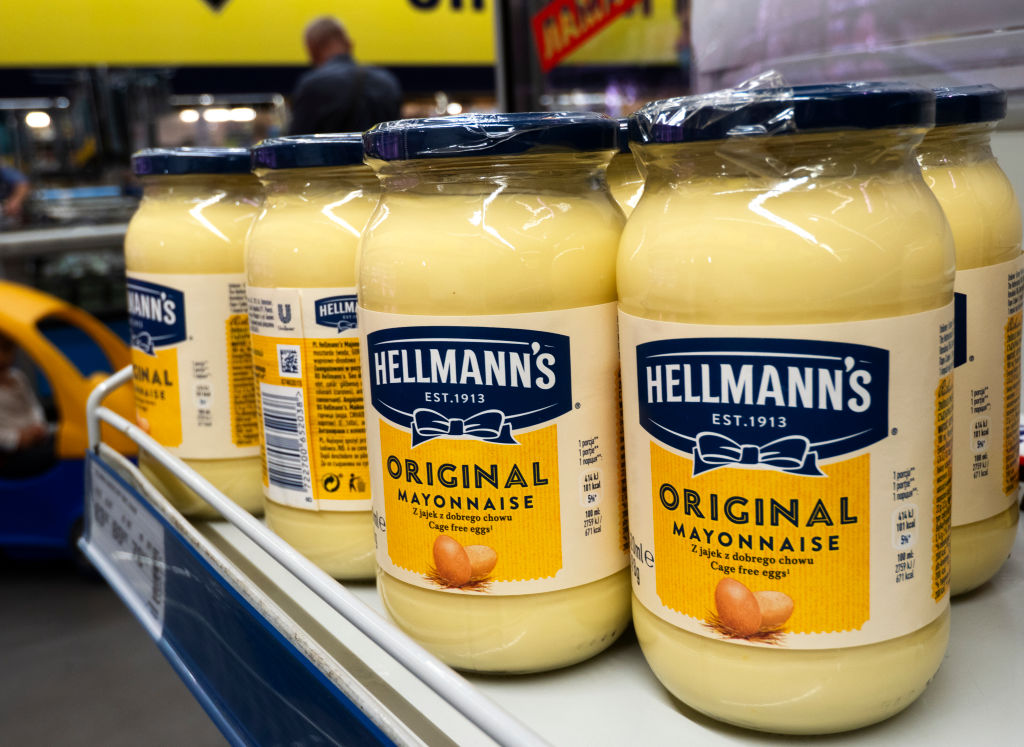
The City should take heed of Terry Smith’s recent comments on Unilever’s obsession with publicly displaying its sustainability credentials at the expense of focusing on the fundamentals of the business. Last year, chief executive Alan Jope claimed the purpose of Hellmann’s mayonnaise was “fighting against food waste.” It was a symptom of a wider malaise at Unilever, which the acquisition of Ben & Jerry’s, the ice cream brand with a penchant for political divisiveness, laid bare. Smith, one the of top 10 shareholders in the company, merely called a spade a spade.
In July last year, Ben & Jerry’s announced a boycott of the “Occupied Palestinian Territory,” but the decision is likely to operate as a de facto boycott of the whole of Israel because of anti-discrimination laws in Israel.
Unilever has been at pains to reconcile its own corporate governance with the terms of the deal under which it acquired Ben & Jerry’s, which gave the independent board of the ice cream giant the ability to make its own decisions about its “social mission”. It has pursued a distancing strategy. More delicately, and to use a Paltrowian neologism, Unilever has been desperately trying to consciously uncouple itself from its own subsidiary, at least in the minds of the public. If this is to give the impression that Ben and Jerry’s is not a home-grown company made in the Unilever mould, but an adopted enfant terrible with a free spirit, it is an artificial distinction of the first order. It is desperate stuff.
In several senses, there is no such thing as an independent subsidiary. It is an oxymoron. Ben and Jerry’s may be a separate legal entity and have a different board, but it does not operate in a vacuum. It belongs to Unilever. Its profits don’t stay where they are made; they flow up to Unilever shareholders. Most relevant, it does not operate unconstrained; it remains subject to Unilever’s group risk management policies. “While you live in our house, you’ll live by our rules,” so said every parent with a sixteen year-old.
Against that backdrop, investors must ask themselves if the arrangements between Unilever and Ben and Jerry’s can continue without regard to continuing adverse reputational, financial, regulatory, and legal consequences. There are only two answers, neither of which does favours for its share price.
If the board was in a position to proactively manage out the foreseeable consequences before they crystallised, but failed to do so, there is a serious governance issue at top echelons of Unilever. Even if the board of Unilever lacked the power to override the decision on risk-management or other grounds, this only serves to highlight the existence of a structural problem. Shareholders demand control from the top down, not from the bottom up.
In this there is a lesson for companies up and down the country. Terry Smith may be one of the most vocal of investors, but he will not be alone. Investors in blue chips don’t bargain for risk and reward in equal measure; they bargain for effective governance from boards with the skills and judgement to minimise the former and maximise the latter. Effective governance requires continuing alertness to risk, not corporate communications after the event.
Too many UK companies don’t understand their basic duties under the Companies Act. They are required to promote the success of the company for a single constituency: the members as a whole. This is an absolute obligation, qualified only where a company is not wholly solvent. While they can have regard to the position of other stakeholders, this must be done for the overall success of the company; they have no positive duty to benefit those stakeholders.
Corporate leadership is not about structuring intermediate holding companies between the parent and the risky subsidiary. Otherwise, boards would consist of lawyers. Boards must make decisions and promote the success of the company, not the success of NGOs.