

Digital data skills’ significance on the rise for UK Plc

Data loss. Hacking threats. Legal compliance. As the volume of digital data gathered by organisations grows, so do the risks and challenges.
But the insights enabled by data analysis also create exciting new possibilities for the corporate world and society at large, as reflected in the UK’s ‘National Data Strategy’.
The strategy, which was unveiled last year, aims to ‘maintain the high watermark of data use set during the pandemic, and to free up businesses and organisations to keep using data to innovate, experiment and drive a new era of growth’.
The power of data should be harvested ‘to boost productivity, create new businesses and jobs, improve public services and position the UK as the forerunner of the next wave of innovation’, the government says, urging that data and data use are ‘opportunities to be embraced, rather than threats against which to be guarded’.
Governance structures are evolving. A wide-ranging consultation on proposed changes, including reform of the Information Commissioner’s Office, launched last week.
Data ‘thrust to centre of debate’
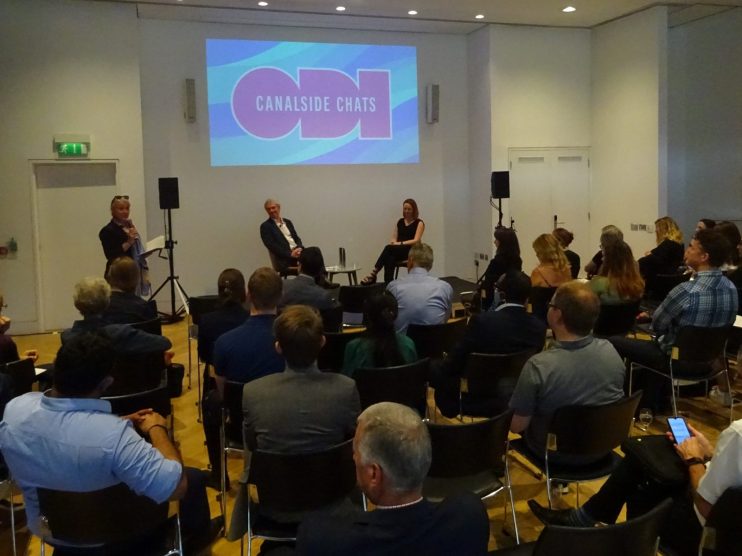
The growing number of data-related questions that organisations must keep on top of, and related skills they need to embed, as well as data’s developing governance landscape, formed the backbone of an event organised by the Open Data Institute (ODI) in King’s Cross on 6 September.
‘The data dilemma – how to balance risks and opportunities in a changing world’ discussion featured the ODI’s co-founder and chairman Sir Nigel Shadbolt and Felicity Burch, executive director of the Centre for Data Ethics & Innovation (CDEI), which is part of the Department for Digital, Culture, Media & Sport.
“So much has changed in the context of the pandemic – and data has been thrust to the centre of debate,” Shadbolt told the audience. “We’re all now aware that we live in this data-driven world.”
Burch, who joined the CDEI last month, described a “massive step-up from the business community” during the pandemic in terms of how data is being used, a view informed by her previous role at the Confederation of British Industry (CBI).
“For many businesses it was the moment they suddenly initiated data strategies that they might have had running for five years into the future and instead implemented in a couple of months – we saw businesses moving onto the ‘cloud’, adopting things like HR software. But new challenges have appeared. Companies that have adopted things really quickly may not have thought about the governance implications,” she said.
‘Many are still getting to grips with this’
What can – and should – organisations be doing with the data they hold?
‘Businesses are more likely to be competitive in today’s digital-driven economy if they can use data effectively,’ the government’s strategy states. ‘Likewise, data-literate individuals are more likely to benefit from and contribute to the increasingly data-rich environments they live and work in, while data-driven companies can deliver significant productivity benefits to their own business and the wider economy.’
Investing in data enables organisations to better understand their customers, help to find new ones, and inspire and guide marketing efforts, among other advantages.
Some businesses are hares, others are tortoises. Many are confused. As the new government consultation notes, in the context of data protection, a small hairdressing business should not have to have the same processes as a multimillion-pound technology company.
“One thing that has really struck me over the past five to ten years of working with business is that you have a few organisations that are really at the front, but so many are still getting to grips with this,” Burch reflected.
Drawing on her pre-CDEI experience, Burch recalled cases of organisations being “hugely nervous” about data-sharing and managing related risks. “I was really struck by how this [nervousness] was holding up product development and innovation across the supply-chain,” she said, indicating the broader and untapped potential for UK Plc of putting data to optimal use.
‘Need to ensure everyone able to engage’
Data literacy and training are increasingly in demand as the arena grows and becomes more complex. Do organisations have the right knowledge and skills?
“During the pandemic there’s been an increase in the adoption of technology but, alongside that, increasing concern that businesses weren’t getting the value out of their investment in data,” Burch said. “That’s a concern because if they’re not getting that value, are they going to invest in it again?”.
“We’re possibly in the same space that we were with cyber-security five or ten years ago where it [data] wasn’t always seen as a board-level issue, and I think that data governance, use and innovation absolutely does need to rise up the agenda,” Burch said.
It’s not just management and data specialists who should have a role, though, with initiatives to ensure interest, and broader take-up of relevant skills, across an organisation seen as important.
“I think that beyond [data skills] being a ‘c-suite’ issue, and beyond it being a coding and software issue, it’s about understanding the role that data is going to play in almost everyone’s roles at work and also in our personal lives,” said Burch. “If we really want to capture the benefit of data, we really need to ensure everyone is able to engage with it to a certain level.”