Skip to content
City PM
  • Germany
  • France
  • Europe
  • Markets
  • Business
  • Opinion
  • Germany
  • France
  • Europe
  • Markets
  • Business
  • Opinion
Friday 28 September 2018 8:03 am  |  Updated:  Tuesday 21 May 2019 4:25 pm

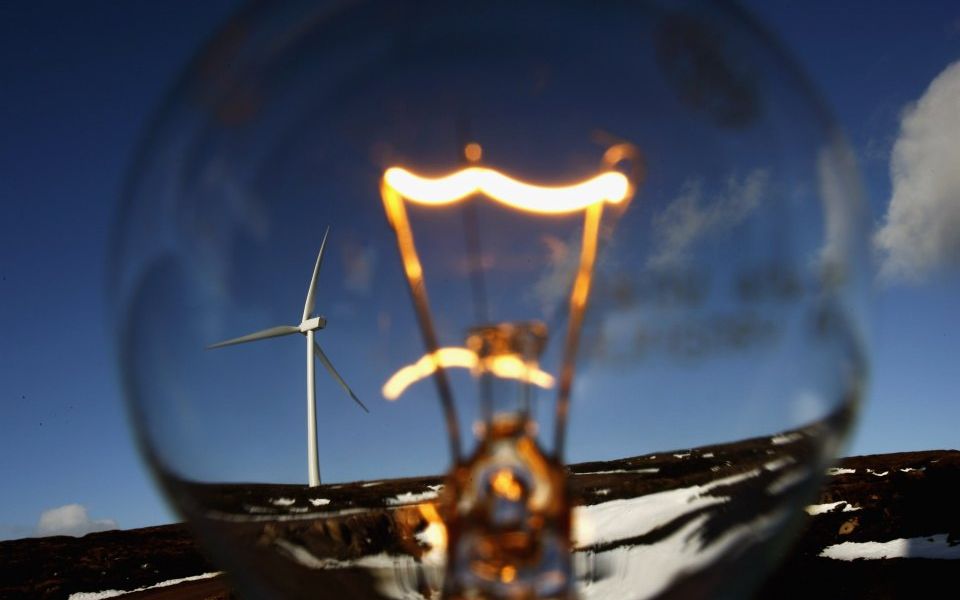
DEBATE: Would the energy market benefit from Corbyn’s proposed wind turbines and renewable subsidies?
By: Tony Lodge and Alan Lockey

Add as a preferred source on Google

NULL

  Would the energy market benefit from Corbyn’s proposed wind turbines and renewable subsidies?

Alan Lockey, head of research at Demos, says YES.

First, let’s dispense with the notion that it’s a choice between unsubsidised fossil fuels and subsidised renewables: the global energy “market” is all subsidised. In fact, research by the International Energy Association shows that in 2016 fossil fuels received more subsidies than renewables by a cool $120bn.

The question is therefore what future do we want for Britain. And for the obvious reason – that the planet itself is at stake – the answer should be a renewable one.

The good news is that renewables are now close to cost-competitive. But this has only happened because the initial high-risk investment was absorbed and stimulated by what the economist Mariana Mazzucato would call an “entrepreneurial state”.

What we need now is to take the renewables revolution away from conventional power generation and to homes.

The future of energy is decentralised – people, not the state or market, should generate and own their energy. That would be truly transformative, but it will require clever subsidies.

Read more: May and Corbyn set out competing economic visions in major speeches

Tony Lodge, research fellow at the Centre for Policy Studies, says NO.

Labour’s pledges to double the number of wind turbines across Britain, alongside new green taxes, risk the security of energy supply and would increase fuel poverty.

Upping the provision of weather-dependent renewables, such as wind and solar, presents a real challenge. It would need to be backed up by new gas-fired power stations for when the wind doesn’t blow and the sun doesn’t shine, thus defeating the point.

Such high growth targets for low-efficiency renewables would also pose a major challenge to National Grid, as it would need to manage and balance unpredictable and unreliable peaks and troughs in supply, which will not always match demand.

Finally, more green energy subsidies inevitably mean higher energy bills for households, hitting hardest the very people Labour claims to want to help.

After Brexit, Britain will need to reduce bills to become more competitive. Labour’s plan would do the opposite – it would mean more fuel poverty, lost jobs, and reduced energy security.

Read more: DEBATE: Is Labour looking more like a credible government-in-waiting now?

Share this article

  • Facebook
  • X
  • LinkedIn
  • WhatsApp
  • Email

Similarly tagged content:

Sections

  • Markets & Economics
  • News

Categories

  • Business
  • Economics
  • Politics

Related Topics

  • Company
  • Green energy
  • National Grid

Trending Articles

  • Top Burnham adviser calls for capital gains and inheritance tax hikes

  • A meeting with the breakfast king of Mayfair

  • Housebuilding giants hit with £4.5bn lawsuit for allegedly overcharging buyers

  • As it happened: Stocks jump on defence and metals boost; Oil on track to shed a fifth on US-Iran peace hopes

  • BT tops FTSE 100 after finding new home for international business with Verizon joint venture

More from City PM

  • Investment firms anticipate surge in renewable energy spending

    Energy
    Battery storage sites are seen as crucial to supporting renewable energy.
  • ‘Enough to keep investors interested’: SSE charges up UK investment

    Markets
    A general view shows pylons and Ferrybridge C power station, owned by energy company SSE, which is set to stop generating and close in March 2016, near Knottingley, northern England, on May 24, 2015. The coal-fired powerstation went online in 1966. AFP PHOTO / OLI SCARFF (Photo credit should read OLI SCARFF/AFP/Getty Images)
  • Sparking interest: Could utilities stocks power your portfolio?

    Investing
    National Grid overhead line refurbishment highlights utility sectors role in stable FTSE 100 performance
  • Upgrading the grid risks ending up like HS2

    Opinion
    Electricity grid infrastructure with high-voltage power lines and pylons under a clear sky, representing energy distribution.
  • AS Graanul Invest Appoints Energy Industry Veteran Lars Christian Bacher as Chief Executive Officer

    Business Wire
  • Drill baby brill: Why the UK must develop it’s North Sea oil fields

    Opinion
    North Sea oil terminal with storage tanks and docking facilities under a clear sky, highlighting energy infrastructure.
  • Inflation drops as Labour subsidies delay price surge 

    Economics
    Rachel Reeves
  • King’s Speech: Ministers ban North Sea oil and gas exploration

    Energy
    North Sea oil terminal with storage tanks and docking facilities under a clear sky, highlighting energy infrastructure.

City PM — European politics, business and analysis.

Europe

  • Germany
  • France
  • Europe
  • UK & Ireland

Topics

  • Business
  • Markets
  • AI
  • Technology
  • Opinion
  • Energy

More

  • Politics
  • Economics
  • Fintech
  • Legal
  • Sport
  • Life

Company

  • About City PM
  • Editorial Policy
  • Corrections
  • Contact
  • Terms of Use
  • Privacy Policy
  • Cookie Policy
© 2026 City PM · Published by CityPM Media, Bahnhofstrasse 65, 8001 Zürich, Switzerland
About · Editorial Policy · Corrections · Contact · Privacy