Skip to content
Saturday 25 July 2026London --:--Frankfurt --:--Zurich --:--
NewslettersSearchEN · DE
City PM

European business, markets and politics

FTSE 100
10,736.23
+0.91%
DAX
25,099.00
+1.36%
CAC 40
8,372.28
+0.88%
STOXX 50
6,280.94
+1.14%
  • Europe
  • Markets
  • Business
  • Economy
  • Technology
  • Politics
  • Opinion
More
GermanyFranceBankingAIEnergyFintechPropertyCapital Markets
  • Germany
  • France
  • Europe
  • Markets
  • Business
  • Economy
  • Technology
  • Politics
  • Opinion
  • DE
Friday 04 March 2016 9:42 am

Dallas Fed warns oil market won’t stabilise this year

By: Jessica Morris

Add as a preferred source on Google

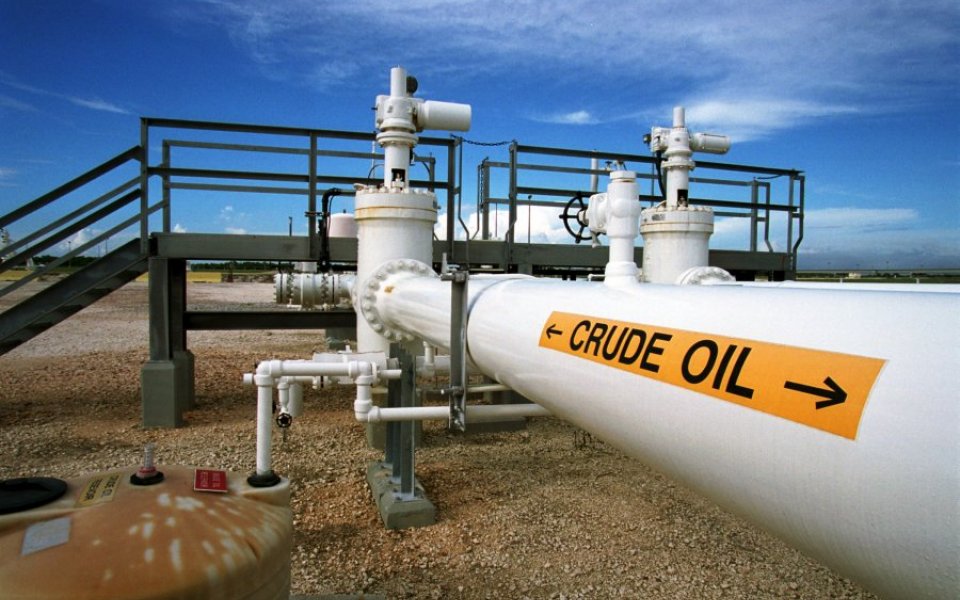
The Dallas Fed chief said the oil market won't rebalance this year, as he warned persistent weakness in the energy sector could send "negative ripples effects" through financial markets.

Robert Kaplan, Dallas Fed president, said demand and supply won't balance until mid-2017, however this could change if the Organization of the Petroleum Exporting Countries (Opec) alters its production strategy. 

"This forecast has been influenced over the past several months by the official return of Iran to the world oil markets, increased supply from Opec nations, slower-than-expected supply declines from US producers despite substantial cuts in drilling and capital spending, and slower-than-expected demand from emerging-market countries," Kaplan told an audience at the University of Texas yesterday.

"This outlook would be meaningfully impacted by a change in OPEC production strategy," he said.

In February, Opec members Saudi Arabia, Qatar and Venezuela and non-Opec Russia agreed they would cap production at January levels if other oil producing countries followed suit.

Some investors have taken the preliminary agreement as a sign that the countries could later reduce output to clear the global supply glut that has forced down prices.

Kaplan also warned there's a risk of energy sector turmoil spreading to the wider financial market if investors pull their money out of funds which are heavily exposed to bad loans.

"One by-product of lower oil prices is wider credit spreads in the high-yield market," he said.

"Because corporate energy issuers comprise a material portion of high-yield issuance, and because highyield debt is heavily held in mutual-fund (with daily liquidity obligations) and exchange-traded fund form, weakness in the energy sector has the potential to create increased levels of fund redemptions."

"This, in turn, can put pressure on funds to sell holdings more broadly in order to meet liquidity needs. This is a good example of the potential negative ripple effects that can come from persistent weakness in the energy sector."

Share this article

  • Facebook
  • X
  • LinkedIn
  • WhatsApp
  • Email

Similarly tagged content:

Sections

  • Markets & Economics
  • News

Categories

  • Business
  • Economics

Trending Articles

  • BT braces for loss of 800,000 customers as it banks on fibre to keep turnaround ‘on track’

  • Wise denied US banking licence in blow to expansion plans

  • Regulator flags BDO’s ‘unacceptable’ audit issues for fifth year in a row 

  • Housebuilder hits a wall: How did Vistry become the UK’s most shorted stock?

  • Scotch whisky sales are falling, but what’s really behind the decline?

More from City PM

  • As it happened: Stocks slide despite tech and data boost; Oil falls after OPEC+ ups output

    Markets
    Samsung has missed earnings expectations
  • As it happened: FTSE 100 rises to defy tech gloom; oil creeps up on fresh Iran tensions

    Markets
    Donald Trump with hand on chin, appearing contemplative during a public event, wearing a suit and red tie.
  • Oil prices return to crisis levels

    Markets
    Close-up of a petrol pump nozzle dispensing fuel at a gas station, highlighting rising fuel costs and economic impact.
  • UK borrowing costs surge as Trump declares Iran ceasefire over

    Economics
    Breaking news event coverage with diverse group of people engaging in discussion at a business meeting or conference.
  • Europe has made a ‘major mistake’ on slow electrification, IEA chief warns 

    Energy
    UK industrial electricity prices are the highest in the G7 and 46 per cent above the average of the International Energy Agency.
  • Burnham to approve North Sea oil and gas drilling in policy blitz

    Politics
    North Sea oil terminal with storage tanks and docking facilities under a clear sky, highlighting energy infrastructure.
  • As it happened: Stocks rises as oil eases but Strait of Hormuz concerns ramp up

    Markets
    Aerial view of ships navigating the strategic Strait of Hormuz, highlighting its importance to global maritime trade routes
  • World Cup demand pushes price of private jet charters up 30 per cent

    Sport Business
    GettyImages 1407027682 showcasing a significant moment in current affairs, capturing a key event with impactful visual sto...
CityPM

Independent European business, markets and political news for decision-makers.

Morning Briefing

Europe

  • Germany
  • France
  • Europe
  • UK & Ireland

Business

  • Markets
  • Banking
  • Technology
  • Energy
  • Property
  • Fintech

Editorial

  • Opinion
  • Editorial Policy
  • Corrections
  • Contact

Company

  • About City PM
  • Privacy Policy
  • Terms of Use
  • Cookie Policy
© 2026 City PM Ltd · Published by CityPM Media, Bahnhofstrasse 65, 8001 Zürich, Switzerland
Privacy · Terms · Cookies · Facebook