
Connect More: Looking after your mental health and wellbeing with digital support

Having a proactive attitude to our mental health is crucial for us all. And now it’s even easier with a raft of digital services
Great strides have been made over the past few years around raising the profile of mental health and wellbeing and its importance in our lives. Since the pandemic there has been an increased acknowledgement, both individually and at a societal level, of the need to respect and care for our mental health. And now with pressures related to the cost of living affecting people, it’s even more important to shore up our mental resilience and normalise asking for help if we need it.
This shift in attitude has profound implications, reframing an issue that affects all of us. Just as we experience variations to our physical health, the same applies to our mental health, and increased acknowledgment of this has stripped much of the stigma away, allowing more people to access help and support.
One misnomer over the years has been the idea that mental health is the same as mental illness. While mental illnesses are diagnosed conditions that affect thoughts and behaviour, mental health refers to anyone’s state of mental and emotional wellbeing. And as a building block to our life experience, good mental health is something we should – and can – pro-actively maintain.
Taking charge
Staying on top of our mental health helps us cope with the normal stresses of life, deal better with challenges we may face in the future — and over time, can also reduce our risk of physical health problems.
Often the first step is just to realise there is help out there that can make a real difference. The digital age has opened up access to the therapeutic field of mental health resources, helpline services and signposting greatly — with much of it now available at the touch of a button.
Those experiencing low mood or sleep problems, but who are coping, having normalised these negative feelings or those who are starting to struggle and experience distress might not necessarily need clinical or therapeutic interventions, but greater help in supporting and improving their mental health and wellbeing. Using the open-access digital resources available can be a powerful way of doing this, and preventing difficulties from escalating into problems that may eventually require clinical intervention. Help in the palm of your hand includes the Samaritan’s Self-Help (self-help.samaritans.org), where you can explore relaxation techniques, record your mood and look for patterns in how you’re feeling and make a personal safety plan, and Shout (www.giveusashout.org) whose website provides resources and tips on coping with feeling anxious, low, stressed or overwhelmed,
The Better Health – Every Mind Matters website tackles the four most common sub-clinical mental health concerns of anxiety, low mood, stress and sleep difficulties, and offers a free personalised Mind Plan to help you feel more in control — Amazon Alexa users can say, ‘Alexa, start my Mind Plan’ to access it — while the Every Mind Matters email programme has tips on how to deal with anxiety and make these new steps part of your daily routine.
Hub of Hope website run by the Charity, Chasing the Stigma and free app is another wide-ranging resource, listing local and national resources to help you tackle a range of mental health concerns including NHS, community, voluntary and private sector services.
For those struggling with common mental health disorders including depression, anxiety, phobias, panic attacks, obsessive compulsive disorder (OCD), body dysmorphia or post-traumatic stress disorder (PTSD), NHS talking therapies are free, effective and confidential treatments delivered by fully trained and accredited NHS practitioners. Go to nhs.uk/talk to find your local NHS Talking Therapies service and complete the online form, email or phone the service. To be eligible you just need to be registered with a GP. It’s vital not to wait until your mental health has declined to support it, and to take timely action if it has dipped, rather than allow problems to grow.
NHS App
The free NHS App is a simple, secure way to access mental health and other NHS services including ordering repeat prescriptions. It is available to all patients aged 13 and over registered with an NHS GP practice in England and the Isle of Man. Visit nhs.uk/nhs-app or download from the App Store or Google Play.

Talking it out
It’s the range and creativity of support that might be something many people haven’t considered. Luke Funnell runs Project Rewild, a community-based Hastings initiative aimed at helping men with their mental health through outdoor activities such as fishing, swimming or even just sitting round a firepit. Funnell says, “I know from experience it can be quite hard to engage men, especially when you’re asking them to talk about their feelings. I was trying to make it accessible rather than just do some sport, to help people connect with the natural world and with each other.” The feedback, he says, has been transformative: “For the regulars in particular you sense it’s having a big impact on their lives. They’re opening up and talking to us more about things but also realising that other men are going through similar problems or fears and listening too.”
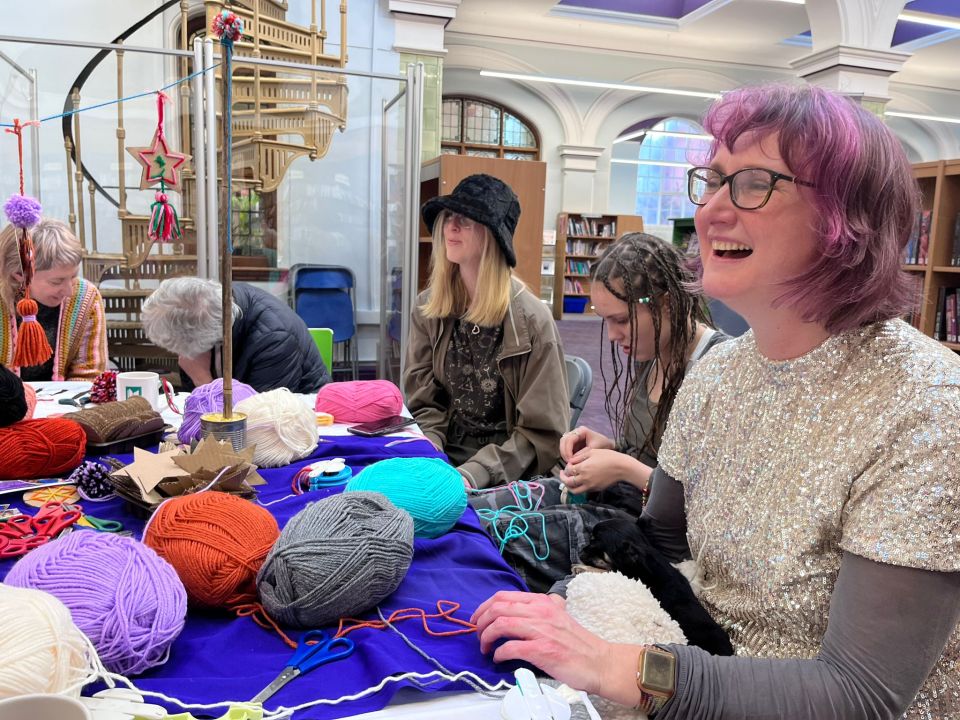
Rachel Conlisk, who runs the friendship café, Creative Active Lives in Stourbridge, West Midlands, believes finding kindred spirits helps improve people’s mental wellbeing. She set up her initiative offering free activities such as steel drumming, coding and crafting, after hula-hooping helped her find a way to connect with others when she was feeling low ten years ago. “I was anxious and depressed, but hula-hooping gave me confidence and brought me into a circle of people I felt comfortable talking to, “ she says. “That helped me feel less isolated.”
Daily mental health boosts
Few people go through life without needing help. There are many simple things we can do to improve our mental health and make a positive difference to how we feel.
Reframe unhelpful thoughts
The way we think, feel and behave are linked. Sometimes we develop patterns of thought that are unhelpful, so recognising them, thinking about them differently and replacing them with alternatives can improve your mental wellbeing. Think about what you might say to a friend in a similar situation; you’ll probably take a more compassionate approach.
Connect with others
Spending quality time with friends or family, talking to someone about how we’re feeling or finding ways to help other people can all help stop you from feeling lonely and improve your mental health and wellbeing. This can be online, over the phone or seeing someone in person.
Move your body
Being active is not just good for physical health, it’s good for your mind too. It can help you burn off nervous energy, and, while it will not make feelings of distress disappear completely, it can make them less intense. You might choose a short walk in the fresh air, gentle yoga or set yourself a bigger challenge. The NHS Active 10 app can help you track your daily walks or you can build up to running 5km in nine weeks with the NHS Couch to 5k app.
Live a healthy lifestyle
Being active, enjoying the outdoors and having a healthy, balanced diet all impact how we feel. Also, binning bad habits like smoking and cutting down on alcohol can have a positive effect on our mood. Visit nhs.uk/better-health for more help.
Start small
Make a plan for managing upcoming stressful days or events – a to-do list, travel timetable or note of things you need to take can help. If a task seems overwhelming and difficult to start, try breaking it down into more manageable chunks and give yourself credit for completing them.
The digital age has opened up access to the therapeutic field of mental health resources, helpline services and signposting
Write it down
Keep a diary of what you are doing and how you feel at different times to help identify what’s making you anxious and what you need to do to manage it. You can also write down some of the challenging situations you have overcome in the past as a reminder of what you’re capable of.
Be in the present
Take time to appreciate the present moment — known as being ‘mindful’ — and not think about the future or the past. This can be helpful as you have some control over the present, but you have no ability to change things that have already happened and have less control than you might think over future events.
Useful resources
BetterHealth-EveryMindMatters
NHS TalkingTherapies
Hub of Hope – Hubofhope.co.uk
Samaritans Self-Help selfhelp.samaritans.org
SHOUT www.giveusashout.org
HELP IN A CRISIS
If you are having thoughts about suicide, are harming yourself or have considered self-harm, it’s important to tell someone. If you can’t wait to see a doctor, get support here:
Your local 24/7 NHS crisis line: at nhs.uk/urgentmentalhealth or visit 111.nhs.uk
Under 35? Visit papyrus-uk.org, call 0800 068 4141 (9am-midnight, seven days a week, 365 days a year), text 07860 039967 or email [email protected].
If you do not feel you can keep yourself or someone else safe, call 999