
Citizens Advice calls for better use of personal data to create social tariff


The government should use Brits’ personal data about income tax rates and energy usage to create a new social tariff tailored to vulnerable households, Citizens Advice has urged.
Citizens Advice has called for the government to offer support to up to 12m households on the lowest incomes in the form of a lump sum – the value of which would be dictated by income and energy use.
Under its proposal, the average qualifying household would see their energy bill reduced by £381 – with some getting up to £1,500 per year.
To achieve this, it has called for HMRC to utilise its real-time data on household incomes, while energy suppliers know how much electricity and gas each household uses.
It suggests that combining the two would show a picture of who needs help, and how much help they need.
Adam Bell, head of policy for Stonehaven and ex-head of energy at BEIS, told City PM that targeting the support in this was a ” fundamentally a good idea, but challenging to implement quickly.”
He said: “You would need to connect HMRC’s database with customer addresses, and sanitise both data sets so that you could ensure they refer to genuinely the same person. Not all meters will have the same address associated with them as the taxpayer record you would want to link them to, so there will be a significant job in synthesising this data. But once this work is done, it will enable far better targeting of support.”
The charity is proposing for the data matching to be done inside government, overseen by the department for energy security and net zero.
No new income information would be required by government, it would be reusing data that it already collects.
Income data is currently used by the government to arrange benefits and welfare programmes.
Citizens Advice hopes that with the huge fiscal benefits to Treasury of better targeting – which mean they can help more households at lower cost to taxpayers – there will be strong incentives to continually improve the quality of data they hold.
When approached for comment, the Information Commissioner’s Office did not raise any objections to the proposal.
A spokesperson said: “The law enables responsible data sharing, and we’re always happy to offer our advice on how this can be done in a way that protects people’s rights, particularly where data sharing can support people in a vulnerable position or who may be affected by the cost of living crisis.”
Simon Oscroft, co-founder of challenger supplier So Energy, argued Citizens Advice’s push for a social tariff is highly dependent on such data being available – otherwise it would not be sufficiently targeted to save money for the taxpayer while helping the most vulnerable.
He told City A.M.: “This proposal lives or dies on HMRC being empowered to collate and share this data, and keep it updated. Without this reliable picture of household income, government will never be able to provide targeted and tailored support to low income households.
“It will avoid the need for inefficient catch-all support measures in the future, and would enable much more targeted household support for services like water, broadband and council tax.”
Energy industry backs social tariff call
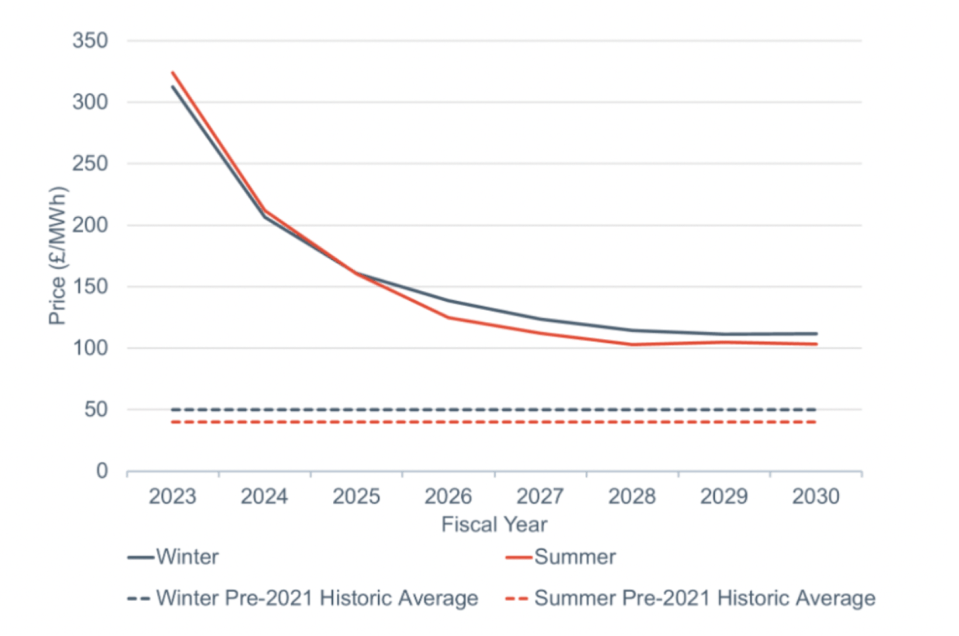
Citizens Advice is calling on Downing Street to bring in a social tariff by next year at the latest, amid expectations energy bills could remain historically elevated for the rest of the decade.
It argues the targeted financial support is the long-term solution to millions of people spending excessive amounts on their bills, based on nine months of consultation with industry leaders, energy firms, and the public.
The charity has put a price tag of £5.6bn-£5.9bn per year, depending on wholesale rates, if the EPG is maintained at £2,500 per year.
By contrasts, combined cost of support packages for households and businesses since the crisis – which have mostly not been targeted – has been tens of billions of pounds, rivalling the Covid-19 furlough scheme.
Dame Clare Moriarty, chief executive of Citizens Advice, said: “Energy affordability is a long-term problem that needs a long-term solution. A social tariff protects millions of people from spending excessive amounts on their bills.
“High energy costs have left too many people choosing between heating and eating. Uncertainty over future high prices only adds to the stress and worry felt in households across the country. This policy helps make energy bills more affordable in the years ahead and supports the shift to warmer, safer homes that are ready for the net zero transition.”
The charity’s proposal has been backed by a coalition of consumer groups and energy bodies, including financial guru Martin Lewis and Energy UK.
Martin Lewis, founder of Money Saving Expert, said: “I’ve argued for a social tariff for years, and now it could be a crucial building block to help repair our broken consumer energy market. When things return to a more normal situation we must work out what energy market we want.”
High energy costs have left too many people choosing between heating and eating. Uncertainty over future high prices only adds to the stress and worry felt in households across the country.
Dame Clare Moriarty, chief executive of Citizens Advice
Dhara Vyas, deputy chief executive of Energy UK added: “The rising cost of energy over the past 18 months has left more households than ever before in need of increasing support with their bills, and the cost-of-living crisis showing no signs of ending soon. Long-term energy affordability needs to remain a top priority.”
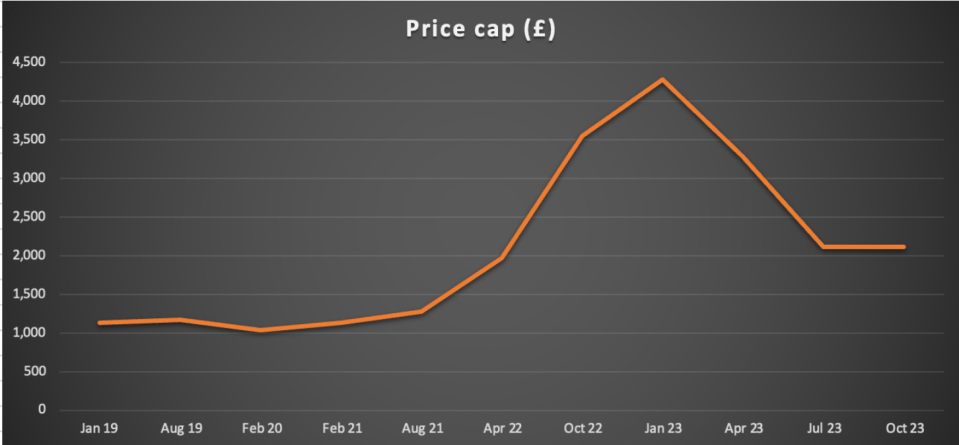
The current support package for households, the Energy Price Guarantee, is officially set to rise to £3,000 per year from April – although is now widely expected to remain at £2,500 with Chancellor Jeremy Hunt reportedly set to U-turn on the decision.
Yet, under either scenario households will still be spending more than twice as much on energy compared to just a year and a half ago.
If the EPG remains at £2,500 per year, Citizens Advice calculates that 10m households will face “crisis-level” energy costs, with more than 10 per cent of their income after housing costs going on energy – a key indicator of fuel poverty.
If the EPG increases to £3,000, that figure rises to 12m.
At the moment, many of those households would not be eligible for current forms of bill support, such as the Warm Home Discount scheme – currently offered to 3m homes across the country.

So Energy is not the only supplier to back a social tariff, with EON UK, Ovo Energy and Good Energy all pushing for the measure to be introduced ahead of the budget.
Ovo has reaffirmed its support for a social tariff this morning, following the Citizens Advice report.
Chief executive Raman Bhatia said: “Our industry, consumer groups and the Money Saving Expert all support an energy social tariff and are standing by, ready to help the government to make it happen. We now have the consensus to fix a key element of our broken energy system. Let’s not waste it.”
Eon UK’s chief executive Michael Lewis said: “The cost of energy has become unaffordable for many and is expected to remain unaffordable for a significant amount of time until wholesale costs fall back to levels last seen in 2021. For that reason as a first step we must target support at those who need it most and I strongly support the principle adopted in the report that any support should ‘provide a direct reduction in energy bills rather than general income support’.
“Not only does this reduce bills at source, it can be funded in a fairer way through general taxation, rather than paid for through energy bills which would put an unfair burden on both the poorest in society and the squeezed middle.”
The government has been approached for comment.