
Churchill myths and bad history are no reason to defend the ECHR

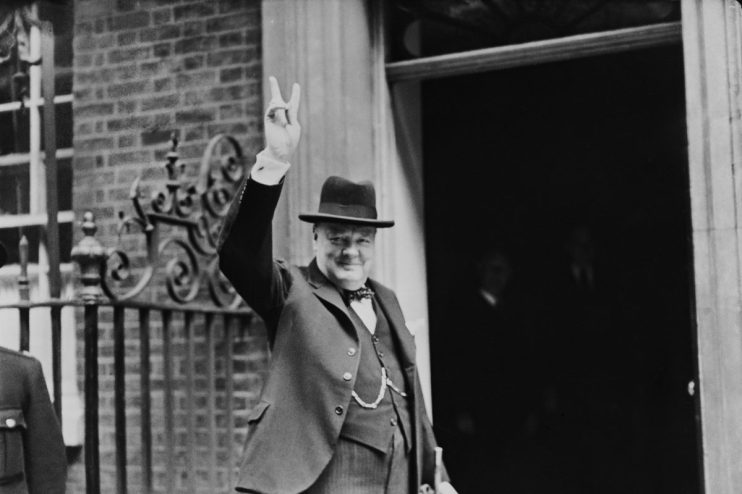
Defenders of the European Convention on Human Rights, from John Major to Keir Starmer, have peddled the fallacy that Winston Churchill was the brains behind it. He was no such thing, argues Yuan Yi Zhu
Six decades after his passing, the legend of Sir Winston Churchill remains undiminished. Almost all of his contemporaries have faded into history. This is probably why many defenders of the European Convention on Human Rights (ECHR) routinely invoke him to defend Britain’s continued membership.
According to their version of history, which has been repeated by figures as different as Sir Keir Starmer, Sir John Major and Baroness Chakrabarti, Churchill was the brain behind the ECHR as well as the European Court of Human Rights, which he conceived as a bulwark for the free world against totalitarianism. To leave the Convention would betray his memory, as well as “real” Conservatism as embodied by Churchill.
But as my paper with Dr Conor Casey for Policy Exchange shows, claims that for Britain to leave the Convention would be a “betrayal” of Churchill’s legacy are nonsense.
For one thing, it was Clement Attlee’s Labour government, and not Churchill, who took Britain into the ECHR in 1950. Churchill was by then still in opposition, and while he gave the project rhetorical support, he was either unwilling or unable to spell out how the regime would work out in practice. As to the Strasbourg Court, of all his public remarks, he only referred to it twice. Churchill was many things. But “architect” of the European Convention on Human Rights he wasn’t.
It was instead Attlee’s social democratic government that took Britain into the Convention and negotiated its details. Unlike their modern day counterparts, Labour Ministers of the time were not enthusiastic about the project, and many opposed British membership of the ECHR on the grounds that it would impede Labour’s economic program, as well as harm the Common Law. In the end, they accepted the Convention reluctantly, and with a series of “carve-outs”, the most important of which was the refusal to accept the jurisdiction of the European Court of Human Rights.
Churchill was no defender of the ECHR
When Churchill returned to power in 1951, he did nothing to further the cause of the ECHR. His government refused to allow the Strasbourg court to have jurisdiction over the United Kingdom and to allow individuals to petition the Council of Europe for redress. In the words of one scholar, Churchill and his Conservative colleagues “felt that, once in power, they did not need any additional defense of human rights at home”.
Some went even further. When Greece successfully invoked the Convention to send a commission of inquiry to the then British crown colony of Cyprus to investigate Greek complaints, Foreign Secretary Selwyn Lloyd “expressed dismay and incredulity that the Convention could have got us into this fix, and even more incredulity that it applies to so many colonies”. He at once ordered civil servants to prepare for a possible British withdrawal from the Convention.
Moreover, the ECHR of 1950 is radically different to the ECHR of 2025. In 1950 the jurisdiction of the European Court of Human Rights was entirely optional and only accepted by the UK in 1966. The jurisdiction of the Court is now mandatory. More importantly, the ECHR was signed before the Strasbourg court invented the “living instrument” doctrine in the late 1970s. Through this doctrine the Court has engaged in extravagant lawmaking that has unilaterally remade the ECHR into something few of its drafters would have recognised or supported.
The claims that the ECHR as it exists today can be considered one of Churchill’s legacies is simply false and not supported by the historical record. Whether or not one thinks that Churchill’s views are even relevant to what we should do about the ECHR today, such discussions must be based on good history and not the mythical account peddled by many of the Convention’s defenders.
Yuan Yi Zhu is a Senior Fellow at Policy Exchange. His Policy Exchange paper ‘Revisiting the British Origins of the European Convention on Human Rights’ can be read here.