
China’s greatest crisis since the 1980s promises more dark days ahead

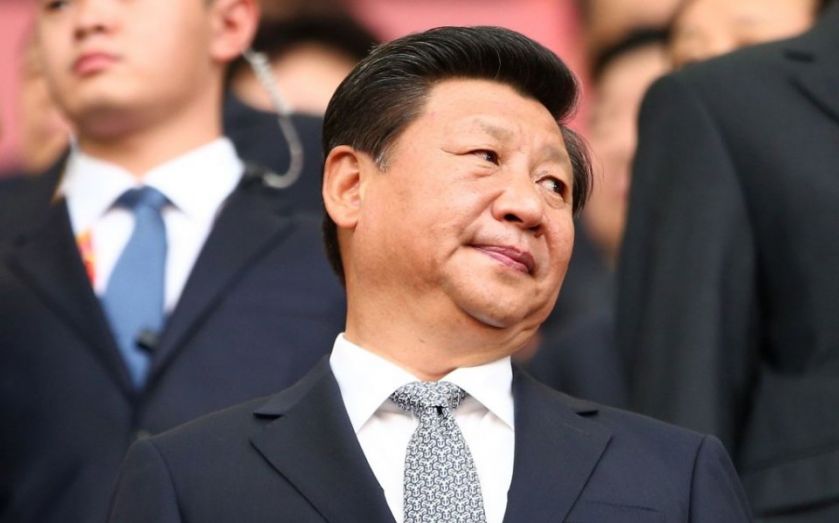
With more than $5 trillion wiped off global stock markets since 11 August, “Black Monday” this week saw declines of historic proportions, driven by concerns over the Chinese economy.
The People’s Bank of China (PBOC) has subsequently cut interest rates and eased lending rules for banks in a much-anticipated move to stem the market rout and stimulate a slowing economy.
Unsurprisingly, many are pondering whether this is the start of a new and alarming phase of the crisis that began eight years ago.
Although China’s true growth figures remain unclear – officially they are around 7 per cent, while the financial markets take a more pessimistic view of approximately 3 per cent – it is clear that Black Monday has challenged the Chinese state’s credibility.
Indeed, the country is going through a transition crisis; the greatest since the time of Deng Xiaoping, who set out to put clear water between the Mao era and modern China.
In the current crisis, President Xi’s proclaimed market-driven reformist party has made progress, but important reforms affecting the role of the state in the economy and the introduction of market mechanisms continue to suffer from dilution and the opposition of vested interests.
August’s events have shown that Xi has failed to implement a free-market model in an authoritarian regime and that further changes are needed.
But such changes may go against the government’s core economic objectives of increasing the weight of consumption in GDP and encouraging companies to move upmarket.
The slowdown in growth has pushed the Chinese authorities to adopt a more expansionary monetary policy.
Alongside cutting interest rates and lowering reserve requirement ratios, they have allowed the RMB to depreciate against the dollar while still maintaining tight control of the currency.
But some economists opine that further depreciation (up to 15 per cent) is needed to significantly boost China’s cost competitiveness – an aspect that has deteriorated sharply over the past decade.
Any sizeable depreciation of the RMB, however, would involve a stark change in China’s decade-long economic policy and a loosening of Xi’s tight economic control, including of the currency.
China’s original promise to encourage free markets was founded on two key pillars – to increase the weight of consumption in GDP and to push companies to move upmarket.
It is these policy fundamentals that would be jeopardised if the authorities decided to allow the RMB to devalue significantly.
This is because, to boost consumption, the real exchange rate must appreciate to improve the terms of trade and stimulate real household income.
What’s more, to push companies upmarket and to avoid a situation where China remains stuck at the lower- and mid-range product level, a strong RMB is required for firms to improve production sophistication.
For the latter, the policy is beginning to bear fruit as technology investment has increased, meaning any clear depreciation of the RMB would constitute an abandonment of Xi’s two core economic policies.
Taking into account that we are still uncertain as to how serious China’s growth slowdown is, it is far from definite that the Chinese authorities will elect to abandon their long-term structural objectives.
However, if China’s real growth turns out to be as low as the financial markets think, then it would be bad news for Xi’s credibility and his vision to transform China’s investment-driven economy into one led by consumption.
Indeed, as the world’s second-largest economy, there will no doubt be increasing pressure for further reforms in which the Chinese administration will have to let go of its rein on the markets, including its hold on the RMB.
Currently, there is a strong indication that Xi’s short-term considerations are outweighing his longer-term economic considerations – so watch out for more dark days ahead.