
China’s coal addiction is an obstacle to real progress on climate change

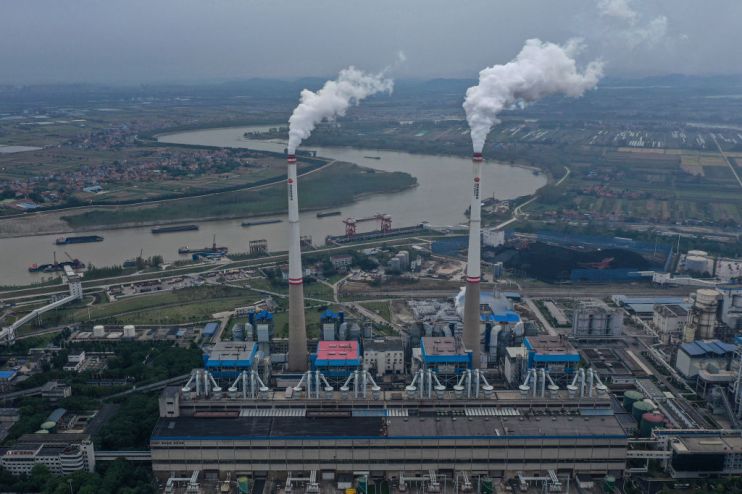
China’s love affair with coal has drawn the chagrin of the West. The most fitting analogy for coal and China is one where coal dependence is an ex from which Chinese officials just can’t quite let go. When the going gets tough, coal is a reliable fallback. Despite knowing better, China’s leaders never seem to be quite able to move on.
The country’s penchant for coal is just one example of how Beijing’s approach to climate action is underpinned by internal tensions.
On one hand, China has stormed ahead in expanding its renewable energy capacity. It produces 80 per cent of the world’s solar panels and expanded its wind power capacity by almost 100 gigawatts last year. Beijing has positioned itself to be the major beneficiary of the growing demand for cleaner technologies.
However, much of its applause-worthy progress is undone by an unhealthy addiction to building coal plants. China is the world’s largest emitter of carbon dioxide by volume, responsible for nearly 30 per cent of global emissions. By contrast, the UK accounts for 1 per cent.
Drilling down into recent statistics doesn’t make for pretty reading for a country that has pledged to hit peak emissions before 2030 and achieve carbon neutrality by 2060. This year, the number of coal-fired power stations granted approval globally has risen for the first time since 2015 – with China making up two-thirds of all plans for the polluting plants.
China was also the only major industrial power whose carbon emissions rose during the 2020 recession induced by the pandemic, as the central government relaxed a traffic light system designed to reduce overcapacity amongst coal-burning state-owned enterprises, with a plethora of coal power projects given the go-ahead.
Internationally, Belt and Road Initiative projects have tended to be rooted in high-carbon infrastructure. Chinese banks have financed 70 per cent of the world’s coal power projects over the past five years.
Beijing keeps returning to its combustible guilty pleasure because it has to water down domestic threats of social instability and economic stagnation. China’s political elites are aware of the country’s vulnerabilities to climate change. There is an underlying concern, however, that rapid decarbonisation could lead to inflation from soaring commodity prices, or instability due to a squeeze on employment in coal-related sectors. President Xi’s attention is consumed by projecting an aura of control ahead of the 20th Party Congress next year.
Recent events have given the Communist Party a taste of what a socio-economic shock might look like and are likely to make it more risk averse when weighing up the balance between stability and climate action. Power shortages across 20 provinces, triggered by the high price of coal and import bans, have prompted policymakers to rethink the pace of the nation’s energy transition.
China’s environmental policies are shaped by a variety of actors. Powerful stakeholders in the coal industry, most notably the network operator State Grid and industry body China Electricity Council, have been successful in lobbying the government to raise emissions caps. Profit-motivated foreign policy actors across the Belt and Road Initiative have consistently backed funding for overseas coal projects that are not being included in China’s emissions figures.
Climate scientists see this decade as pivotal for whether the world can get on the path to limiting temperature increases to 1.5°C above pre-industrial levels. Just now, Beijing’s 2030 pledges look insufficient to set China on a path to carbon neutrality by 2060, meaning that we can all but forget the global 1.5 target.
The UK and its allies must start leading by example. The G7’s Build Back Better World (B3W) scheme has lost momentum, and we’re failing to mobilise $100bn annually – pledged in the Paris Agreement – to support climate action in the Global South.
This lack of solidarity on the part of wealthy nations gives China a protective shield from criticism. Beijing is only going to cooperate if it is in its interest – but reputation is important to the Communist Party, which has staked political capital in cultivating the image of China as a global climate leader walking the walk.
Ultimately, the devastating impacts of climate change – the harshest of which China finds itself exposed to – will come down to whether Beijing can bring an abrupt end to its affinity with its old flame. Deep down, China’s leaders know they have to let go of coal – the world will hope it’s sooner rather than later.