
ChatGPT-5 launch took the shine off OpenAI

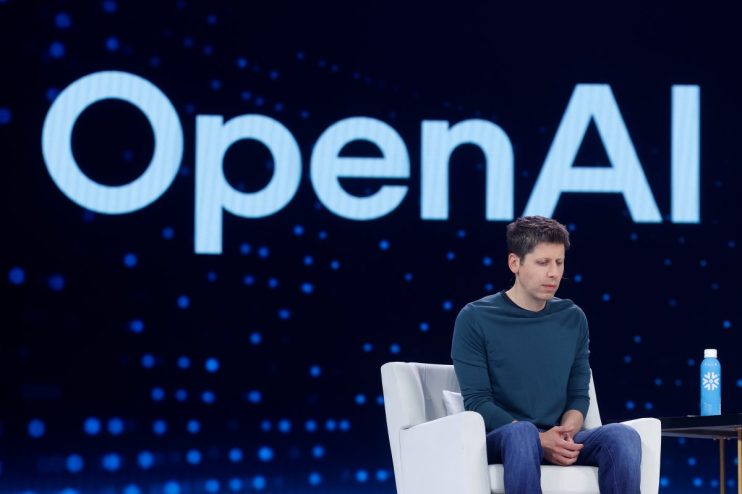
Overhype has taken the shine off OpenAI, whose much anticipated launch of ChatGPT-5 left superfans disappointed, writes Paul Armstrong
A lot of nerds walked into the GPT‑5 launch expecting a line to be crossed. More than a couple of investors, founders and boards did too. Many on both sides genuinely believed OpenAI would unveil something that felt like Artificial General Intelligence (AGI). That means an AI that can keep learning and applying knowledge in many different areas, set its own goals you can check, and make reliable cause-and-effect decisions even when things are unclear. Alas, despite the Deathstar references (why?!), a generational leap did not arrive. Instead, a capable, more reliable, albeit not fully baked, model plopped onto everyone’s desk.
The gap between expectation and reality matters for anyone making multi‑year bets on AI because capital allocation, hiring plans and vendor lock‑in are being shaped by narratives as much as by measurable capability. The data and early reviews (that aren’t born from Reddit) are clear; better enterprise performance, broad availability, higher stability, but no AGI. Many felt the release was overdue, overhyped and underwhelming, for a lot this isn’t the OpenAI many thought they knew. Probably why this was the highest newsletter open rate ‘What Did OpenAI Do This Week?’ has seen since we began back in 2022.
How did GPT-5 disappoint?
Launch execution amplified the mismatch. The livestream included benchmark graphics that critics quickly labelled “chart crimes”, with at least one bar chart showing a shorter score as a taller bar. Within 48 hours Sam Altman publicly referred to a “bumpy rollout”, acknowledged community frustration and even signalled a path to bring GPT‑4o back for users who preferred its tone and creativity. Altman’s broader unease about people trusting models with major life decisions, and the emotional backlash when models are swapped or deprecated, isn’t helping anyone but the subscription stickiness bean counters. None of this makes GPT‑5 a poor system, but it does expose a vendor behaviour pattern that leaders need to start factoring into the next three to five year plans.
OpenAI’s own materials describe reductions in factual error rates on long‑form tasks, stronger tool use for multi‑step chains, upgraded multi‑modal handling and larger context windows, with developer notes emphasising trustworthiness and better performance on factuality benchmarks. Independent commentary points to fewer collapses under complex prompts and a bias toward silence rather than hallucination when uncertain. The nerds wanted more, but Enterprise users will feel those upgrades in code generation, analytics, compliance drafting and long‑document synthesis. A better tool is a better tool, even if a keynote oversells it.
AGI was never promised by OpenAI
Plenty of insiders still expected an AGI‑ish moment due to Altman’s hype, but also the length of time that this has taken. No company has shown it working in the real world. But it’s important not to go polar; neither “AGI is here, reorg everything” nor “nothing to see here” is correct. Calibrate these amazing tools to what your workflows actually demand.
Hype is rarely an accident; it is an incentive structure. Frontier labs are in a knife‑edge business where compute costs soar, talent ‘churn’ (read: corporate talent raids) is brutal and regulator attention is rising. Over‑promising juiced up sign‑ups, recruitment and investor sentiment during the GPT‑4 era. The same playbook is now colliding with enterprise risk tolerance. When a launch stumbles, the narrative whiplash can show up as internal confusion, procurement pauses and change‑management drag. Equally, check your sources: while Reddit went into full meltdown and detail, most users won’t care GPT-5 is any different, it just works for their faux therapy needs.
Your next 90 days
Practical takeaways for the next 90 days start with governance, rather than gadgets. Tap IT and start thinking about future AI contract clauses (older version reverts, lock-ins for model changes, speed limits and price changes). Beyond this, check that the sandbox all enterprises have (cough) are testing GPT-5 to see if/where it’s better or worse than your current tools. None of this is glamorous; all of it prevents rework.
Decision quality is still the KPI that matters. GPT‑5’s reported drop in long‑form factual errors is exactly the kind of gain that moves needles in compliance reviews, policy drafting, financial analysis and legal discovery. Use those wins where you can measure them, and keep models away from unobservable judgment calls until your human oversight is designed to catch low‑frequency, high‑impact mistakes. Leaders burned by GPT‑4’s occasional “brittleness” will welcome a system that fails quieter; but remember you aren’t looking for subservience, you should be looking for proactive challenge.
Competitive positioning should assume an accelerating arms race. OpenAI is hardly alone. Deepseek’s push on low‑cost reasoning, Anthropic’s focus on reliable alignment and even Elon’s weirder and weirder Grok, keep the pressure on. Analysts will spend the next month comparing GPT‑5 to specialised reasoning models and mixed‑initiative agent stacks. Your procurement should maintain optionality across at least two families of models, ideally with an element that lets you switch without rewiring every app.
Strategic horizon setting benefits from sobriety. No credible evidence suggests GPT‑5 has achieved general intelligence. Plenty of evidence suggests meaningful productivity gains are on the table if integration is thoughtful. Continue funding the unglamorous plumbing that turns capability into value. Those investments compound regardless of which lab’s logo sits on the API.
Boards don’t need another “falling behind” sermon. Boards need a clear read on vendor incentives, a plan to separate marketing from measurable progress and a mechanism to capture real gains without buying every promise. GPT‑5 will help many teams do better work more quickly.
Over‑interpreting it as a watershed, or not, isn’t helpful. The right plan blends pragmatism and ambition: apply improvements where proven, insulate against supplier volatility and keep your options open while frontier labs race to control the narrative. As ever, it’s always right to price capabilities, not buy shares in AI theatre.
Paul Armstrong is founder of TBD Group and author of Disruptive Technologies