
Philip Hammond’s virtue signalling on low pay is hypocritical

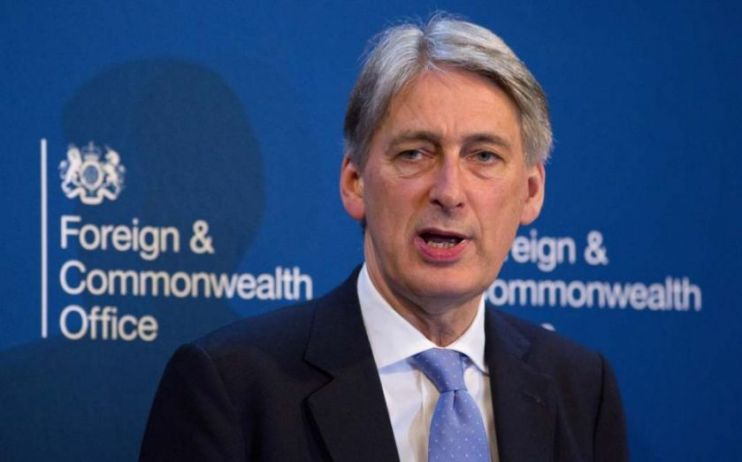
Philip Hammond may soon be out of a job. In fact, I would be very surprised if he remains chancellor of the Exchequer for more than a day or two after our new Prime Minister is chosen.
Hammond is fond of reminding his critics that his demise has been predicted before. Yet while the Tory leadership contenders may differ as to the merits of a no-deal Brexit, there is a consensus from them that we need lower taxes.
For example, Jeremy Hunt promises that he would cut corporation tax to 12.5 per cent – the same level as in Ireland, where setting the rate so low has proven a great spur to economic growth. Similarly, Dominic Raab wants to cut the basic rate by a penny a year, and Matt Hancock proposes £5bn of tax cuts for small firms.
All of this has Hammond reaching for the smelling salts, so he will have to go. Perhaps he senses that this time it really will be the end. Thus, he is on a last minute scramble for a “legacy”. Tricky, as he hasn’t really done very much.
So, he is attempting a bit of virtue signalling and claiming that he is helping the poor by using state regulation to require that they be paid more. “The Low Pay Commission will deliver on its remit for the national living wage to reach 60 per cent of median earnings by 2020,” Hammond says. “But later this year, we will need to set a new remit beyond 2020.”
Real-world economics
In the real world, pay is determined by a competitive labour market. Businessmen take natural pride in expanding their companies and taking on more staff. But they need confidence that it will make financial sense to do so. The same goes for the person taking the job. It is about voluntary contract, not “exploitation”.
Government meddling in setting pay rates just gets in the way. It makes it harder to take the risk of employing a new member of staff.
One way to mitigate that risk might be to take someone on with low basic pay but offer them a bonus or commission, or for them to start on low pay for a trial period with the prospect of a higher-paid permanent job if it works out.
Some workers might prefer lower pay in return for being able to choose their hours – this might suit working mothers looking for part-time work.
Currently, the national living wage is £8.21 an hour. It could be argued that the economy has managed to absorb it pretty well. But there are two caveats.
First of all, that is the rate for those aged 25 and older. If it was applied to teenagers as well it would be far more damaging.
Secondly, we don’t know the counterfactual. Unemployment has fallen, but it might have fallen further without a minimum wage.
Overall, it’s quite possible that the national living wage simply hasn’t made much difference on employment. However, if it was sharply increased, then it could start to bite. Instead of being merely a gimmick, it would become a serious job destruction mechanism.
Even the Institute for Fiscal Studies – hardly an outfit of free market purists – has warned politicians against a “bidding war” over the minimum wage, on the grounds that pushing up labour costs would hasten automation and a switch to capital-intensive production.
What would really help
There are alternatives the government could take that would help the low paid, and would also help reduce unemployment, rather than endangering jobs.
The first priority should be a sharp rise in the threshold for national insurance contributions.
Employees have to hand over 12 per cent of their earnings to the government on anything over £166 a week, so somebody on the national living wage working a 40-hour week has a significant tax bill.
Raising the threshold would require the chancellor to find some savings in state spending. That’s more challenging than just imposing a requirement on someone else and claiming the credit for it. But it would not be impossible to achieve.
Another priority to address is the Universal Credit earnings taper rate. Changing this would help make it more rewarding to be in work, rather than on welfare.
Before the Universal Credit reforms, people who accepted work really did end up with less money. This is no longer the case, but the taper rate means that for each £1 earned, 63p in benefits is lost. That is simply too steep for a “taper”. After all, the Laffer Curve applies to the poor as well as the rich, so reducing the taper would reward work just as tax cuts do.
There is something awfully hypocritical about Philip Hammond and the government decrying “unacceptable” low levels of pay by employers, then grabbing a chunk of a salary so that it is even lower when it finally gets to the employee.