Skip to content
City PM
  • Germany
  • France
  • Europe
  • Markets
  • Business
  • Opinion
  • Germany
  • France
  • Europe
  • Markets
  • Business
  • Opinion
Wednesday 26 February 2020 5:19 am  |  Updated:  Tuesday 25 February 2020 7:29 pm

The chancellor could use the Budget to help both startups and investors

By: Sophie Dworetzsky

Add as a preferred source on Google
chancellor
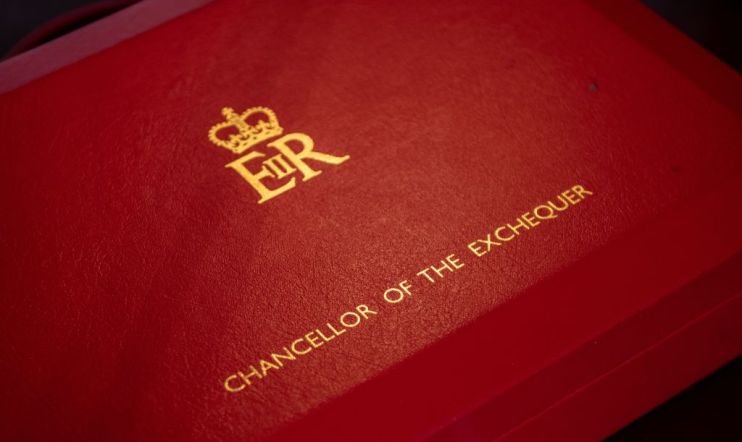
A picture shows a ministerial red box belonging to Britain's Chancellor of the Exchequer Philip Hammond, in his office in Downing Street in London on October 28, 2018 ahead of his 2018 budget announcement. - Britain's finance minister will try to navigate a political minefield on October 29 when he unveils a budget that could be scuppered by the final terms of Brexit next year. (Photo by Chris J Ratcliffe / POOL / AFP) (Photo credit should read CHRIS J RATCLIFFE/AFP via Getty Images)

Ahead of any Budget, there is always great speculation on what may be announced. This year, the focus thus far has been on when a Budget would happen and who will deliver it. 

But with the new chancellor Rishi Sunak confirming that it will go ahead on 11 March, all attention has turned to the content. 

One major issue this year is the possible reform of entrepreneurs’ relief.

This relief allows entrepreneurs to pay less capital gains tax when they sell all or part of their business. It is an important incentive for later-stage business owners, and we would certainly caution against scaling it back — more so than ever given the importance of sending the message that the UK is open for business post-Brexit.  

However, of equal importance to get right is to make sure that we maintain the reliefs that enable businesses to progress from the startup phase, and reduce the restrictions and complexity that, all too often, are real stumbling blocks at this early stage. 

In fact, it would be fair to argue that making these reliefs work better and be easier to access matters just as much during a company’s startup stage as entrepreneurs’ relief does at later stages.

There are currently a wide range of reliefs available to investors in startup companies, including the seed enterprise investment scheme (SEIS), the enterprise investment scheme (EIS), venture capital trusts (VCTs), and social investment tax relief — all focused mainly on providing investors with income tax relief. 

Then there is investors’ relief, which is focused on reducing capital gains tax, while the business investment relief is designed to encourage non-doms to invest money that would otherwise remain offshore. 

It goes without saying that these all have slightly different criteria for eligibility, are available to different investors, and apply differently.

Read more

‘Pendulum swung too far’: AIM hit with 222 delistings ahead of nomad changes 

London Stock Exchange building exterior with financial charts overlay, highlighting impact of stamp duty on share listings.

To give a flavour, an EIS investor can make a maximum investment of £1m for the present tax year and receive 30 per cent income tax relief after a three-year holding period, while an SEIS investor can make a maximum investment of £100,000 for the present tax year and receive a 50 per cent income tax relief. Meanwhile, an investor in a VCT can invest a maximum of £200,000, which must be held for five years to be eligible for a 30 per cent income tax relief.

The greatest complexity, though, arises in what does and doesn’t qualify for these reliefs, including how businesses can use the funds raised — and this complexity arises at precisely the time when new businesses can ill afford to take advice regarding how to ensure that they offer attractive investment propositions.  

In order for companies to meet the stringent criteria for these different reliefs, they must pay extremely close attention to issues including whether to offer newly-issued shares or bonds, what rights are attached to shares, and how the monies can be used. 

For example, a prominent issue that surprises many entrepreneurs is the requirement that funds raised via EIS investments cannot be used to buy all or part of another business. This remains a problem, and in our experience, frequently means that businesses either accidentally fall foul of this rule, or comply with it and so hinder their own growth.

This is only one example, but it serves to illustrate how the new chancellor could provide a real boost to early-stage businesses by simplifying and expanding the availability of reliefs such as EIS and SEIS. 

This would enable businesses to attract more investment by offering certainty that investors will get tax reliefs, without hindering their own expansion needs.  

We urge the chancellor to take this opportunity to reduce complexity for investors at the startup stage, and to do this as part of a tax policy roadmap, setting out objectives for the next five years. 

This would provide some much-needed stability in tax policy — and avoid fevered pre-Budget rumours, fun as they are.

Main image credit: Getty

Read more

Burnham’s choice of Chancellor will define his premiership

Ed Miliband speaking at a podium during a press conference, addressing energy policy reforms and climate change initiatives.

Share this article

  • Facebook
  • X
  • LinkedIn
  • WhatsApp
  • Email

Similarly tagged content:

Sections

  • Jobs and Money
  • News

Categories

  • Business
  • Money
  • Personal Development

Related Topics

  • Budget
  • Tax

Trending Articles

  • Top Burnham adviser calls for capital gains and inheritance tax hikes

  • Housebuilding giants hit with £4.5bn lawsuit for allegedly overcharging buyers

  • Brewdog chief executive quits after only one year

  • A meeting with the breakfast king of Mayfair

  • As it happened: Stocks jump on defence and metals boost; Oil on track to shed a fifth on US-Iran peace hopes

More from City PM

  • ‘Pendulum swung too far’: AIM hit with 222 delistings ahead of nomad changes 

    Markets
    London Stock Exchange building exterior with financial charts overlay, highlighting impact of stamp duty on share listings.
  • Burnham’s choice of Chancellor will define his premiership

    Opinion
    Ed Miliband speaking at a podium during a press conference, addressing energy policy reforms and climate change initiatives.
  • OBR chiefs warn jostling Labour MPs against fiscal rules change

    Economics
    Louise Haigh has hit out at Rachel Reeves' "excessive deference" for the OBR.
  • A bank tax hangs in the balance at the local election ballot

    Banking
    Angela Rayner addresses the media, discussing current political developments and her role in shaping policy decisions.
  • Exclusive: OBR calculations suggest Reeves set for borrowing spree

    Economics
    Chancellor Rachel Reeves leads roundtable with petrol retailers and energy suppliers at 11 Downing Street, Westminster
  • Reeves aims to lure US workers through tax reform

    Economics
    Keanu Reeves seen casually dressed during a public appearance in a local pub, engaging with fans and enjoying a relaxed at...
  • Labour leadership turmoil to cost Reeves up to £12bn

    Economics
    Rachel Reeves is looking to introduce planning reforms to boost growth prospects ahead of the Budget.
  • Reeves unveils ‘Great British Summer Savings’ at cost to energy giants

    Economics
    Rachel Reeves delivering spring statement at podium with financial charts in background, addressing economic policies.

City PM — European politics, business and analysis.

Europe

  • Germany
  • France
  • Europe
  • UK & Ireland

Topics

  • Business
  • Markets
  • AI
  • Technology
  • Opinion
  • Energy

More

  • Politics
  • Economics
  • Fintech
  • Legal
  • Sport
  • Life

Company

  • About City PM
  • Editorial Policy
  • Corrections
  • Contact
  • Terms of Use
  • Privacy Policy
  • Cookie Policy
© 2026 City PM · Published by CityPM Media, Bahnhofstrasse 65, 8001 Zürich, Switzerland
About · Editorial Policy · Corrections · Contact · Privacy