
Businesses are bracing for trans policy rewrites

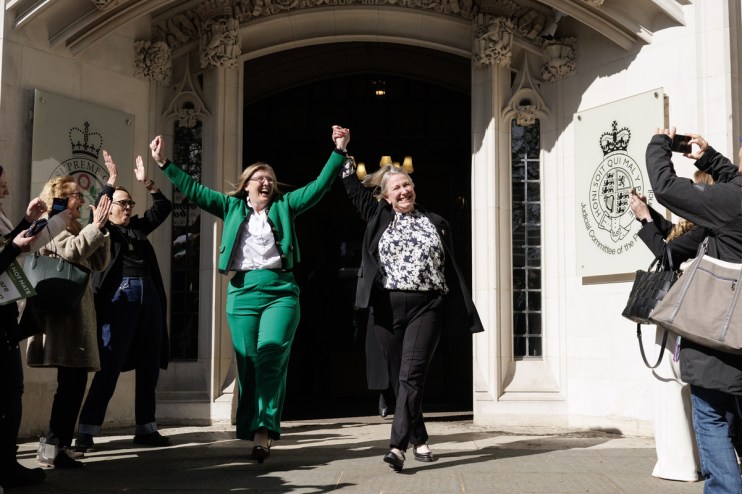
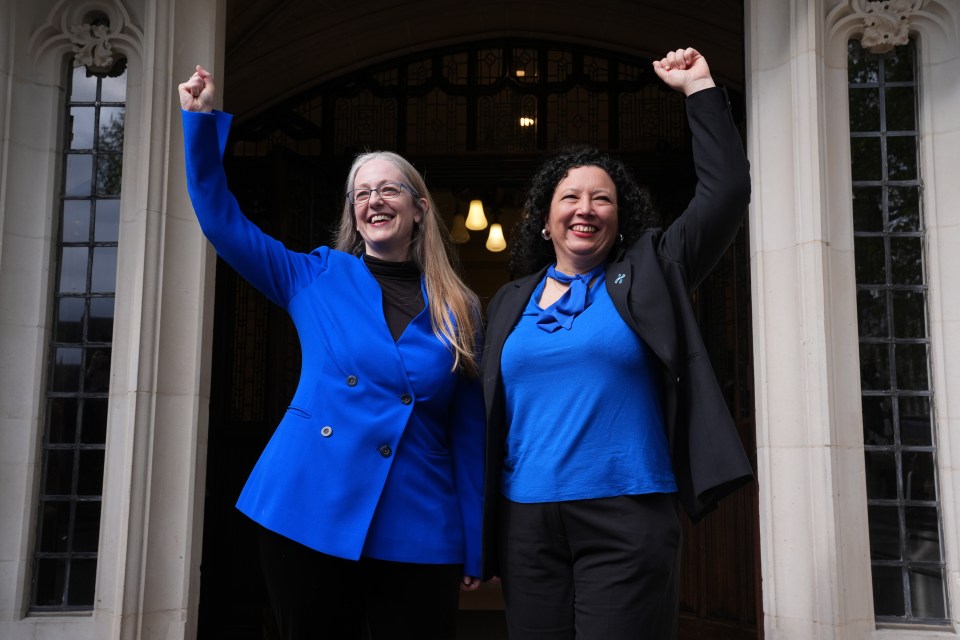
Campaigners and watchdogs say the Supreme Court’s recent ruling on trans inclusion in the Equality Act brought clarity. But for bosses, the topic is likely to become even more of a minefield, says Ali Lyon.
Ever since her appointment as chair of the UK’s human rights watchdog in 2020, Baroness Falkner has been convinced that the highly contentious debate around trans rights needed one thing: clarity.
In 2023, the Equality and Human Rights Commission (ECHR) received a letter from then equalities minister Kemi Badenoch, asking her for advice on the thorny issue of how best to define ‘sex’ within the Equality Act.
Doing so in clinical, biological terms, rather than gender identity, would, she replied, bring “greater legal clarity” in manifold ways. Sports teams, religious organisations and social clubs would all feel they could restrict their membership to ‘biological females’. It would also prevent trans women with a gender recognition certificate (GRC) from using positive action schemes devoted to females.
But above all, it would provide welcome, much-needed clarification for employers – mentioned no fewer than 12 times in her 19-page letter – many of whom, she said, were worried about potential tribunal claims should they get on the wrong side of the currently “unclear” laws.
At the time, the response sent shock waves through Britain’s trans community, which has long argued that the law should view a person’s gender in the way that they identify, not their biological sex at birth. The fallout even culminated in a United Nations representative rebuking the EHRC for giving, in his eyes, “flawed… and deeply harmful” advice.
Two years on, though, and that same advice has been settled and enshrined unequivocally in a unanimous ruling from the Supreme Court. The verdict held that sex – as it is referred to in the Equality Act 2010 – should be defined in the way Baroness Falkner desired, not the gender to which a person is transitioning nor that which their GRC declares them to be.
Invoking the same word that she had used repeatedly in her letter two years ago, Baroness Falkner welcomed the verdict with alacrity. It brought welcome “clarity”, she said, to one of the most contentious questions in British society. But in the wake of her organisation’s hastily pulled together guidance for employers, some businesses and industry bodies are worried it has brought anything but.
The guidance, which the watchdog stresses will be replaced by a more detailed interpretation of the ruling by the end of June, makes employers legally obliged to “provide sufficient single-sex toilets”. Trans women (biological men who identify as a woman) “should not be permitted to use the women’s facilities and trans men… should not be permitted to use the men’s facilities”.
And in order to facilitate the needs of trans people – the update went on to say – firms should all provide mixed facilities “where possible”.
The interpretation has put clear-blue water between what is legal in the eyes of the EHRC, and the approach to trans inclusion adopted by most of Britain’s blue-chip businesses.

Most of the country’s largest employers have publicly available policies that have tended to err on the side of trans inclusion. Telecoms giant BT provides pronoun badges to people visiting its east London headquarters. And education firm Pearson is one of several to offer gender reassignment treatments as part of its health insurance offer, including feminisation and masculinisation services up to and including surgery.
But the most widespread policy found within British corporations relates to access to gendered office facilities. Namely that, in contradiction to last week’s EHRC guidance, staff are allowed to use the loo that corresponds with their gender identity, not biological sex.
These irreconcilable positions have left employers and HR functions scrambling to establish how best legally to implement the new landscape.
“It has been busy,” says Ben Wilmott, head of public policy at the Chartered Institute of Personnel and Development (CIPD). “The issue around single sex facilities and access to those is a challenging one.
“For now, we are trying to encourage members to promote the importance of mutual respect and tolerance, and stressing the importance of trying to resolve issues informally and with consensus and agreement where possible.”
The likes of Trans in the City chief executive Bobbi Pickard can understand why Wilmott and his body have been so overwhelmed with enquiries. While Baroness Falkner and even Lord Hodge, the supreme court judge who delivered the verdict, stressed the need for clarity, she argues it has brought anything but.
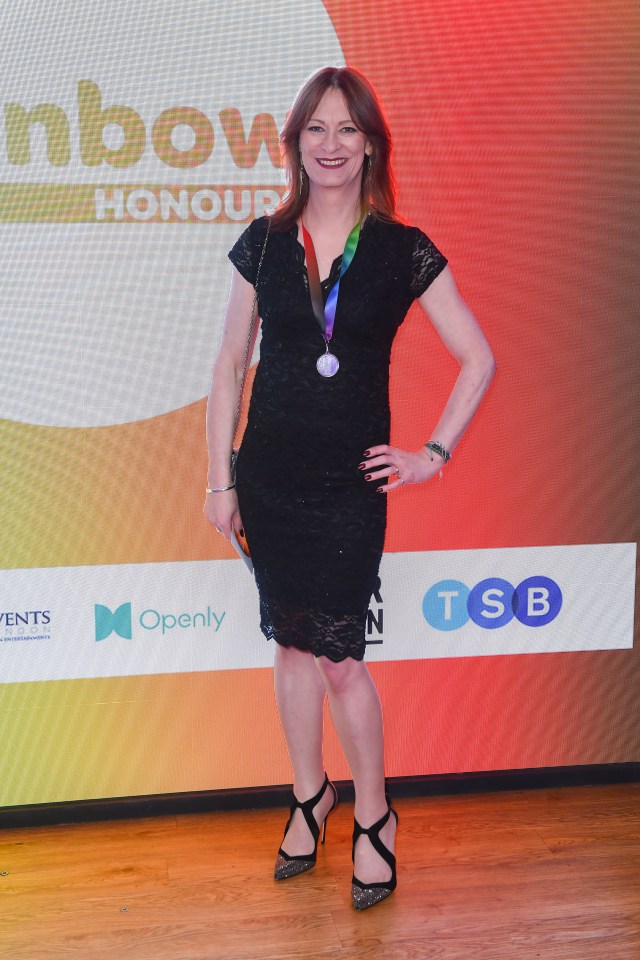
“What that ruling will bring is huge ambiguity to what employers can now do for both trans people… and cisgender people,” she says. “It’s really put them in a very sticky situation where, whatever they do, will result in indirect discrimination claims.”
Even those who agree with the guidance issued by the EHRC, and who side with Falkner’s belief that the verdict brought clarity, admit adjusting to the new reality will be challenging for many firms; especially those that have eagerly burnished their trans credentials.
Maya Forstater, the chief executive of Sex Matters and one of the UK’s foremost gender critical activists, tells City PM the ruling shows that both lawyers and organisations like Stonewall have sold employers a misinterpretation of the Equality Act. Rowing back from it will be a difficult but crucial endeavour.
“Unwinding these policies and culture inconsistent with the Equality Act will be a headache,” she says. “Many of them have adopted not only a wrong interpretation of the law, but internal incentives and structures built on that.”
Ultimately, Forstater adds, the buck will stop with businesses’ general counsel and senior leadership to enforce the new policies. And the most obvious manifestation of that will be the emergence of new ‘third spaces’.
“They will be the norm,” she says. “But there is a danger that organisations think they have to rip out all of their facilities and replace them all with gender neutral toilets. But that is also potentially indirect discrimination… and nobody likes it.”
The minefield is compounded for those for the kind of retail and hospitality firms that exist to host or serve customers.
Within its guidance, the EHRC warned shops, pubs, clubs and restaurants they may be guilty of discrimination if they fail to provide sufficient single-sex lavatories or changing rooms.
The steer has provided considerable disquiet among the hospitality sector, which is urging government to consult with business on the practical implications of the full guidance published in June.
Kate Nicholls, the chief executive of UK Hospitality, said the initial guidance, while “clear in its intentions” will sow “confusion among operators about how it could be applied in hospitality”.
“Providing multiple toilet facilities in small or listed buildings is often not logistically possible,” she added.
There is also, says Christina Peach, the DEI communications lead at the PR agency Fleishmanhillard, a host of reputational elements to consider. The ruling presents a particularly stern test to the companies who have woven trans inclusion into their marketing to customers or their communication with staff.
Any shift in position needs to feel “authentic and inclusive”, she tells City PM, adding: “Brands have a responsibility to engage with those who will be most affected by any changes, especially trans, non-binary and intersex communities.”
In the immediate aftermath of the ruling, though, bosses’ first priority will be the clarified legal ground on which they now stand.
It may be tempting to try and maintain old policies like allowing trans people into the loos or changing rooms they would prefer to use, in the hope staff or guests are sufficiently apathetic not to pursue legal action.
Campaigning lawyers like Naomi Cunningham – who chairs Forstater’s Sex Matters charity – have other ideas though, and have already launched thinly veiled threats about firms’ responsibility to comply. In a statement shared with City PM, she said risk planning by firms “will need to take account of the possibility of mass claims” from customers or staff.
Forstater, on the other hand, leaves no room for misinterpretation. Asked whether bosses who stick with those old policies can expect legal action from campaigners like herself, she answers with the kind of clarity she, and Baroness Falkner believe the ruling itself has brought.
“They can,” she says. “And they will.”