
Britain should ignore Trump’s tariffs and unleash unilateral free trade

A UK conversation focused on a trade deal with the US is depressingly small-minded. The best way to beat tariffs is to lower our own barriers and trade with the world, says Tim Focas
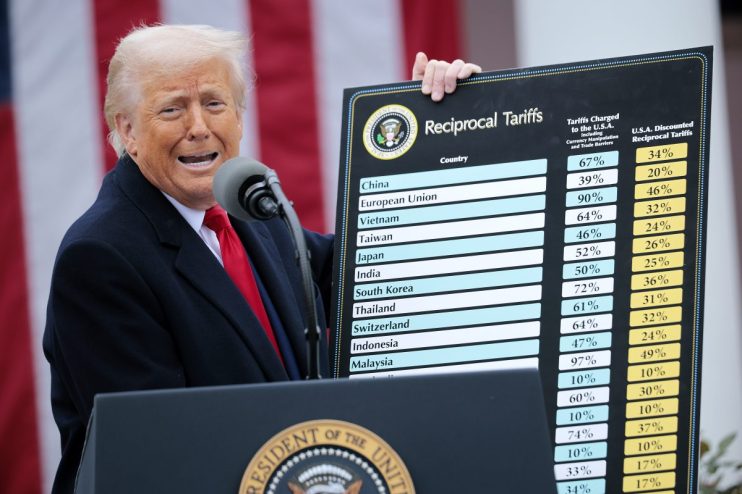
The global trade war is now an all-out economic slugfest, with Britain caught in the middle. President Trump has slapped a 10 per cent tax on nearly all British goods entering the US. A retaliatory move, he claims, against the UK’s own duties on American imports. The EU is preparing to hit back following Trump’s 20 per cent tariff hit on them, with $28bn in tariffs on US goods ranging from bourbon to semiconductors.
Yet amid all this chaos, the UK conversation remains depressingly small-minded. How do we secure a bilateral trade deal with the US? How do we respond to Trump? How do we play nice in the next round of negotiations? We’re asking all the wrong questions.
Instead of chasing deals with protectionist partners, Britain should take a bold, independent step that would immediately benefit its economy, consumers and international standing. We should embrace unilateral free trade, cutting all tariffs to zero on imports from every country – no strings attached.
That’s not a radical idea. As the economist Milton Friedman once argued, “the benefits of free trade do not depend on reciprocity”. He was spot on. Tariffs are not a weapon to use against other countries – they’re a tax on your own people. When the UK taxes Chinese electronics or Kenyan tea, it’s not Beijing or Nairobi who pay the price. It’s British families at the tills.
Tariffs are not a weapon to use against other countries – they’re a tax on your own people
Unilateral free trade would bring instant, tangible benefits. First, lower prices across the board. In a cost-of-living crisis, nothing could be more welcome than cheaper clothes, tech, food and fuel. Second, it would streamline thousands of costly customs processes, eliminating red tape and slashing bureaucracy for UK businesses. Third, it would make Britain a magnet for global trade and investment, unshackled from the slow paced nature of international negotiations.
But here’s the problem – how can Britain pursue unilateral free trade given our current obligations under the Trade and Cooperation Agreement (TCA) with the EU, not to mention our commitments under the World Trade Organisation (WTO)? First, the TCA mandates some alignment with EU regulations, and lowering tariffs unilaterally could provoke concerns from Brussels about “unfair competition” or market distortion. However, the UK’s commitment to the WTO obligations would actually work in our favour in this case. If Britain chose to reduce tariffs to zero for one country or bloc, it would need to extend that same treatment to all WTO members. This means the UK could set its tariffs at zero across the board, including for the EU without breaking any international laws.
Embrace universal free trade
That’s where the true benefits of unilateral free trade lies. Britain would be in the position to drive down costs for consumers and businesses immediately, without waiting for the EU to change its internal policies. The EU could hardly argue against a zero-tariff policy when it applies to all countries equally. Let’s address the other elephant in the room – non-tariff barriers. Even if Britain slashes its tariffs to zero, we still face obstacles in the form of regulatory differences, customs checks, subsidies and other trade restrictions imposed by other countries. Wouldn’t this still be a problem?
Yes, to an extent, but there’s a crucial distinction here. Tariffs are the most immediate and visible barrier to trade – and eliminating them provides an immediate benefit to consumers and businesses. Non-tariff barriers, on the other hand, are slower, more complicated and far less visible. By embracing unilateral free trade, Britain can push forward with a policy that simplifies cross-border transactions and gives its businesses a clear advantage in global markets.
Furthermore, it would position the UK as a leader in advocating for reduced non-tariff barriers over time. Instead of waiting for slow-moving negotiations, Britain could actively engage in international forums to promote greater regulatory harmonisation and mutual recognition of standards. As we have done under the last government when the then Chancellor Jeremy Hunt struck the Berne agreement on financial services with Switzerland. Moves like this gradually reduce these invisible barriers to trade.
Critics will argue this gives away leverage. But we don’t need leverage. We need lower prices, greater competition and better choices. Others warn that British industries will be undercut. But protectionism only protects inefficiency. Give our businesses a level playing field, not a crutch and they’ll compete with the best in the world. If support is needed during adjustment, then let government target that support, rather than punishing every household with blanket tariffs.
Then there are those who argue that unilateralism is a lonely road. Not at all. Hong Kong, Singapore, and New Zealand have pursued low or zero tariffs for decades – and reaped the benefits. In fact, Britain once led the way. The repeal of the Corn Laws in 1846 sparked a golden age of growth, prosperity and international leadership. We’ve done this before. We can do it again.
Rather than wasting the next four years tiptoeing around Trump, let’s look after our own interests. Let the US and EU fire off tariff salvos like it’s the 19th century. Britain should rise above it, lead in the 21st, and declare we’re open for business – and this time it is for good.
Tim Focas is head of capital markets at Aspectus Group