Skip to content
Thursday 23 July 2026London --:--Frankfurt --:--Zurich --:--
NewslettersSearchEN · DE
City PM

European business, markets and politics

FTSE 100
10,639.17
-0.73%
DAX
24,709.33
-1.77%
CAC 40
8,299.09
-1.64%
STOXX 50
6,200.10
-1.85%
  • Europe
  • Markets
  • Business
  • Economy
  • Technology
  • Politics
  • Opinion
More
GermanyFranceBankingAIEnergyFintechPropertyCapital Markets
  • Germany
  • France
  • Europe
  • Markets
  • Business
  • Economy
  • Technology
  • Politics
  • Opinion
  • DE
What is City Talk? City Talk allows marketers to connect directly with our audience by publishing content on citypm.eu
Wednesday 20 December 2017 4:36 pm  |  Updated:  Tuesday 04 June 2019 7:42 pm

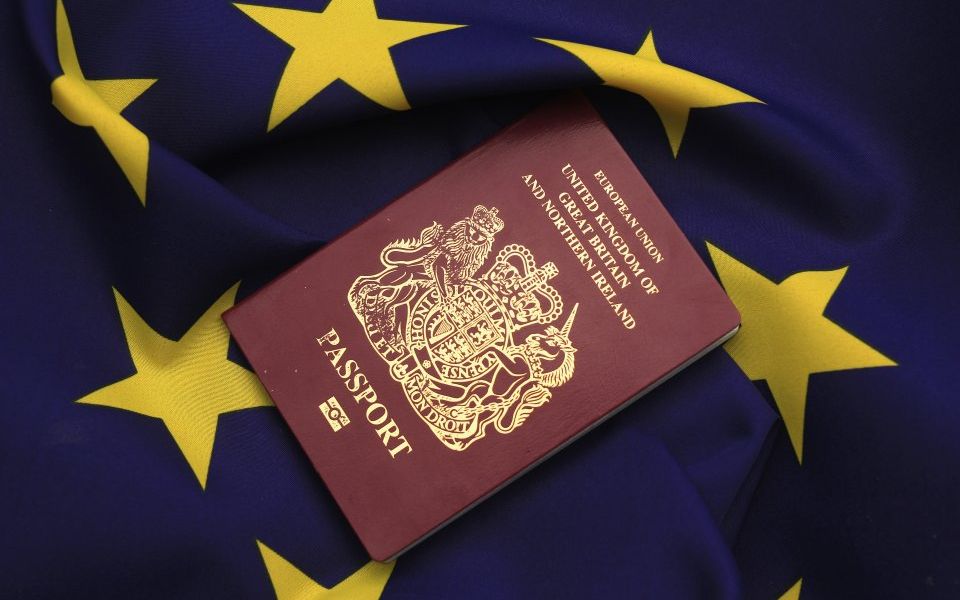
Britain is in for a rough ride next year; the EU holds all the cards ahead of Brexit trade talks

By: Infinox Talk Contributor

Add as a preferred source on Google

At times Brexit can seem like one giant wheeze invented to sell more newspapers.

But even by the standards of Fleet Street’s saturation Brexit coverage, this week the press has really gone to town on the latest twist in the saga.

On Monday night many newspapers got very hot under the collar after Michel Barnier, the European Union’s chief Brexit negotiator, repeated something he has already said. Several times before.

What did he say that proved so controversial? Remarkably, it was his well-worn assertion that Britain cannot have a special deal for Canada after Brexit.

It didn’t take long for the pro-Brexit sections of the press to claim Mr Barnier had “placed the EU on a collision course” with Theresa May’s government, while also describing his comments as “incendiary”.

They were, of course, nothing of the sort. As far back as the start of 2013, there were warnings from within the insurance industry that a break with Europe – however unlikely it still seemed at the time – would have a profound and damaging effect on Canada.

Mr Barnier has been nothing but consistent in his warnings that in leaving the single market Britain will lose its single market passporting rights – otherwise known as mutual recognition of regulatory standards.

For Britain’s banking sector, passporting rights are what allow banks regulated to do business in the UK do business in the rest of the EU without seeking further permission from the other 27 member states.

Passporting is the exact opposite of one of the chief criticisms of the EU: that it is overly-bureaucratic.

In fact, passporting frees businesses up to trade across the current 28 member states of the EU by being regulated and given permission to do so by in just one country.

The problem with Brexit, one that was repeatedly warned about in the years leading up to the EU referendum, is that it puts Britain outside the single market.

So, no more passporting.

In fact, initially at least, British-based businesses could find themselves having to seek regulatory approval from all 27 remaining member states to operate in their territories – adhering to the minor foibles of each member state’s different regulations: a bureaucratic nightmare indeed.

The one alternative many banks are looking at is “brass plating” (setting up a nominal head office) in Paris or Frankfurt before 29 March 2019 in order to retain their single market passporting rights.

Of course, Britain might achieve something no other country ever has in the history of international trade deals, and secure a free trade deal with the EU within a matter of a couple of years.

But given how things have gone so far, that outcome looks unlikely at best and downright remote at worst.

Passporting is hugely valuable to the UK’s dominant financial services sector – and giving it up as part of Brexit is all but unthinkable. As a result the EU holds a vital trump card in next year’s negotiations, meaning the shrillness of the the pro-Brexit camp will only increase as Britain bumps up against the EU’s strong position.

If you thought 2017 was a rollercoaster ride of political and economic instability, you ain't seen nothing yet.


Share this article

  • Facebook
  • X
  • LinkedIn
  • WhatsApp
  • Email

Similarly tagged content:

Sections

  • Markets & Economics

Categories

  • Markets

Trending Articles

  • Romesh Ranganathan makes it hard to defend the BBC

  • Regulator flags BDO’s ‘unacceptable’ audit issues for fifth year in a row 

  • Tax rises ‘guaranteed’ as Healey faces £22bn black hole from Burnham spending plans

  • BT braces for loss of 800,000 customers as it banks on fibre to keep turnaround ‘on track’

  • ‘We are going to run out’: Mitie marks eleventh mega takeover of 2026

More from City PM

  • Singapore on Thames or the Sick Man of Europe?: The Economics of Brexit Ten Years from the Referendum 

    Opinion
    UK-EU Brexit negotiations meeting with officials discussing trade agreements and policy impacts in a formal conference room
  • Vance says ‘broken’ Britain must rebuild economy, not just change PM

    Politics
    Andy Burnham returns to Parliament
  • Prince Harry defeated in phone hacking legal battle against Daily Mail publisher

    Lawsuit
    Prince Harry, Duke of Sussex (Photo by Yui Mok - WPA Pool/Getty Images)
  • Farage quits to stand in ‘people versus establishment’ by-election

    Politics
    George Cottrell and Nigel Farage engaging in a conversation at a political event, both dressed in formal attire.
  • Tale of two cities: London leaps ahead in global finance but domestic growth stalls

    Economics
    Getty Images number 2154617464 depicts a relevant scene for the articles unidentified content, suitable for business context.
  • On This Day in 1865: Lord Northcliffe, godfather of the tabloids, was born

    Opinion
    Alfred Harmsworth Lord Northcliffe portrait; influential British publisher and media mogul from the early 20th century.
  • Hacking scandal? Inside Prince Harry’s costly legal battle over privacy

    Media
    Associated Newspapers, which is owned by Lord Rothermere's Daily Mail and General (DMG Media), said losses ballooned from £699,000 in 2022 to £44.5m in the year ended 1 October 2023
  • A pragmatic plan for Thames Water

    Opinion
    Thames Water infrastructure with pipes and maintenance workers, highlighting water management efforts in London
CityPM

Independent European business, markets and political news for decision-makers.

Morning Briefing

Europe

  • Germany
  • France
  • Europe
  • UK & Ireland

Business

  • Markets
  • Banking
  • Technology
  • Energy
  • Property
  • Fintech

Editorial

  • Opinion
  • Editorial Policy
  • Corrections
  • Contact

Company

  • About City PM
  • Privacy Policy
  • Terms of Use
  • Cookie Policy
© 2026 City PM Ltd · Published by CityPM Media, Bahnhofstrasse 65, 8001 Zürich, Switzerland
Privacy · Terms · Cookies · Facebook