
Britain needs to run in circles, especially when we buy new clothes and other goods

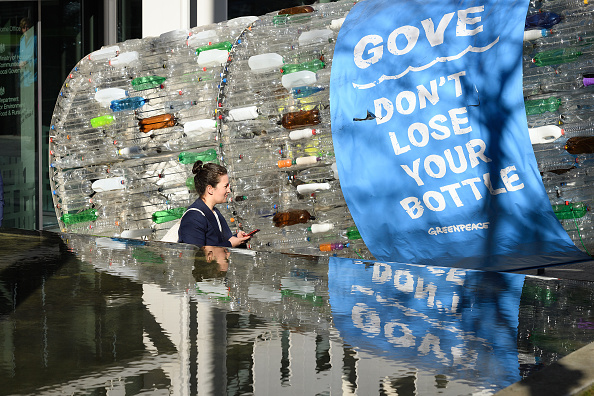
It might not make a dent in the cost-of-living crisis, but soon people will be able to get a small cash sum for every plastic bottle they recycle. The scheme, lauded by environmental campaigners, was finally approved last Friday.
A rare slice of positive news, however, was overshadowed by a familiar problem in this Broken Britain we’re living in: delays. Michael Gove first suggested the scheme five years ago. It also broke a manifesto pledge of including glass bottles in the recycling effort.
Countries that already have glass and plastic bottles return schemes – like Norway or Germany – have far better recycling rates than us, according to Sarah Webster, director of sustainability at Britvic. A bottle for a coin is one of the most basic examples of how a circular economy works. Yet eighty-seven per cent of British adults don’t know what the circular economy is, according to a survey commissioned by YoungPlanet.
Moving to a circular economy would mean shaking up the way we consume, going from a linear model in which objects are produced, used and then thrown away, to a circular one based on repair and re-use. This reduces emissions, waste generation and the exploitation of natural resources.
This model makes sense not only because it’s more sustainable, but also based on economic value. Between 2014 and 2019 it created 90,000 new jobs in the UK, according to Green Alliance. On top of that, circularity “builds economic security, as there is less reliance on imports from other countries”, says Heather Plumpton, policy analyst at Green Alliance. It could have a huge impact on industries like electronics, where we’re still addicted to the Chinese supply chain.
It might sound complicated but it’s not. We already entered the circular economy without knowing it. We’re doing it when we buy second-hand clothes in a vintage shop. They’re doing it in Prague, where you can bring back glass beer bottles to the pub in exchange for a euro – another example of successful deposit return schemes.
Circular models are linked to emissions targets. Emissions reporting – especially scope 3, the indirect emissions in a company’s value chain – drives the supply of, and demand for, circular goods and services. Through reporting, companies see how much they cut on the causes of scope 3 emissions – like waste disposal – by embracing circular practices.
This progress can begin with voluntary disclosure, but “ultimately will require that governments provide structure for greenhouse gas emissions reporting”, says Dan Esty, Hillhouse Professor at Yale University. This is the main issue: scope 3 emission reporting is not compulsory.
There is growing demand from stakeholders through international organisations, according to Philippe Pernstich from carbon-reporting start-up Minimum. Yet it is naive to think that companies of all sizes will do serious scope 3 emissions reporting without being compelled to do so.
The UK is one of the leading countries when it comes to scope 3 emissions, but that’s only because the bar is set so low. And we are lagging on initiatives which rely on a circular economy, far behind Belgium, the Netherlands and Scandi countries.
This is partially because the UK “has a culture of ownership rather than usership”, says Anthony Burns, chief operating officer at ACS Clothing, a company enabling brands to rent and re-sell second-hand clothes. But the biggest reason is the lack of incentives. Many companies don’t yet have the data and expertise to calculate their scope 3 emissions. They don’t have the language and the numbers to sell the idea to their audience.
This can all change. Consumers can step away from the throw-away economy. It’s a no-brainer economically too, as reused products are almost invariably cheaper. For companies, solutions like scrapping the value-added tax on sustainable fashion would accelerate change.
This transition is already underway. All stakeholders – from consumers to investors and the government – would be better off riding the wave rather than chasing it when it’s too late.