

Britain may be left out in the cold over Russia row

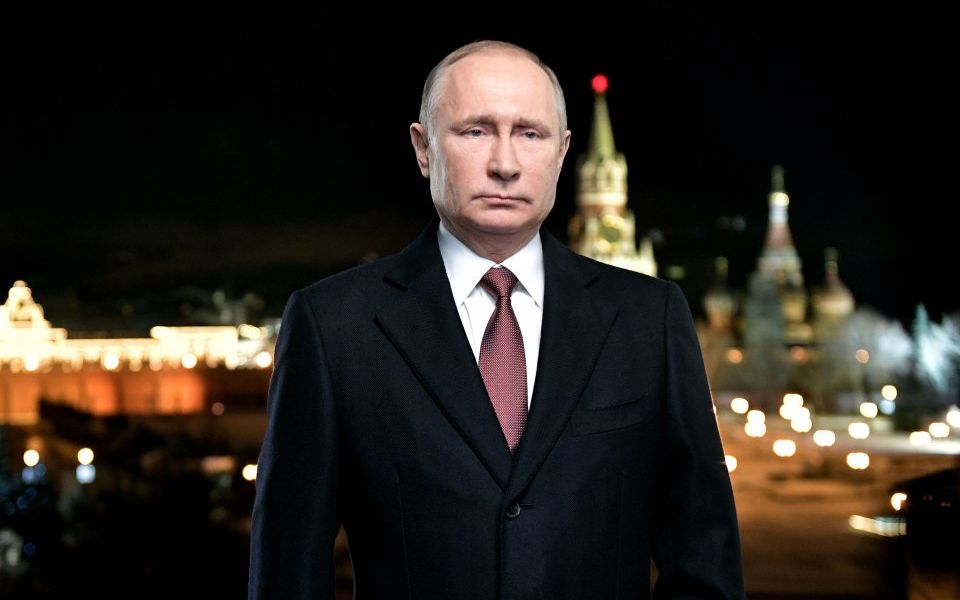
As Britain froze again over the weekend thanks to the mini Beast from the East, another chill wind blew across Europe from Russia.
Russian President Vladimir Putin was re-elected with more than 76 per cent of the vote and immediately ratcheted up the war of words between his country and Britain.
Mr Putin’s victory in Russia’s general election was all but assured before voters even went to the polls on Sunday. He will remain President of Russia until 2024 and will become Russia’s longest serving leader since Joseph Stalin.
For many, the similarities between the two don’t end there. Political opposition in Russia is scant at best, the media is tightly controlled and Russia’s neighbours look east with fear.
Meanwhile, it is hard to look at the current state of Britain’s relationship with Russia and not conclude that the UK, at least, is entering a new cold war with the former Soviet empire.
But might Britain be the one left out in the cold? It is a question the prime minister was asked last Wednesday during Prime Minister’s Questions and Theresa May was unable to give a definitive answer.
France, Germany, Italy and the US all gave lukewarm initial support to Britain in the wake of the attempted murder of Sergei Skripal and his daughter Yulia. While that support has grown over the past week, many European nations know there is little they can do in response.
Keeping warm
This is ultimately because of a failure of globalisation. While free trade may stop wars, it often fails to address certain injustices that leave it open to attack by populists.
Russia can act with impunity in Syria, the Crimea and even, it seems, Britain. This isn’t because it has nuclear weapons – although that certainly helps – but because it has oil and gas in abundance.
Germany is about to embark on the building of a new gas pipeline to Russia at a cost of €9.5 billion (£7.95bn). Poland, Ukraine and the Baltic states all fear the pipeline will increase Europe’s dependence on Russian gas. They are also concerned the gas pipeline will provide the Kremlin with billions of dollars of additional revenue to finance a further military build-up on the European Union’s (EU) border.
In January, then US Secretary of State, Rex Tillerson, outlined US opposition to the pipeline.
“Like Poland, the United States opposes the Nord Stream 2 pipeline. We see it as undermining Europe’s overall energy security and stability,” Mr Tillerson said.
Such a project presents serious problems for Germany and for the rest of Europe. On the one hand, Germany needs the gas pipeline, on the other hand its ability to stand up to Russian aggression, perceived or real, is diminished.
Russia has already shown itself willing to cut off gas supplies as it has done to Ukraine. What would stop it doing so in the event of a breakdown of diplomatic relations between Moscow and Berlin, or Moscow and Brussels?
As Europe becomes ever more reliant on Russian gas to keep warm in the winter, its ability to chastise Russia is weakened.
Trade imbalance
In fact, the annexation of Crimea by Russia three years ago was a salient lesson in just how weak Europe has become. While Western sanctions were imposed, they did little to weaken Mr Putin. Equally this time around, regardless of some of the language being used by the British government, there is little else it can do beyond having already expelled 23 “spies” and withdrawing officials from this summer’s World Cup.
In much the same way, Saudi Arabia has been able to act with impunity in Yemen for the past three years, as well as much of the rest of the Middle East. The West, thanks to its reliance on oil, has appeared to do little to curtail Saudi Arabia’s actions, leaving it open to criticism from Russia of double standards.
While globalisation can be a force for good, it only works if there is balance. Where there is an imbalance in trade that can be exploited by one party, it often leaves the other side powerless to address behaviour that, in the most extreme circumstances, violates its sovereignty.
Britain, as well as much of Europe, is energy poor and reliant upon imports of oil and gas.
Unless that changes, there is little Britain can do about Russia without significant support from its NATO allies. And that is likely to become harder to come by, as Europe becomes ever more reliant on Russian gas.
No wonder those countries closest to the Russian border – Poland, Ukraine, Latvia, Estonia and Lithuania – are concerned.
To find out how INFINOX Capital can help you reach your financial goals, visit www.infinox.com.