
Britain does not have to accept industrial decline

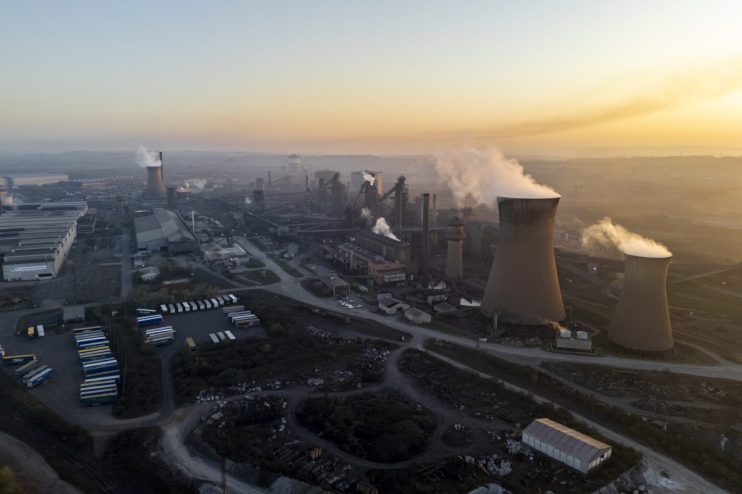
Britain’s industrial decline was not inevitable. It’s time to revive Britain’s industrial economy as a national priority, writes Rian Chad Whitton
Policymakers must treat their survival as a national priority.
At the turn of the millennium, Britain’s manufacturing sector was strong. This was especially true of its energy-intensive industries such as steel, cement, chemicals, glass, ceramics and petroleum refining. The UK had the fourth-largest industrial economy in the world, and more than 800,000 people worked in foundational industrial sectors such as oil and gas extraction, refining, metals, chemicals and inorganics. Contrary to popular belief, Britain’s energy-intensive production did not peak in the 1970s; it reached its high point in 2002.
But in 2026, Britain stands close to an industrial crisis. Energy-intensive industries – from steel and ceramics to industrial gases and poultry processing – now operate at roughly half their output in 2000. Employment has dropped from over 800,000 to under 413,500; in 2023 alone it fell eight per cent, and is continuing to slide with high-profile closures like Prax Lindsay refinery and the Fife ethylene plant.
Some pressures are global. China’s rapid manufacturing expansion since 2000 has pushed down prices worldwide, squeezing margins for producers in advanced economies. Overproduction of steel, plastics and bulk chemicals in East Asia has depressed global markets. Many Western governments responded with protective measures; Britain largely did not.
But one major factor is down to government policy: energy costs. Since 2004, both gas and electricity prices for industry have risen sharply, with British industrial electricity becoming the most expensive in the developed world. This is directly tied to Britain’s Net Zero commitments and the policies designed to support them.
Since the 2008 Climate Change Act, Britain has been legally bound to five-year carbon budgets limiting domestic emissions. While electricity generation has decarbonised rapidly, total consumption emissions – the carbon embedded in imports – have barely fallen. These policies have pushed costs onto energy bills through green levies and indirect requirements such as subsidies for backup gas power and expanded transmission. For many factories, high energy prices are now the decisive factor behind closures and job losses. These costs are expected to rise even as wholesale gas prices flatline.
Steel is the most visible casualty. British Steel Scunthorpe and Liberty Steel Rotherham collapsed as commercial operations, leading to effective nationalisation. Tata Steel’s Port Talbot plant survives only because of a £500m government package. Sheffield Forgemasters, essential to defence-grade steel production, was taken under Ministry of Defence ownership in 2021 and still requires tens of millions in annual support. Sheffield-based TiVac Alloys, a major producer of ferro-titanium alloys, also folded.
How to revive Britain’s industrial economy
But the crisis goes well beyond steel. Rising carbon costs, in the form of the Emissions Trading Scheme (ETS), have damaged sectors dependent on cheap natural gas for industrial heat. In 2025, Britain will have gone from six operational oil refineries to four, while two out of three ethylene crackers have closed. Since Covid, the country has ceased production of all ammonia, a key input in nitrogen fertiliser. Cement production is 72 per cent of its 2007 level, while imports have more than doubled and prices have risen significantly, fuelling inflation in the housing sector.
Some argue that Britain should accept this decline and specialise in high-value sectors while importing basic materials. But Britain’s retreat from heavy industry has coincided with weak productivity growth and reduced influence in advanced technology. Materials such as steel, glass, plastics and cement underpin modern supply chains. New industries like battery manufacturing, drones and the growing reliance on data centres to power advances in artificial intelligence are extremely energy-intensive.
What I have dubbed the “foundational industrial economy” (FIE), which includes extraction and energy-intensive manufacturing, employed 445,000 people in 2023 – just 1.4 per cent of jobs. But it generated £57bn in gross value added (GVA) – 2.5 per cent of the British total. The average FIE job produces £128,000 in value added compared with £72,000 for the average British worker, a 77 per cent productivity premium. Outside London, the sector accounts for 1.7 per cent of jobs but three per cent of GVA. These are not low-productivity jobs; they are the backbone for hundreds of cities and towns.
Reversing decline requires action, as I outline in Destroying the Foundations, my new report with the Prosperity Institute. Net Zero-related levies should be removed from energy bills. Wholesale costs could be reduced by abolishing the carbon price support and expanding free allowances under the ETS, or even getting rid of the cap-and-trade system altogether. Subsidies for speculative technologies such as green hydrogen should be cut or redirected toward essential industrial needs.
Britain’s 78 per cent effective tax rate on oil and gas production should be lowered, and restrictions on new field licences lifted. While this will not eliminate the need for imports, it will support around 30,000 high-value jobs, improve energy security and reduce the current-account deficit.
The FIE drives productivity, supports wider manufacturing and provides high-paid jobs in regions that need them most. If these industries collapse, the jobs will not be replaced by better opportunities. Policymakers must treat their survival as a national priority. Britain cannot prosper without a solid industrial base.
Rian Chad Whitton is an analyst at Bismarck Analysis. He writes a Substack on British industry, Doctor Syn