

Botswana and Zimbabwe typify Africa’s diverse capital market challenges


CFA Institute has examined Africa’s 10 largest capital markets in a major report compiled by Heidi Raubenheimer, CFA, our senior director for journal publications. Here we highlight key developments in Botswana and Zimbabwe.
Botswana: mining-dominated exchange seeking to innovate
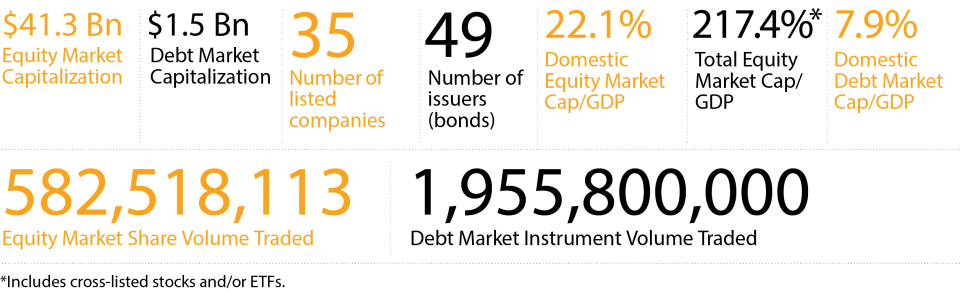
Botswana is one of the fastest-growing economies in the world. But the Botswana Stock Exchange (BSE) has just 35 equity listings and 49 bond listings. Of these, the vast majority are issued by mining companies.
The debt market is shallow, with government bonds accounting for 65% of bond listings and more than 90% of trading.
Exchange activity may be low, but future prospects are improved by innovative policies. The BSE has tried to boost listings and trading by demanding a higher free float for listings, introducing market making and promoting cross-listings with other southern African countries. In 2019, the exchange launched a board focused on small and medium enterprises (SMEs).
The BSE has also launched education initiatives to improve investment knowledge. As a result, at the end of 2018, the exchange had 90,000 registered investor accounts compared with just 20,000 in 2013.
There is also an energetic attitude toward pensions, with retirement funds allowed to invest up to 70% offshore and funds starting to make allocations to offshore private firms.
In the near future, the BSE is planning to launch depository receipts, which will broaden investor exposure to international securities.
Meanwhile, the bond market is moving toward centralisation of trading, clearing, and settlement of trades, which should unlock capacity, increase efficiency, and align with IOSCO’s Principles for Financial Market Infrastructures, thereby improving the attractiveness of the bond market to international investors.
Zimbabwe: RTGS dollar and online trading platform launch
Zimbabwe has one of the oldest financial systems in Africa, with the Zimbabwe Stock Exchange established in 1896.
There are 16 securities dealing firms, 16 asset management firms, 31 securities investment advisers, five securities custodians and two security exchanges registered with the financial regulator.
Beginning in 2009, to counteract runaway inflation, Zimbabwean businesses were able to use foreign currencies for trade.
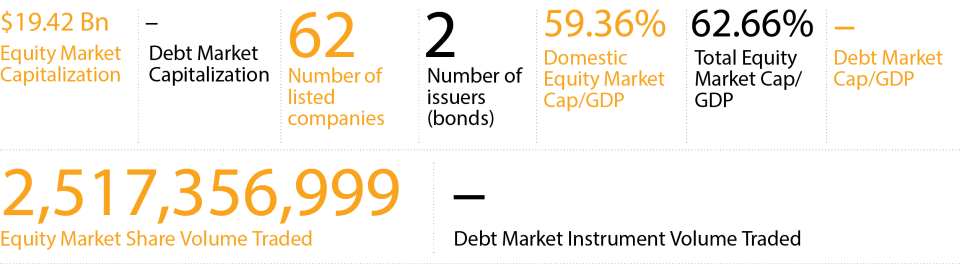
The stock exchange has witnessed huge outflows: equities sold by foreigners increased by 466% from USD42 million in January 2019 to USD237.83 million in February 2019.
In February 2019, a new currency, the RTGS (Real Time Gross Settlement) dollar was launched for trading.
The economic situation has complicated Zimbabwe’s attempts to stimulate capital markets, including the automation of the stock exchange and the launch in 2018 of the country’s first online trading platform, which allows trading by mobile phone.
In future postings… we will take a look at capital market developments in East Africa & Mauritius; Nigeria & Ghana; and Egypt & Morocco. Click here for our earlier look at developments in South Africa and Namibia.
Visit CFA Institute for more industry research and analysis.
About the report
Our tales of African capital markets’ history and future reflect the journey of CFA Institute: from a lunch group in New York City in 1937 to a diverse collection of 170,000 members and 157 societies worldwide in 2019, united with the purpose of leading the investment profession globally for the ultimate benefit of society.
Some of Africa’s exchanges were established in early colonial times. South Africa led the way on the heels of the diamond and gold rush, followed by Zimbabwe, Egypt, and Namibia (a German colony at the time) – all before 1905. Some didn’t outlive the commodities rush but others are still thriving – substantially diversified and modernised.
Some capital markets were established more recently, and their development tells of independence and nation-building: Nigeria in the 1960s; Botswana, Mauritius and Ghana in 1989; Namibia post-independence from South Africa in the 1990s. Others, particularly the East African exchanges, are new and leapfrogging toward greater participation.
All tell of how regulation, trading technology and fintech are enabling fairer, faster and lower-cost participation in finance and investment for more market participants.
The CFA Institute Research Foundation brief was developed in conjunction with the African Securities Exchanges Association (ASEA).
Authors:
Botswana
Kopano Bolokwe, CAIA, MBA, Head of Product Development, Botswana Stock Exchange
Kagiso Sedimo, CFA, FRM, Portfolio Manager, Morula Capital Partners
Zimbabwe
Dennis Murekachiro, Brighton Mutingwende & Norbert Mungwini, Investment Professionals of Zimbabwe
Image credits: JEKESAI NJIKIZANA/AFP via Getty Images