
Beware the unintended consequences of hiking the minimum wage

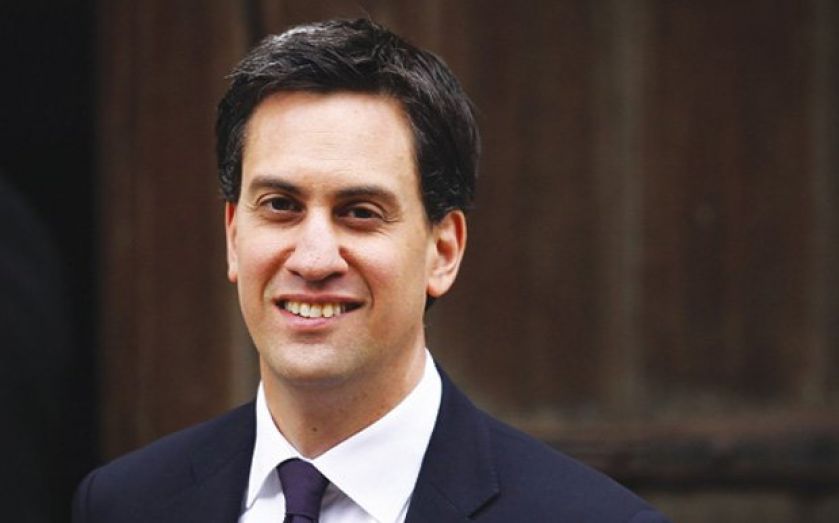
ED MILIBAND’S promise of an £8 per hour minimum wage by 2020 is one of the latest salvoes in the political battle over living standards. We can expect more help for hard-pressed families from the other party conferences, including the trumpeting of October’s above-inflation rise in the minimum wage. With real wages having fallen dramatically, it should be no surprise that parties are seeking to outbid each other on how they will help household budgets.
I am well aware that those who warn of the costs of raising the minimum wage risk being accused of being heartless or greedy. But you can strongly support the goal of raising incomes for the low paid while worrying about the means – particularly when the government will grab a share of any minimum wage increase through national insurance and, often, income tax.
Nor is it a criticism of the minimum wage in principle. Its introduction in the UK in 1999 – at £3.60 an hour – was long overdue. Increasing the minimum wage, in a way which is affordable, must be right. But whoever is in government needs to understand that higher wages lead to increased costs for employers. And when costs cannot be recouped, this has damaging consequences.
Take, for example, care homes – a sector I know well through Four Seasons Health Care, the largest private operator. It is also an industry at the heart of one of society’s greatest challenges. With the number of people aged 85 and over forecast to double by 2030, there will inevitably be a big increase in demand for residential care. We all want our loved ones – and eventually ourselves – to live their final years in peace, comfort and dignity. It is a responsibility of government to make sure this ambition is met.
But high quality residential care – of which 80 per cent is provided by the private sector – does not come cheap. It requires investment in facilities and, crucially, in the number and quality of staff. Four Seasons employs over 30,000 people to provide round-the-clock care for approximately 20,000 residents. To ensure we can retain staff and invest in training, we reached a pioneering recognition deal with the unions to help us improve employment conditions.
Care homes across the UK, however, are operating under increasingly difficult conditions. As local authorities feel the financial pressure, the fees they pay have fallen, in real terms, by 5 per cent in the last three years alone. At the same time, as a result of shocking treatment of some elderly patients, a much more rigorous inspection regime has correctly been put in place. It is vital we have proper safeguards to protect vulnerable residents, but extra bureaucratic burdens and costs have fallen on all care homes.
The result is that costs are rising as revenues fall. Returns on equity, before the capital expenditure needed to keep care homes in good condition, are on average down from 15 per cent in 2007 to 5 per cent today: well below the level needed to allow the industry to invest to improve care.
Staff constitute the majority of any care home’s costs. An increase – even over time – of the minimum wage to £8 will push many home operators into a loss. Indeed, only a rise in fees of around 25 per cent would produce the returns needed to invest for the future and keep the industry sustainable.
Without such an increase in fees, the shortfall can only be met by cutting investment in repairs or in the number of staff working in homes. This is in no one’s interest – not for businesses like ours, which want to increase wages for staff and continue improving standards of care, and certainly not for elderly residents. We are already seeing a two tier home system developing, where residents who meet their own fees get an increased level of care and comfort while those who rely on local authorities get a far lower standard.
The mismatch between revenues and costs is, however, not unique to care homes. Many labour-intensive sectors in the service industry are feeling the same pressures. The risk is we will see more firms go out of business and jobs lost, as well as an expansion of zero-hours contracts.
This does not mean the low paid should be abandoned to the forces of the market. After such a long period of falling living standards, we have to find ways of increasing family incomes. Raising the tax-free threshold for national insurance and income tax would deliver a much-needed boost, without putting jobs at risk. Even raising the national insurance threshold to that used for income tax would add £5 a week to take-home pay for the lower paid. It is scandalous that, at present, any increase in the minimum wage benefits the Treasury as well as the low paid.
But such a change would require politicians of all parties to accept that raising the minimum wage is not the cost-free policy they claim. It would force them to face up to some hard decisions of their own, rather than hand the problem over to businesses. We should not hold our breath.