
Beware BritCard. Digital ID will turn Britain into a papers, please society

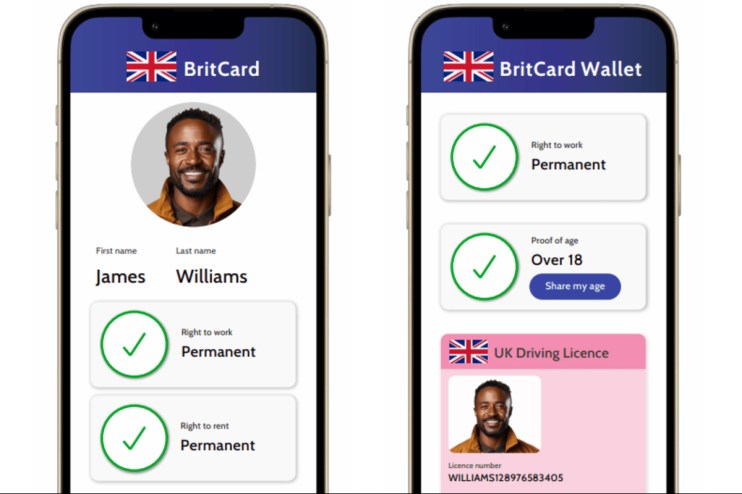
Britain has a long history of rejecting mandatory identification. Digital ID BritCard must be no different, writes Rebecca Vincent in today’s Notebook
Digital ID is back with a vengeance
Following years of calls for a digital ID from Labour figures such as Tony Blair, the Starmer government is reportedly considering a new proposal that would require the entire population to download a mandatory “BritCard”. The plan put forward by think tank Labour Together proposes a mandatory, universal national digital ID that it argues will tackle illegal migration and a range of other societal woes, as well as force the estimated 8m UK residents who do not hold any passport to “get onboarded” by connecting their birth records to the “One Login” system.
From a privacy perspective, this new proposal is just as dangerous as those that have come before. It would fundamentally change the nature of our relationship with the state and turn Britain into a “papers, please” society, putting the burden on all of us to prove our right to be here. It is unclear how such a digital ID would deliver on promises to tackle illegal migration better than existing measures, such as the e-visa scheme, which is riddled with system failures and inaccuracies. But the debate about digital ID isn’t really about immigration; it’s about gaining access to, and control of, everyone’s data. Never mind that doing so would trample privacy rights and create huge digital security risks, as well as pave the way for further digital exclusion.
For these reasons, Big Brother Watch is campaigning vigorously against the introduction of the “BritCard” or any other form of mandatory digital ID. We have launched a petition urging Starmer to reject the new plan, and will be submitting evidence to the parliamentary inquiry into “harnessing the potential of new digital forms of identification”. The British people have a long and proud history of rejecting proposals for a mandatory ID, and we should reject this one too.
Where does Blair himself stand on this latest proposal? He’s publicly quiet for the moment, but the Labour Together report contains a recommendation to “hire a very senior, high-profile and experienced political figurehead or tech sector professional to be the cross-government champion and external face of its digital identity programme”. Who could that possibly be?
Quote of the week:
“There is a whole piece around digital exclusion, which is class-based and racialised… I think that this idea that it’s kind of this panacea to a) a problem that doesn’t exist, and b) that it’s not going to create huge problems, particularly for working class and racialised communities, is nonsense. I think that the lessons from Windrush are that actually, not only was it people who were entitled to live and be in this country, but it spills over, it has this massive spillover effect so you develop a surveillance culture, where everyone is encouraged to surveil people’s documents.”
Runnymede Trust CEO Shabna Begum on digital ID, BBC Politics Live, 9th June
Big bank is watching you
As governments around the world grapple with the decline of cash and explore the use of new kinds of money, many – including the UK government – are considering Central Bank Digital Currencies (CBDCs), a digital form of public money that is issued and guaranteed by the state. A landmark new report launched in parliament on 16 June by Big Brother Watch and the New Economics Foundation examines whether CBDCs can be designed to protect privacy, and what a privacy-preserving CBDC might look like. Crucially, our two organisations have also argued that before moving forward with any CBDC, the UK government must make a case for why one is needed. As things stand, as Parliament’s Economic Affairs Committee has previously concluded, a UK CBDC still seems to be a solution in search of a problem – and one with enormous privacy implications that must be fully considered.
Bank spying moving full speed ahead
The House of Lords has again been debating the controversial Public Authorities (Fraud, Error and Recovery) Bill, with Committee Stage concluding this week. So far, the mass bank spying powers decried by groups like Big Brother Watch remain fully intact, despite multiple attempts to secure amendments in both Houses. Under the pretext of rooting out welfare fraud but also to rectify the Department of Work and Pension’s own errors, the Bill would effectively turn banks into agents of the state, tasking them with trawling through everyone’s bank accounts and reporting back to the government. This represents intrusion on a new scale, treating all past and present benefits claimants as suspects, and trampling the privacy rights of anyone with a UK bank account. With only the report stage now remaining for the House of Lords to make a difference, we urge Peers to support amendments striking these bank spying powers, and ensuring greater accountability and oversight, before it is too late.
What I’ve been reading
I’ve been engrossed in Kate Wilson’s new book, Disclosure: Unravelling the Spycops Files, her personal account of being targeted by undercover police officer Mark Kennedy as part of the UK’s notorious “spy cops” programme. Tasked with infiltrating a group of environmental activists, Kennedy entered into deceptive intimate relationships with Wilson and a number of other women using the false persona of Mark Stone. Wilson’s book reads like a thriller, painting a shocking picture of gross police overreach in targeting peaceful activists through highly invasive and personal means. Wilson is so far the only one to receive a disclosure after pursuing the matter through the Investigatory Powers Tribunal, and police were forced to hand over more than 5,000 pages evidencing the deception. The undercover policing inquiry, set up in 2015 to look into the matter, is still ongoing.
Rebecca Vincent is interim director of Big Brother Watch