
Bank of England tight lipped on liquidity market probe

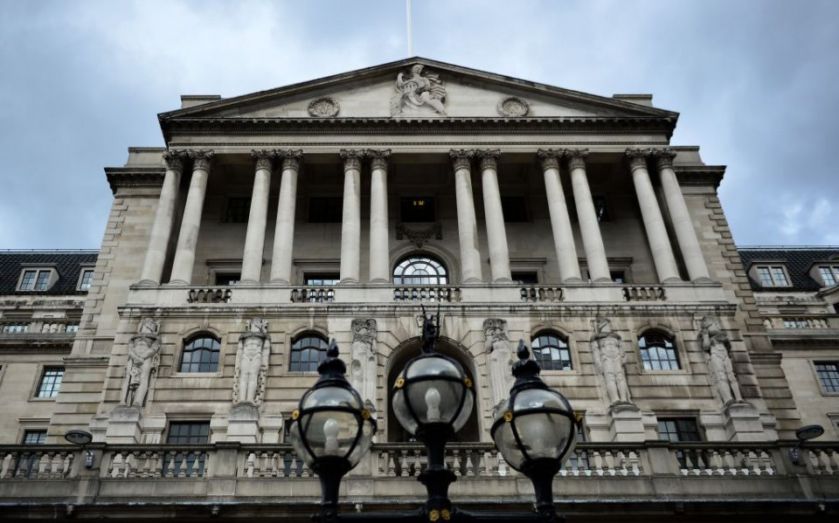
Threadneedle Street was on lockdown yesterday, as Bank of England officials declined to give any details of potential fraud around its liquidity operations in the crisis years.
A spokesperson for the Bank said it would not answer questions on speculation over which of the Bank’s schemes the alleged fraud relates to. “We are not getting into a guessing game,” the representative said. “It’s very much a matter for the Serious Fraud Office and their investigation.”
It has revealed that Lord Grabiner, who also investigated whether or not Bank staff knew about forex benchmark fiddling, was commissioned to study the liquidity operations. Grabiner’s findings were passed on to the Serious Fraud Office (SFO) in November. But the Bank is refusing to say whether it is the victim of fraud, or whether any of its staff knew what was going on.
The Bank also declined to say which liquidity operations could have been affected by the possible fraud, and which banks, if any, could have been involved. It ran a long series of major operations over 2007 and 2008.
It is understood that Grabiner’s liquidity investigation took place roughly at the same time as his forex inquiry. Top MP Andrew Tyrie was briefed in November about the case – he chairs the Treasury Select Committee which questioned Bank governor Mark Carney earlier this week about the forex investigations.
Grabiner’s foreign exchange probe found a Bank official had been aware of the possibility of forex benchmark fixing, but had not told his seniors.
Carney told MPs he gave staff a chance in March 2014 to tell senior managers about any other similar cases, and 50 such instances were reported. Of those, 42 were considered serious enough to be passed to the Financial Conduct Authority, which is now investigating. The Bank declined to say if they are related to this case.
One previous case of manipulation of the liquidity schemes came to light last year, when Lloyds Bank was fined £70m over attempts to manipulate the fees paid to the central bank for its use of the Special Liquidity Scheme (SLS) in the crisis years.
“Following the confirmation by the Serious Fraud Office that it is investigating material referred to it by the Bank of England, the Bank can now confirm that it commissioned Lord Grabiner QC to conduct an independent inquiry into liquidity auctions during the financial crisis in 2007 and 2008,” said the Bank.
“Given the SFO investigation is ongoing, it is not appropriate for the Bank to provide any additional comment on the matter at this time.”
WHO IS LORD GRABINER?
Top QC Lord Grabiner was already a high-profile barrister before the Bank of England cases came along.
Ennobled in 1999, he is a top commercial lawyer at One Essex Court, as well as sitting as a deputy high court judge.
Other very high profile roles include chairing News Corp’s standards committee in the wake of the phone hacking scandal.
He has also held a series of senior business roles, working as a non-executive director at Next,
He is so well remunerated that he told the Treasury Select Committee of MPs that he did not know how much he was paid for his forex work at the Bank of England.
Initially telling MPs he did not get involved in the “grubby issue of negotiations on fees,” Grabiner later revealed he was paid just over £400,000 for the eight-month project.
But the higher-profile work has also came with more scrutiny – MPs on that committee objected to his tone at one of their parliamentary hearings.
TIMELINE: BANK OF ENGLAND’S CRISIS-ERA LIQUIDITY OPERATIONS
AUGUST 2007 – TERM AUCTIONS
The Bank of England offers banks liquidity with Term Auctions. Up to £10bn was on offer the first time around. Banks could offer high quality loans in exchange for funding. But the high cost combined with the potential stigma attached to seeking help, meant nobody took part.
DECEMBER 2007 – LONG TERM REPOS
The long-term extended repo operation allows banks to put up a wider range of collateral than normal, so they have more flexibility to use their portfolios for funding. At its peak, banks took £180bn from the service in January 2009.
APRIL 2008 – SPECIAL LIQUIDITY
The Special Liquidity Scheme (SLS) lets banks post an even wider range of collateral – this time including portfolios of illiquid mortgage loans. Use of the scheme peaked at £185bn, again in January 2009, just before the scheme closed.
SEPTEMBER 2008 – DOLLAR REPOS
The Bank of England starts lending US dollars overnight, easing the strain on international banks.
OCTOBER 2008 – DISCOUNT WINDOW
The Discount Window Facility lets banks post collateral to borrow government bonds, giving more liquidity. The Operational Standing Facility was launched to help keep interests near the base rate.
JULY 2014 – ABUSE FINE
Lloyds fined for trying to manipulate the fees to the Bank of England for using the SLS.
NOVEMBER 2014 – GRABINER’S PROBE
Lord Grabiner reports to the Bank on the liquidity schemes. The Bank passes it on to the Serious Fraud Office.
MARCH 2015 – PROBE REVEALED
The existence of that investigation becomes public knowledge.