Skip to content
Saturday 25 July 2026London --:--Frankfurt --:--Zurich --:--
NewslettersSearchEN · DE
City PM

European business, markets and politics

FTSE 100
10,736.23
+0.91%
DAX
25,099.00
+1.36%
CAC 40
8,372.28
+0.88%
STOXX 50
6,280.94
+1.14%
  • Europe
  • Markets
  • Business
  • Economy
  • Technology
  • Politics
  • Opinion
More
GermanyFranceBankingAIEnergyFintechPropertyCapital Markets
  • Germany
  • France
  • Europe
  • Markets
  • Business
  • Economy
  • Technology
  • Politics
  • Opinion
  • DE
Wednesday 10 February 2016 2:01 pm

Bank of England’s Andrew Hauser defends financial crisis safety net on the 150th anniversary of the Overend and Gurney panic

By: Chris Papadopoullos

Add as a preferred source on Google

A Bank of England official has defended the safety net it used in response to the financial crisis. 

Andrew Hauser, executive director of banking, payments and financial resilience, said the Bank’s lender-of-last-resort (LOLR) operations during the 2007 and 2008 financial crises “helped prevent global economic and financial meltdown.”

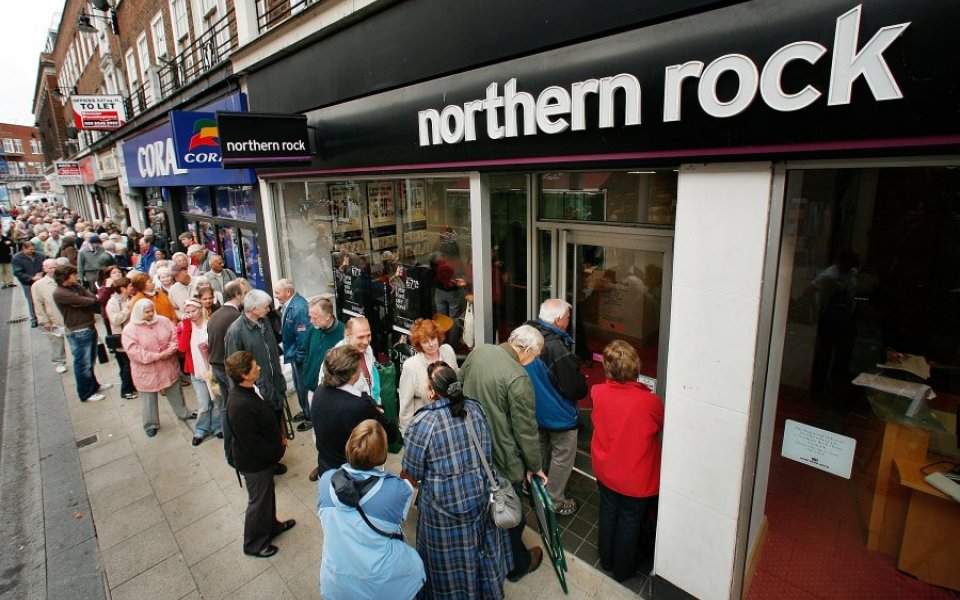
The Bank first lent cash to Northern Rock in 2007 and later lent money to a wide-variety of much bigger banks in September 2008.

The Bank has acted as lender-of-last-resort (LOLR) since 1866, when Overend and Gurney, a large financial company, was allowed to fail. The Bank lent money to other banks, helping to stem a widespread crisis. It led to the publication of Lombard Street, an influential book on central banking by Walter Bagehot, who has a column named after him in the The Economist.

“Without an effective LOLR framework, economies cannot hope to foster strong and sustainable growth over the long run,” Hauser told an audience in Washington today.

“Countries lacking such backstops are likely to sustain large-scale, and preventable, economic damage. So the risk of central banks having ‘too little’ scope to carry out LOLR is real.”

However, he went on to say that there were reasons why the Bank should avoid too much LOLR action.

“One strand of this debate is led by those who feel that central banks lent ‘too much’, too often or too freely during the crisis, using public money – so the allegations go – to support institutions of dubious solvency, sometimes in secret, protecting bankers from their own mistakes, and thereby stoking moral hazard for the future,” Hauser said.

“But another strand in the debate draws the opposite conclusion from the crisis – focusing on the risk that central banks might lend ‘too little’, too rarely or too late, amplifying what might begin as short-term liquidity shortages into deeper or more persistent solvency concerns, and subsequently causing financial institutions to over-insure, reducing their capacity to lend.”

“The public has a legitimate interest in avoiding ‘too much’ LOLR. We cannot afford for financial institutions to view liquidity support as a substitute for prudent financial management: central banks must not be ‘lenders of first resort’. And lending to institutions that are in need of capital rather than liquidity is the wrong solution,” he said.

Hauser said the Bank had improved its LOLR protocols since the financial crisis. The Bank, he said, was more transparent about how it would lend in future. He also said it can now lend to certain institutions other than just banks, such as central counter parties (CCPs).

Regulators have placed massive responsibility for the financial system’s safety on the shoulders of CCPs such as LCH Clearnet since the financial crisis.

Share this article

  • Facebook
  • X
  • LinkedIn
  • WhatsApp
  • Email

Similarly tagged content:

Sections

  • Markets & Economics
  • News

Categories

  • Business
  • Economics

Trending Articles

  • BT braces for loss of 800,000 customers as it banks on fibre to keep turnaround ‘on track’

  • Regulator flags BDO’s ‘unacceptable’ audit issues for fifth year in a row 

  • Wise denied US banking licence in blow to expansion plans

  • Tax rises ‘guaranteed’ as Healey faces £22bn black hole from Burnham spending plans

  • ‘We are going to run out’: Mitie marks eleventh mega takeover of 2026

More from City PM

  • Bank of England to relax capital rules despite warning of economic threats

    Banking
    Bank of England building on Threadneedle Street, London, showcasing its historic architecture and financial significance
  • Bank regulation, not austerity, explains why Britain is poorer than America 

    Opinion
    Aerial view of a residential cul-de-sac with houses, green lawns, trees, and a swimming pool
  • Kemi Badenoch’s economic revolution could set the City free

    Opinion
    Kemi Badenoch will push to restore the Tories' economic credibility in the eyes of the public in a key speech.
  • Bank of England warns Burnham of UK economy’s ‘big issue’

    Economics
    Bank of England Governor Andrew Bailey said the future of interest rates was "more uncertain".
  • Bank of England governor opens door to ‘simplifying’ financial rulebook

    Regulation
    Bank of England Governor Andrew Bailey said cited several indicators that the labour market was softening.
  • Dimon threatens to ditch JP Morgan tower in tax warning to Burnham

    Banking
    Jamie Dimon speaking at a JP Morgan event, wearing a suit and tie, addressing financial trends and market strategies.
  • Rachel Reeves’ legacy of tinkering with the City is not enough, says Mel Stride

    Economics
    Mel Stride addressing an audience at a business conference, standing at a podium with a presentation screen behind him
  • Rachel Reeves to unveil next steps for ring-fencing reform at Mansion House

    Banking
    Descriptive image related to a news or business article with focus on general themes and engaging visual elements.
CityPM

Independent European business, markets and political news for decision-makers.

Morning Briefing

Europe

  • Germany
  • France
  • Europe
  • UK & Ireland

Business

  • Markets
  • Banking
  • Technology
  • Energy
  • Property
  • Fintech

Editorial

  • Opinion
  • Editorial Policy
  • Corrections
  • Contact

Company

  • About City PM
  • Privacy Policy
  • Terms of Use
  • Cookie Policy
© 2026 City PM Ltd · Published by CityPM Media, Bahnhofstrasse 65, 8001 Zürich, Switzerland
Privacy · Terms · Cookies · Facebook