Skip to content
City PM
  • Germany
  • France
  • Europe
  • Markets
  • Business
  • Opinion
  • Germany
  • France
  • Europe
  • Markets
  • Business
  • Opinion
Wednesday 19 September 2018 8:33 am  |  Updated:  Tuesday 21 May 2019 4:27 pm

The Bank of England’s own data negates Carney’s overhyped house price warning

By: Paul Ormerod

Add as a preferred source on Google

NULL

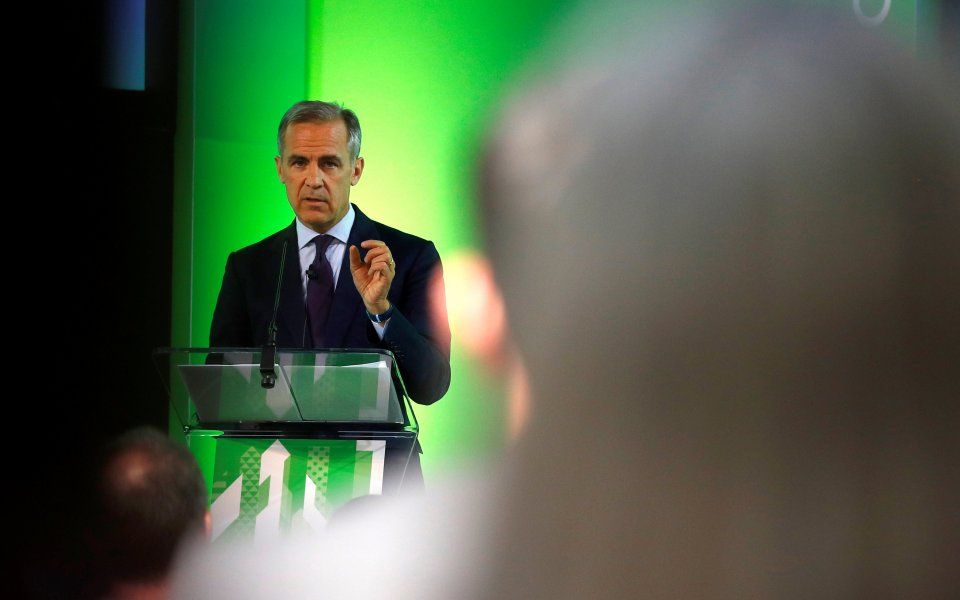
No one can tell them quite like Mark Carney, the governor of the Bank of England.

He appears to have briefed the cabinet last week that house prices could fall by 35 per cent in the event of a no-deal Brexit.

To be fair, the Bank did try to qualify this figure by saying that it was just the worst of several scenarios which analysts had produced in order to stress test the balance sheets of the commercial banks.

Read more: Mark Carney warns house prices could fall by a third in a no-deal Brexit

But the 35 per cent house price drop has now become embedded in the public narrative about Brexit.

Just how likely is such a massive drop to take place?

We do not know exactly how the Bank did its stress tests. But, typically, the worst-case scenario in such tests is either one which is judged to have a one in 20 chance of happening, or, if you are setting really demanding standards for the test, just a one in 100 chance.

When trying to assess these odds, an important input is what has happened in the past. The past may of course not be a reliable guide to the future, but it is all we have to go on.

An analogy from the sporting world might help. Every year, three clubs from the Championship are promoted to the Premier League. What are the chances of one of them being relegated after their first season in the top league?

We can look at the historical record since the Premier League began in 1992/93, which helps us form an initial view. We might then qualify it, and set the benchmark – a 44 per cent chance of relegation, since you ask.

With house prices, we can go much further back in time, as far back as 1845 to be exact. And the source of this information on nearly two centuries of house prices data is none other than the Bank of England itself.

Over all this time, there has never been a cumulative fall in the Bank’s house price series of as much as 35 per cent.

The closest we have seen was in the opening decade of the twentieth century in the run-up to the First World War. The UK economy was pretty much in the doldrums, and between 1902 and 1909, prices fell by a total of 33 per cent.

Nothing else remotely compares to this drop.

There have been two global financial crises over this period. In the 1930s, house prices fell by only seven per cent between 1929 and 1934.

And following the most recent crash, the reduction between 2007 and 2009 was 13 per cent.

In America, the Case Shiller house price index was 21 per cent lower in 2011 than it was in 2006, but this is the largest fall in that particular database.

The governor is therefore inviting us to believe that, in the event of a no-deal Brexit, house prices may fall by more than they have ever fallen since the Bank’s own data began in 1845.

How did the Bank arrive at this figure? I think we should be told.

Read more: London house prices set to hit lowest growth levels since financial crash

Share this article

  • Facebook
  • X
  • LinkedIn
  • WhatsApp
  • Email

Similarly tagged content:

Sections

  • Markets & Economics
  • News

Categories

  • Banking
  • Business
  • Economics

Related Topics

  • Bank of England
  • Brexit
  • London house prices
  • Mark Carney
  • People

Trending Articles

  • Top Burnham adviser calls for capital gains and inheritance tax hikes

  • Clarkson’s Farm and why businesses must stop blaming the weather

  • Two solicitors linked to Post Office scandal charged with misconduct

  • Lloyd’s deputy chair: The City is a club in the best sense

  • A meeting with the breakfast king of Mayfair

More from City PM

  • House price slump blamed on World Cup and heatwave

    Property
    Soccer players competing in the World Cup, showcasing intense action on the field with a stadium full of cheering fans
  • House prices jump as property market ‘treads water in rough conditions’

    Property
    The price paid for first homes has surged 7.1 per cent in a year
  • London house prices fall as Bank of England rate hikes loom over mortgage market 

    Property
    Housing delivery in London is in a major crisis
  • Wimbledon property market drops ball ahead of Grand Slam

    Property
    Wimbledon tennis court with players in action, surrounded by a cheering crowd under clear blue skies
  • Private credit firms draft in City advisers to help with ‘meltdown’ stress test

    Banking
    Bank of England headquarters with financial charts overlay, illustrating private credit stress test analysis
  • Bank of England unveils Armageddon stress test scenario ‘more severe than the financial crisis’

    Regulation
    bank of england
  • Inflation stays below three per cent despite price warning

    Economics
    The Bank of England is expected to hold interest rates at four per cent due to stubbornly high inflation.
  • Bank of England to ‘tolerate slow return’ to inflation target as interest rates held

    Economics
    Bank of England Governor Andrew Bailey said cited several indicators that the labour market was softening.

City PM — European politics, business and analysis.

Europe

  • Germany
  • France
  • Europe
  • UK & Ireland

Topics

  • Business
  • Markets
  • AI
  • Technology
  • Opinion
  • Energy

More

  • Politics
  • Economics
  • Fintech
  • Legal
  • Sport
  • Life

Company

  • About City PM
  • Editorial Policy
  • Corrections
  • Contact
  • Terms of Use
  • Privacy Policy
  • Cookie Policy
© 2026 City PM · Published by CityPM Media, Bahnhofstrasse 65, 8001 Zürich, Switzerland
About · Editorial Policy · Corrections · Contact · Privacy