

The Bank of England has just given a coded warning about the danger posed by a no-deal Brexit. It’s terrifying

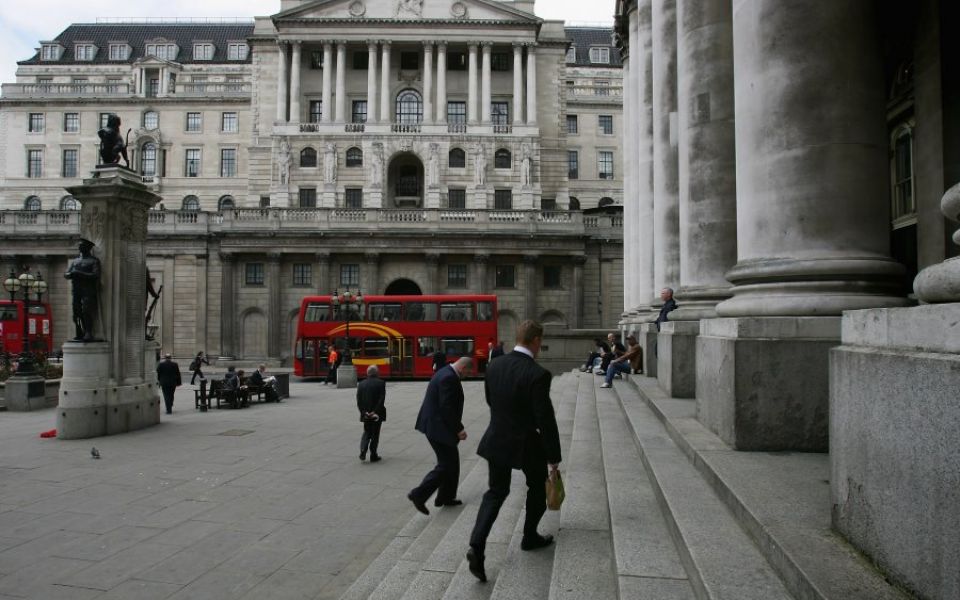
On Tuesday, the Bank of England released the details of its latest banking industry stress tests.
The results made for some soothing sounding headlines – the UK financial system is strong enough to withstand a "disorderly Brexit".
In other words, Britain’s banking system can withstand leaving the European Union (EU) without a trade deal.
While that may be manna from heaven for Brexiteers, who will no doubt cite it as proof the British economy is resilient enough to withstand what would be an enormous shock to the system if Britain were to leave without a deal, the devil, as always, is in the detail.
And the detail for most people makes for grim reading to say the least.
The economic test the Bank of England used was this: Could the banks’ balance sheets withstand a 33 per cent fall in house prices, a more than doubling of the unemployment rate to 8.6 per cent, a 25 per cent drop in the value of the Pound and a rapid rise in interest rates from 0.5 per cent to 4 per cent?
If none of those things scare you, they really should.
Sterling fell 20 per cent after the EU referendum and while some of that fall wiped out substantial gains from the day before the referendum, it was still a very significant drop – somewhere in the region of 15 per cent in real terms.
That decline has already had a dramatic impact on our economy. Growth has slowed by 0.5 per cent this year and is forecast to remain 0.5 per cent below previous forecasts for the next five years, while Inflation has risen from 1 per cent to 3 per cent since the EU referendum.
That means lower living standards – which are now predicted to not reach the same level as 2008 until 2030/31, about the same time the budget deficit is finally wiped out. That’s a colossal 22 years after the financial crisis plunged Britain, and much of the rest of the world, into the biggest recession in recorded history.
Meanwhile, a 33 per cent fall in house prices is, to say the least, dramatic. To give that number some context, house prices fell by a comparatively modest 24 per cent after the 2007 credit crunch.
This time around however, there will be no Bank of England to rescue homeowners from repossession because interest rates in this stress test scenario rise from their current 0.5 per cent to 4 per cent.
Combine that with rising unemployment and you have a disaster scenario that takes us back to the dark days of Britain crashing out of the European Exchange Rate Mechanism in 1992, when interest rates hit 15 per cent and unemployment rose to 3 million people. House prices had already fallen 40 per cent between 1989 and 1990 leaving thousands of households in negative equity.
Unable to pay their mortgages due to high interest rates – if they were lucky enough to still have a job – thousands of people had their homes repossessed.
While the recession which began in 2008 was deeper, the recession of 1989 to 1993 had much greater impact. It left a scar on the psyche of most people living in Britain. Few who lived through the early 1990s were fortunate enough to be completely unaffected.
It is important to point out that the Bank of England’s stress test isn't based on the belief that a disorderly Brexit would definitely cause this level of economic shock. The bank stress tests are a kind of wargame that tries to imagine one of the worst possible scenarios to hit the British economy – and then works out if the banking system could cope.
But by pointedly saying the banking system could withstand “a disorderly Brexit”, the Bank is pointing out the potential impact of Britain walking away from the EU without a deal.
What’s worse is the Bank’s warning that if the banking system was caught up in a “disorderly Brexit” and a sudden major economic downturn, the banks would struggle to lend support to the economy.
In other words, Brexit without a trade deal, plus a recession, equals disaster. Such a scenario cannot be ruled out.